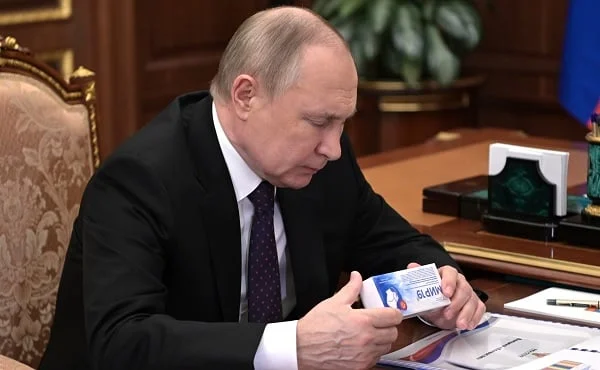
MOSCOW — Russian President Vladimir Putin has firmly asserted that ultimate victory belongs to Moscow, declaring that the recent parliamentary elections demonstrated the unyielding resilience of the Russian populace against external intimidation and foreign subversion. Addressing political party leaders in a high-profile Kremlin meeting on a Monday following the electoral cycle, the Russian leader stated that concerted foreign efforts to derail the democratic process and meddle in the internal sovereignty of the nation had comprehensively failed.
According to the Kremlin, the electoral period was targeted by hostile external forces employing what Putin characterized as terrorist methodologies and sophisticated operational instruments managed by foreign intelligence services. Despite these severe disruptions, the President extended his gratitude to the tens of millions of citizens who cast their ballots, emphasizing that robust voter turnout has cemented the indisputable and absolute legitimacy of the resulting parliament.
The parliamentary elections, held over a contentious three-day period from September 18 to September 20, took place against the backdrop of escalating geopolitical tensions and active hostilities. The culmination of the voting process coincided with a massive, coordinated barrage of unmanned aerial vehicles launched against the Russian mainland, heavily targeting the capital city of Moscow and surrounding strategic regions.
Chronology of the Election and Aerial Assaults
The friction surrounding the September parliamentary polls began mounting weeks prior to the opening of the ballot boxes, with international observers noting a hyper-charged political climate. However, the crisis escalated dramatically on the final day of voting, September 20, transforming a domestic political exercise into a high-stakes national security event.
According to reports from Russian defense and municipal authorities, the air defense network was activated on an unprecedented scale to intercept incoming aerial threats. Officials confirmed that more than 1,600 unmanned aerial vehicles were successfully neutralized or intercepted across various sectors of the country. Of that total, approximately 450 drones were tracked converging on the Moscow metropolitan area alone.
Moscow Mayor Sergey Sobyanin publicly described the aerial onslaught as unprecedented in both scale and intent. Municipal authorities reported that while the vast majority of the incoming threats were intercepted by air defense systems, falling debris and localized impacts resulted in infrastructure damage and tragic human casualties. At least two civilian fatalities were officially confirmed within the Moscow region, underscoring the direct physical toll the ongoing conflict is exacting on the Russian civilian population during landmark political events.
Context and Background of the Electoral Cycle
The parliamentary elections were viewed by domestic and international analysts as a critical barometer of public sentiment toward the ruling political establishment, particularly in light of the prolonged military campaign in Ukraine and the sweeping array of Western economic sanctions imposed on Moscow.
The Russian electoral commission structured the voting across a multi-day format—a practice institutionalized in recent years—allowing citizens to cast their ballots over a 72-hour window. While the government defended the extended voting period as a measure to ensure public safety and convenience amid epidemiological and security concerns, critics and independent watchdogs frequently contend that multi-day voting complicates independent oversight and transparency.
Despite these criticisms, the Kremlin has consistently championed the outcomes as a clear mandate for its current domestic and foreign policy trajectory. President Putin’s remarks in the Kremlin directly tied the success of the ruling party and the stability of the legislative branch to a broader national defiance against foreign pressures. In his evaluation, the employment of foreign-backed sabotage and aerial warfare during the democratic exercise was designed to sow panic, delegitimize the government, and fracture the social cohesion of the Russian Federation. Instead, Putin argued, these actions produced a rally-around-the-flag effect, driving voters to the polls to demonstrate solidarity with the state.
Official Responses and Security Measures
The Ministry of Defense of the Russian Federation released detailed operational summaries following the conclusion of the voting window, highlighting the complexity of the air defense operations required to protect major urban centers. Military spokespersons reiterated that all available electronic warfare systems and surface-to-air missile batteries were brought to maximum readiness levels to safeguard civilian populations and critical infrastructure during the electoral climax.
Security apparatuses across the country remained on high alert throughout the voting period, with heightened patrols deployed around polling stations, transport hubs, and government facilities. Intelligence agencies reported the preemption of several localized sabotage plots allegedly coordinated by external handlers, further reinforcing the official narrative that the electoral process was subjected to an aggressive multi-domain campaign aimed at destabilization.
In his address to party leaders representing the newly configured parliament, Putin stressed that the ability of the state to conduct a secure national vote under such extreme conditions is proof of institutional maturity and national strength. He underscored that the political forces represented in the new legislature must now unite to address pressing socioeconomic priorities while maintaining a steadfast posture against external threats.
Broader Geopolitical Implications and Strategic Analysis
The convergence of national parliamentary elections and intensive strategic drone strikes marks a significant escalation in the tactics accompanying major political milestones in the region. Political analysts suggest that the timing of the aerial offensive was calculated to maximize psychological impact, attempting to project vulnerability at the heart of Russian state power precisely when the government sought to project stability and control.
However, the domestic political fallout appears, at least in the short term, to have reinforced the official narrative propagated by state media. By framing the election as a referendum not merely on domestic governance, but on national survival and resistance against foreign aggression, the political leadership successfully galvanized its core constituency. The insistence on the absolute legitimacy of the vote serves to preemptively neutralize domestic dissent and dismiss anticipated international criticisms regarding the fairness and environment of the election.
Furthermore, the integration of security imperatives into the electoral narrative sets a definitive tone for the legislative agenda of the incoming parliament. Observers anticipate an accelerated push toward legislative measures prioritizing national security, import substitution, defense sector funding, and stricter regulations on foreign influence within domestic civil society.
As Moscow absorbs the results of the September polls and assesses the damage from the unprecedented drone incursions, the overarching message from the Kremlin remains resolute. By declaring that victory belongs to Moscow, the Russian leadership has signaled its intention to press forward with its strategic objectives undeterred by external military pressure or electoral interference, solidifying a political landscape defined by defiance, centralization, and heightened state security.