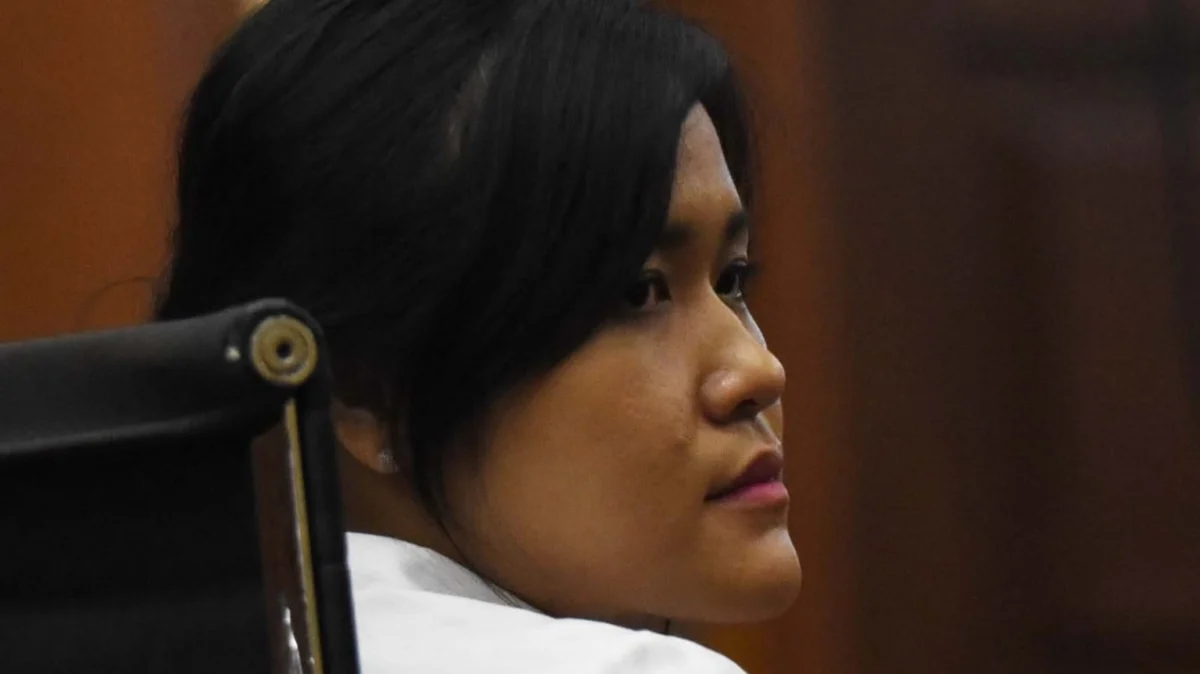
The high-profile legal saga of Jessica Kumala Wongso, the woman convicted in the notorious "cyanide coffee" murder case of 2016, continues to resonate within the Indonesian public consciousness nearly a decade after the tragic death of Wayan Mirna Salihin. In a recent and rare public reflection, Jessica Wongso shared her deeply personal thoughts regarding the man who has been her most vocal accuser: Edi Darmawan Salihin, the father of the deceased. Speaking in an interview with journalist Fristian Griec, Jessica articulated a message of empathy and a yearning for a shift in perception, suggesting that if she were ever granted the opportunity to meet Darmawan Salihin face-to-face, her primary objective would not be legal confrontation, but a gesture of human connection and condolence.
During the conversation, which was recently highlighted on the "Mereka Berbicara" YouTube channel in July 2026, Jessica maintained a composed and reflective demeanor. She emphasized that despite the years of legal battles and the intense public scrutiny she has faced, she harbors no ill will toward Mirna’s family. Instead, she expressed a profound understanding of the grief that has defined Darmawan Salihin’s life since the loss of his daughter. Jessica noted that the loss of a child is a tragedy of immeasurable proportions, and it is from this perspective of shared humanity that she wishes to approach the bereaved father.
A Message of Condolence and Human Connection
In the interview, Jessica Wongso detailed the specific words she would choose if a meeting with Edi Darmawan Salihin were to occur. She stated that her first priority would be to offer her sincere condolences for the passing of Mirna. "First of all, I would express my deepest condolences for Mirna’s passing because losing a family member, a biological child, is incredibly painful. I understand that," Jessica remarked. This statement marks a significant moment in the long-running narrative of the case, as it focuses on the emotional gravity of the loss rather than the technicalities of the legal defense that have dominated headlines for years.
Jessica’s rhetoric suggests a desire to transcend the labels of "convict" and "victim’s father." She expressed a hope that Darmawan Salihin might one day be willing to look past the media portrayals and the investigative findings that led to her conviction. She urged him to consider her as an individual rather than a character in a criminal case. "But I also want ‘Om’ [a respectful term for an older male] to think and not just believe everything people say. Get to know me as well. Spend time with me first. See for yourself who I am," she added, implying that the public and judicial image of her does not reflect her true character.
The ultimate goal of such a meeting, according to Jessica, would be the cessation of hostility. She expressed a wish that Darmawan Salihin would no longer harbor resentment toward her. "So, I hope that in the future, Om won’t hold a grudge against me or anything like that. I hope his perception of me can change. That is all I can say," she concluded. These statements have sparked renewed debate among legal analysts and the public regarding the psychological state of the involved parties and the possibility of restorative justice in cases of such high emotional and social stakes.
Chronology of the Cyanide Coffee Case
To understand the weight of Jessica’s recent statements, it is essential to revisit the timeline of the events that led to her incarceration. The case began on January 6, 2016, at the Olivier Cafe in Grand Indonesia Mall, Jakarta. Wayan Mirna Salihin collapsed and died shortly after consuming an iced Vietnamese coffee ordered by Jessica, who had arrived at the cafe earlier to meet Mirna and another friend, Hani.
The subsequent investigation by the Jakarta Metropolitan Police became a media sensation. On January 30, 2016, Jessica was officially named a suspect and arrested. The prosecution’s case rested heavily on CCTV footage from the cafe, which they argued showed Jessica behaving suspiciously and allegedly placing cyanide into Mirna’s drink, although the actual act of poisoning was not clearly visible on the tapes. The trial, which commenced in June 2016, lasted for several months and featured 32 court sessions, making it one of the longest and most televised trials in Indonesian history.
On October 27, 2016, the Central Jakarta District Court found Jessica Kumala Wongso guilty of premeditated murder under Article 340 of the Indonesian Criminal Code. She was sentenced to 20 years in prison. The judges cited her "calmness" during the incident and the trial as an aggravating factor, interpreting it as a lack of remorse. Despite numerous appeals—including to the Jakarta High Court, the Supreme Court, and a subsequent Judicial Review (Peninjauan Kembali)—the 20-year sentence was upheld at every level of the Indonesian judiciary.
The Role of Media and the "Ice Cold" Phenomenon
The case experienced a massive resurgence in global and local interest following the 2023 release of the Netflix documentary Ice Cold: Murder, Coffee and Jessica Wongso. The film re-examined the evidence, highlighted the inconsistencies in the forensic testimonies, and questioned the "trial by media" that Jessica endured. This documentary significantly shifted public opinion, with a large segment of the population beginning to question the validity of the conviction and calling for a reinvestigation.
Edi Darmawan Salihin, who had remained relatively quiet in the years following the trial, returned to the spotlight after the documentary’s release. He participated in several interviews to defend the court’s decision and reiterate his absolute certainty of Jessica’s guilt. His confrontational style and the revelation of certain details regarding his own background further polarized public sentiment. It is within this heightened atmosphere of public debate that Jessica’s recent calls for a personal meeting and reconciliation must be viewed.
Supporting Data and Forensic Controversies
The conviction of Jessica Wongso has long been a subject of scrutiny among legal and forensic experts due to the nature of the evidence presented. Key points of contention include:
- Cyanide Levels: Forensic reports indicated that while cyanide was found in the coffee cup, the amount found in Mirna’s stomach during the initial post-mortem examination was negligible or non-existent in some samples taken shortly after death. It was only in samples taken several days later that higher concentrations were noted, leading some experts to argue that post-mortem changes or contamination could have occurred.
- CCTV Analysis: Digital forensics experts presented by the defense argued that the CCTV footage had been manipulated or was of insufficient quality to definitively prove that Jessica handled the coffee in a way that suggested poisoning.
- Motive: The prosecution suggested that the motive was rooted in a personal grudge related to advice Mirna had given Jessica regarding a past relationship. The defense argued this motive was weak and lacked sufficient evidence to justify a premeditated murder charge.
These technical disputes have fueled the "Justice for Jessica" movement, which advocates for a second look at the case based on modern forensic standards and a more critical evaluation of the circumstantial evidence used to convict her.
Statements from Related Parties
While Edi Darmawan Salihin has not yet formally responded to Jessica’s recent offer of a meeting, his historical stance suggests a deep-seated resistance to such a reconciliation. In previous statements, Darmawan has characterized Jessica as a "cold-blooded" individual and has often expressed that no amount of time or explanation could change his view of the events that took place at Olivier Cafe.
Legal observers, however, note that Jessica’s move to speak out is a strategic attempt to reclaim her narrative. By positioning herself as a person seeking forgiveness and understanding—even while maintaining her innocence—she appeals to the cultural values of silaturahmi (maintaining social ties) and forgiveness that are central to Indonesian society.
Fristian Griec, the journalist who conducted the interview, noted that Jessica appeared to have found a sense of peace despite her circumstances. This "new" Jessica, who speaks of empathy for her accuser, stands in stark contrast to the "arrogant" and "unfeeling" persona that the prosecution painted during the 2016 trial.
Broader Implications and Analysis
The ongoing saga of Jessica Wongso serves as a landmark case for the Indonesian legal system. It highlights the profound influence of public opinion and media coverage on judicial outcomes. The fact that the case remains a topic of intense discussion in 2026 demonstrates that the "cyanide coffee" murder was more than just a criminal trial; it was a cultural event that tested the limits of the country’s legal infrastructure.
From a sociological perspective, Jessica’s request to meet Darmawan Salihin represents a complex intersection of victim-offender dynamics. In many legal systems, restorative justice programs allow for such meetings to facilitate healing. However, in a case where the "offender" maintains her innocence and the "victim’s family" is convinced of her guilt, the potential for genuine reconciliation remains slim.
Furthermore, the case has prompted discussions about the necessity of forensic independence in Indonesia. The conflicting testimonies of state experts and defense experts during the trial led to calls for more standardized and transparent forensic protocols to prevent similar controversies in the future.
As Jessica Wongso continues to serve her sentence, her recent statements ensure that the conversation surrounding her case will not fade. Whether or not a meeting with Edi Darmawan Salihin ever takes place, Jessica has successfully shifted the focus from the evidence of the past to the possibility of a different future. Her words challenge the public and the bereaved family to consider the human element behind the headlines, suggesting that even in the wake of a tragedy that paralyzed a nation, there remains a flicker of hope for understanding, if not for total closure.