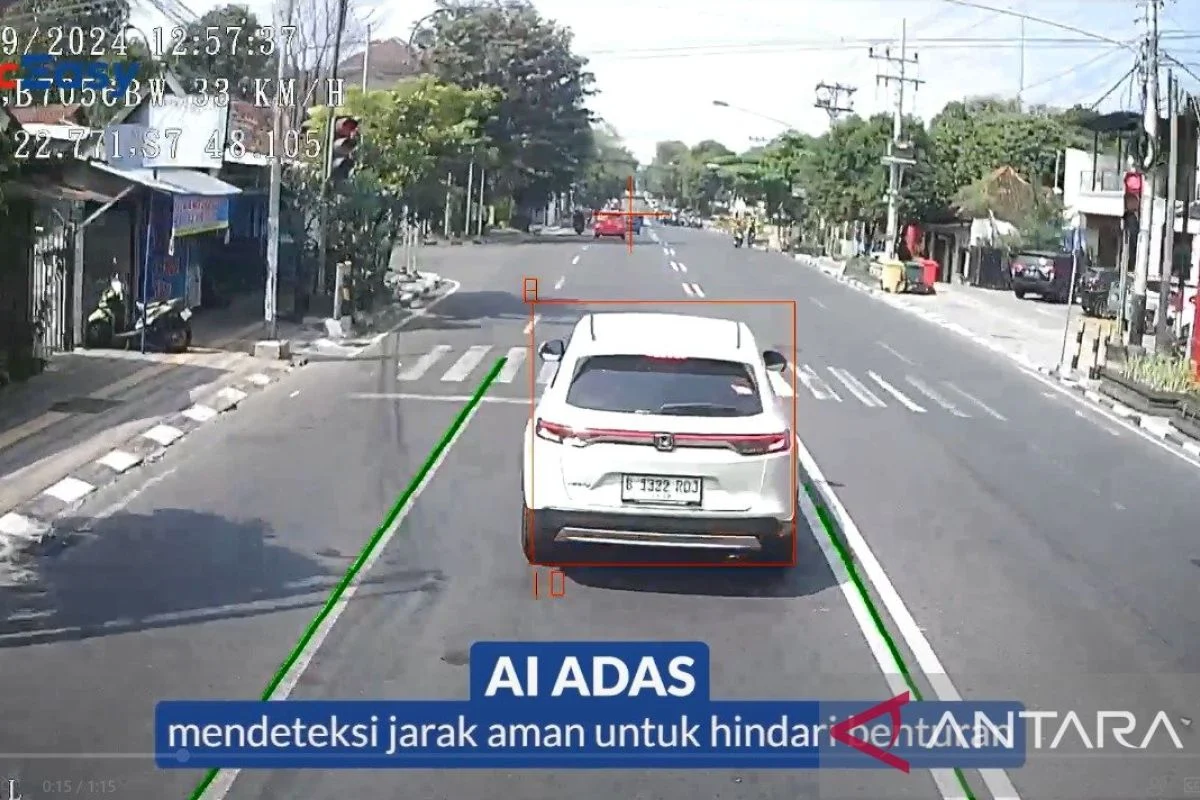
The contemporary automotive landscape has transcended the traditional metrics of vehicle evaluation, shifting decisively away from a primary focus on raw engine efficiency, cabin ergonomics, and infotainment screen dimensions. Today, the cornerstone of modern automotive engineering lies in advanced active safety systems, most notably Advanced Driver Assistance Systems (ADAS). As vehicle manufacturing undergoes this profound technological transformation, ADAS has rapidly transitioned from an exclusive luxury reserved for high-end flagship models to a ubiquitous feature suite found across mainstream vehicle segments.
This technological pivot is not merely a marketing strategy for automotive brands; it represents a fundamental overhaul of global vehicular safety architecture. Driven by increasingly stringent international testing protocols, evolving consumer expectations, and rapid advancements in artificial intelligence and sensor fusion, the automotive industry is entering an era where preventing an accident before it happens takes precedence over mitigating damage after a collision occurs.
The 2026 Regulatory Paradigm Shift: Euro NCAP and Global Standards
The acceleration of ADAS integration is deeply intertwined with regulatory changes sweeping across international safety agencies. Chief among these regulatory catalysts is the European New Car Assessment Programme (Euro NCAP), which implemented a rigorous update to its vehicle testing methodology. The 2026 protocols place unprecedented emphasis on active safety features, shifting the evaluation paradigm to scrutinize how effectively a vehicle’s software and sensor array can prevent accidents in real-world environments.
Under the updated 2026 framework, Euro NCAP evaluates autonomous emergency braking (AEB) and lane support systems across highly complex traffic scenarios. These tests simulate intricate interactions with vulnerable road users, including pedestrians, cyclists, and motorcyclists, under varied lighting and weather conditions. Furthermore, the testing protocols utilize advanced sensor combinations—integrating high-definition cameras, radar systems, and LiDAR technology—to benchmark vehicle performance against real-world data sets.
This regulatory evolution has created an intense compliance and competitive pressure cooker for global automakers. Meeting or exceeding these standards is no longer optional for brands seeking market dominance. A striking demonstration of this dynamic unfolded in September 2026, when Euro NCAP released crash-test and safety ratings for four new vehicles evaluated under the stringent 2026 protocols. Notably, three emerging Chinese manufacturers—AION, Geely, and Leapmotor—secured prestigious five-star safety ratings for models such as the AION UT, Geely E2, and Leapmotor B05. This milestone underscores a broader industry democratization of advanced safety tech, proving that state-of-the-art accident-prevention systems are now baseline expectations for globally competitive vehicles.
Decoding ADAS: Core Technologies and Mechanical Principles
To understand why ADAS has become the focal point of modern automotive engineering, it is essential to examine its core architecture. At its foundation, Advanced Driver Assistance Systems comprise a network of electronic technologies designed to assist human drivers during the operation of a vehicle. Utilizing a sophisticated symphony of ultrasonic sensors, long and short-range radars, optical cameras, and sometimes LiDAR, the vehicle continuously monitors its 360-degree perimeter.
The collected sensory data is processed by onboard computing units in real time. When the system detects a potential hazard or deviation from safe operating parameters, it either issues immediate visual, auditory, or haptic warnings to the driver or takes direct mechanical intervention.
The most widely adopted ADAS features include:
- Forward Collision Warning (FCW) and Automatic Emergency Braking (AEB): FCW detects impending collisions with objects, vehicles, or pedestrians ahead, alerting the driver. If the driver fails to respond adequately, AEB engages the brakes autonomously to mitigate or completely avoid the impact.
- Lane Keeping Assist (LKA) and Lane Centering Assistance (LCA): Utilizing optical cameras to track lane markings, LKA provides corrective steering inputs if the vehicle begins to drift out of its lane without an activated turn signal, while LCA maintains the vehicle in the dead center of the lane.
- Adaptive Cruise Control (ACC): An evolution of traditional cruise control, ACC automatically adjusts the vehicle’s speed to maintain a safe, pre-set following distance from the traffic ahead.
- Blind Spot Monitoring (BSM) and Blind Spot Intervention (BSI): BSM alerts drivers to vehicles positioned in their blind spots during lane changes, while advanced BSI systems can actively apply corrective braking or steering torque to prevent a hazardous side-swipe collision.
Mitigating Risk: The Multifaceted Benefits of Driver Assistance
The rapid proliferation of ADAS is anchored by tangible safety and ergonomic benefits that address the primary vulnerabilities of human-operated transportation.
First and foremost, these technologies serve as an indispensable layer of active risk reduction. Human error—stemming from distraction, fatigue, delayed reaction times, or compromised visibility—remains the leading cause of traffic accidents globally. Systems like AEB act as an infallible safety net, drastically reducing stopping distances in emergency scenarios where human reflexes may fall short.
Second, ADAS significantly mitigates driver fatigue during long-distance travel. Extended hours behind the wheel naturally erode cognitive focus and physical stamina. Features like Adaptive Cruise Control and lane-centering technologies alleviate the continuous micro-adjustments required of a driver on long highway stretches, thereby reducing cognitive load. However, industry regulators emphasize that these systems are designed to assist, not replace, human concentration.
Third, ADAS directly addresses the inherent physical limitations of vehicle design, specifically structural blind spots. Modern vehicles feature thicker roof pillars to comply with rollover crash standards, which inevitably create obstructed angles of visibility. Blind Spot Monitoring systems act as electronic extensions of the driver’s peripheral vision, proving invaluable in high-density urban environments characterized by chaotic traffic flow and frequent lane changes.
The Critical Distinction: Assistance Versus Full Autonomy
Despite the sophisticated capabilities of modern ADAS, regulatory bodies and safety authorities globally are heavily invested in clarifying the limitations of these technologies to prevent over-reliance and consumer complacency.
The United States National Highway Traffic Safety Administration (NHTSA) and international transport authorities maintain strict operational definitions regarding vehicle automation. Most commercial vehicles equipped with ADAS operate at Level 1 or Level 2 automation under the Society of Automotive Engineers (SAE) classification scale.
At Level 1, the system can independently control either steering or acceleration/braking, but not both simultaneously. At Level 2, the vehicle features combined automation—such as operating adaptive cruise control and lane centering at the same time—yet the human driver remains legally and operationally responsible for the vehicle at all times. The driver must maintain continuous supervision of the road environment and remain perpetually prepared to take over manual control instantaneously.
Industry studies and empirical driving data consistently highlight the limitations of current automated systems. Factors such as severe weather events (heavy rain, snow, or fog), obscured or faded road lane markings, complex urban construction zones, and erratic pedestrian behavior can degrade sensor performance. Consequently, transportation ministries and regulatory watchdogs—including Indonesia’s Ministry of Transportation—have continually emphasized that technological advancements must be paired with disciplined driving habits and comprehensive driver education.
Economic and Market Implications for the Automotive Industry
The widespread integration of ADAS has fundamentally altered the competitive dynamics of the global automotive market. Historically, advanced safety innovations were proprietary technologies introduced exclusively in high-end, luxury segments. Today, consumer demand has democratized safety, turning ADAS into a core purchasing criterion.
Automakers that fail to incorporate comprehensive, high-performing active safety suites risk immediate obsolescence in both mature and emerging markets. This dynamic has accelerated research and development expenditures in artificial intelligence, sensor manufacturing, and software engineering. Tech giants and traditional automotive manufacturers are increasingly forging strategic alliances to develop scalable, cost-effective ADAS platforms that can be integrated into entry-level commuter vehicles without pricing them out of reach for average consumers.
Furthermore, insurance industries are beginning to take note. Actuarial data suggests vehicles equipped with robust active safety packages—particularly AEB and BSM—experience lower frequencies of severe collisions. This trend points toward future insurance frameworks where vehicles outfitted with advanced ADAS technologies may qualify for reduced premium rates, creating an additional economic incentive for safety-conscious consumers.
Conclusion: The Future of the Intelligent Cockpit
The evolution of Advanced Driver Assistance Systems marks a pivotal chapter in the history of personal mobility. By merging cutting-edge sensor technology with rigorous international safety standards like those championed by Euro NCAP in 2026, the automotive sector is moving systematically toward a future defined by proactive loss prevention.
Yet, despite the dazzling capabilities of artificial intelligence, radar arrays, and automated braking systems, the foundational rule of the road remains unchanged. ADAS is engineered to act as an intelligent co-pilot, a technological safeguard designed to compensate for the limits of human biology during moments of crisis. As the automotive industry continues its relentless march toward smarter, safer vehicles, the ultimate responsibility for road safety continues to rest firmly in the hands of the human behind the wheel.