
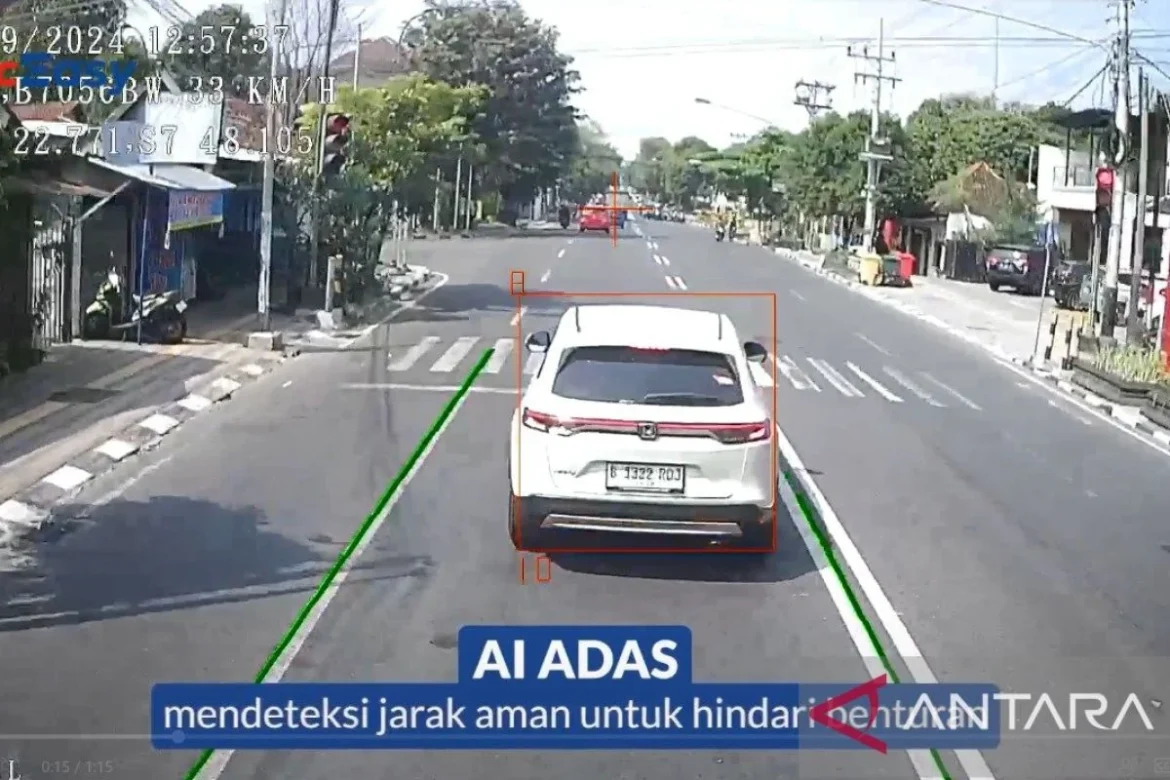
The contemporary automotive landscape has transcended the traditional metrics of vehicle desirability, shifting focus away from mere horsepower, fuel efficiency, or expansive infotainment displays. Today, the defining benchmark of a modern passenger vehicle lies in its active safety architecture, most notably encapsulated by Advanced Driver Assistance Systems (ADAS). Once relegated to the exclusive domain of luxury flagships, technologies such as autonomous emergency braking, lane-keep assist, adaptive cruise control, and blind-spot monitoring have rapidly democratized, finding their way into mass-market segments globally.
This technological pivot is not merely a marketing strategy for automakers; it is a fundamental redesign of vehicular safety catalyzed by shifting regulatory frameworks and increasingly stringent international crash-testing protocols. As the industry navigates through 2026, the integration of ADAS has become the epicenter of a fierce global manufacturing race, redefining how vehicles protect occupants and prevent collisions before they occur.
The Changing Regulatory Paradigm and the 2026 Euro NCAP Protocol
To understand the meteoric rise of ADAS, one must examine the evolving standards set by independent vehicle safety authorities. For decades, safety ratings—such as those administered by the European New Car Assessment Programme (Euro NCAP)—focused heavily on "passive safety": how well a vehicle’s crumple zones, airbags, and structural integrity could mitigate injury after a collision had already been initiated.
However, the launch of Euro NCAP’s updated 2026 testing protocols marked a profound philosophical shift toward "active safety prevention." Under the revised guidelines, evaluation metrics heavily penalize vehicles that lack advanced accident-avoidance capabilities. The new testing matrix subjects systems like Autonomous Emergency Braking (AEB) and Lane Support to far more complex real-world scenarios. Vehicles are now rigorously tested on their ability to interact safely with vulnerable road users, including pedestrians and cyclists, across diverse lighting, weather, and traffic conditions.
This regulatory pressure has fundamentally altered product development cycles. Automakers no longer view active safety as an optional add-on, but as a critical compliance requirement to secure top-tier safety ratings. This was highlighted in September 2026, when Euro NCAP released test results for four new vehicles evaluated under the rigorous 2026 protocols. Notably, three Chinese-manufactured models—the AION UT, the Geely E2, and the Leapmotor B05—secured coveted five-star safety ratings, illustrating that advanced driver assistance technology has become an industry-standard baseline rather than a luxury niche.
Decoding ADAS: How the Technology Works
At its technical core, Advanced Driver Assistance Systems refer to an intricate network of electronic technologies designed to augment, monitor, and assist human driving operations. Unlike older cruise control systems or basic anti-lock brakes, modern ADAS relies on a sophisticated fusion of hardware and software.
Vehicles are now routinely equipped with a multi-layered sensor suite comprising high-definition optical cameras, long- and short-range radar units, ultrasonic sensors, and, in increasingly advanced architectures, LiDAR (Light Detection and Ranging). These components continuously scan the vehicle’s 360-degree environment, gathering millions of data points per second. An onboard electronic control unit (ECU) processes this sensory influx in real time, determining whether the vehicle is maintaining a safe trajectory, identifying speed limits via traffic sign recognition, or calculating the closing speed of an obstacle ahead.
When the system detects a potential hazard, it operates in a multi-stage intervention hierarchy:
- Warning Phase: The system issues visual, auditory, or haptic alerts (such as a vibrating steering wheel or seat) to prompt driver awareness.
- Active Intervention: If the driver fails to respond adequately or if a collision is deemed imminent, the system takes direct corrective action, such as applying emergency braking, autonomously steering the vehicle back into its lane, or cutting throttle input.
The Core Pillars Driving ADAS Adoption
Industry analysts point to several compounding factors driving the ubiquitous integration of ADAS in 2026 vehicle lineups.
1. Mitigation of Human Error and Accident Reduction
Human error remains the leading cause of global traffic accidents, frequently attributed to distraction, fatigue, delayed reaction times, or misjudgment of distance. Technologies such as Forward Collision Warning (FCW) and Automatic Emergency Braking (AEB) act as an infallible digital co-pilot. While these systems do not claim to eradicate physics, they serve as a crucial safety net that can significantly shorten stopping distances or lessen the severity of impact when a human driver’s reflexes are compromised.
2. Combating Driver Fatigue on Long Journeys
Long-distance driving places a heavy cognitive and physical load on motorists, often leading to highway hypnosis and diminished concentration. Features like Adaptive Cruise Control (ACC) and Lane Centering Assistance alleviate this fatigue by automatically managing acceleration, braking, and steering inputs to maintain a safe distance from surrounding traffic. This reduces the micro-stressors of modern commuting and long-haul travel, helping drivers remain alert over extended periods.
3. Overcoming Human Blind Spots
Urban congestion and dense multi-lane traffic present persistent visibility challenges. Blind Spot Monitoring (BSW) and Blind Spot Intervention (BSI) systems scan the peripheral zones that traditional side mirrors fail to capture. By warning drivers of approaching vehicles or actively preventing unsafe lane changes, these systems drastically lower sideswipe collision rates on crowded urban thoroughfares and high-speed motorways alike.
4. The Sensor Technology Revolution
The rapid advancement and decreasing cost of sensor hardware have made comprehensive safety suites commercially viable for entry-level and mid-tier vehicles. Improved camera resolution and advanced AI-driven image processing allow vehicles to differentiate between static roadside objects, erratic pedestrians, and fast-moving motorcycles. The integration of artificial intelligence into safety algorithms has enhanced the predictive accuracy of these systems, ensuring fewer false positives and more reliable intervention timing.
5. Heightened Market Competition and Consumer Awareness
Today’s consumers are increasingly tech-literate and safety-conscious. Dealership floor inquiries increasingly focus on active safety features alongside traditional metrics like fuel economy and interior comfort. To remain competitive, legacy automakers and emerging EV brands alike are racing to out-equip one another, transforming safety features into a primary battleground for market share.
Regulatory Realities: The Limits of Assistance
Despite the marvels of modern engineering, regulatory bodies such as the U.S. National Highway Traffic Safety Administration (NHTSA) emphasize a vital distinction: ADAS does not mean "autonomous driving."
According to standard industry classifications defined by SAE International and referenced by safety authorities, the vast majority of consumer vehicles operate at SAE Level 1 or Level 2 automation. At Level 1, the vehicle may independently control either steering or acceleration/braking, but not both simultaneously. At Level 2, the vehicle can execute both longitudinal and lateral control concurrently, but the human driver remains legally and operationally responsible for monitoring the driving environment at all times.
Industry safety advocates continuously warn against the perils of automation complacency—a phenomenon where drivers place excessive trust in assistive systems, leading to disengagement, distraction, and delayed manual takeovers when the technology encounters edge-case scenarios. Environmental variables such as severe weather, heavy downpours, obscured road markings, faded lane lines, or sudden construction zones can still degrade sensor performance.
Consequently, transportation ministries and road safety agencies worldwide, including transport departments in Southeast Asia and global bodies cooperating during events like the UN Road Safety Week, continue to emphasize driver education. Regulatory campaigns stress that ADAS must be viewed strictly as a supportive safety net rather than a substitute for human attentiveness.
Broader Implications for the Automotive Industry
The widespread adoption of Advanced Driver Assistance Systems represents a permanent transformation in vehicle manufacturing. As automotive software architecture grows more complex, automakers are evolving into software-defined mobility providers, relying on over-the-air (OTA) updates to continuously refine safety algorithms, patch vulnerabilities, and even deploy enhanced safety features long after a vehicle has left the showroom floor.
Ultimately, the 2026 automotive market reflects a maturing industry where performance and luxury are inextricably linked to proactive preservation of human life. By marrying advanced sensors with stringent international testing standards, modern vehicles are forging a safer paradigm for drivers, pedestrians, and cyclists alike—proving that the future of mobility is defined not just by how fast a car can travel, but by how effectively it can protect everyone on the road.
