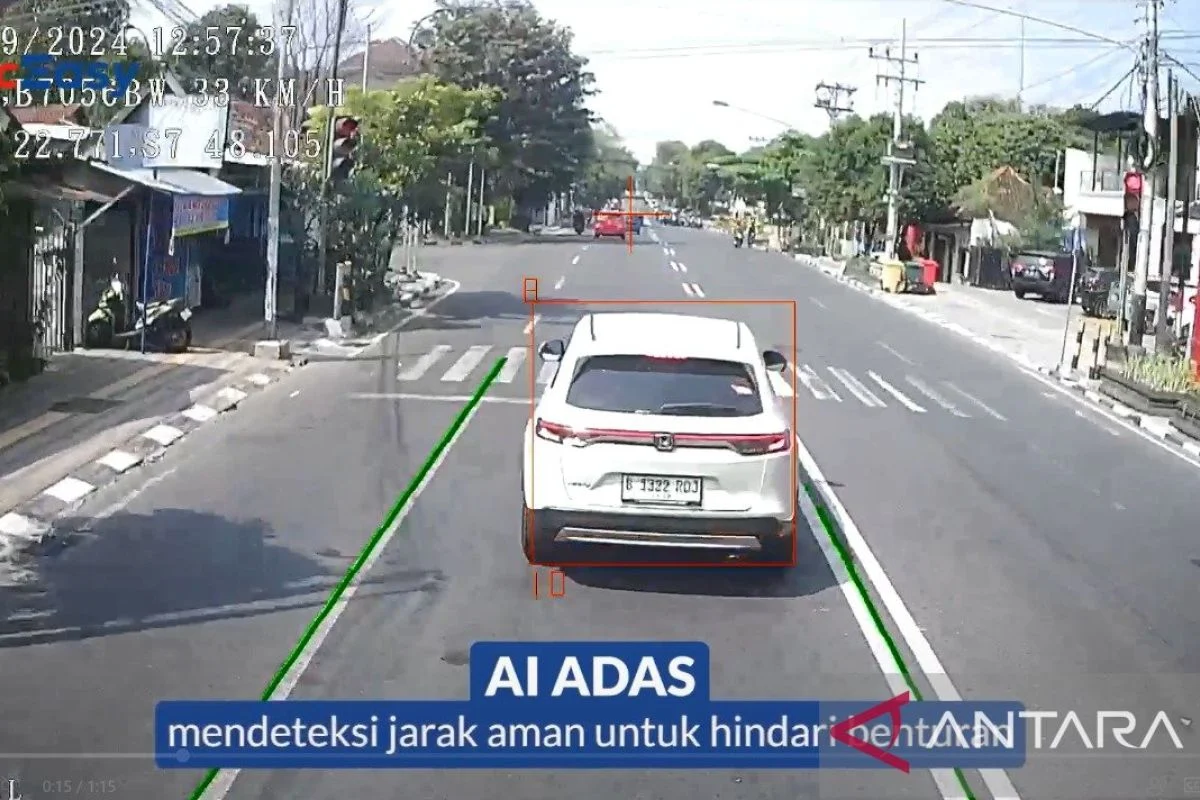
Modern automotive engineering has long transcended the era when a vehicle’s value was judged solely by engine displacement, fuel efficiency, cabin spaciousness, or the diagonal measurement of its infotainment screens. Today, the modern automotive landscape is defined by an invisible yet indispensable co-pilot: Advanced Driver Assistance Systems (ADAS). Once relegated to the exclusive, high-end luxury segments of the market, these sophisticated electronic safety nets have rapidly democratized, finding their way into mainstream vehicles and fundamentally transforming how drivers interact with the road.
From automatic emergency braking systems that react faster than human reflexes to adaptive cruise control units capable of modulating speed in dense highway traffic, ADAS has evolved from a novel technological perk into an absolute industry standard. This technological shift is not occurring in a vacuum; it is being aggressively propelled by tightening global safety regulations, rapid advancements in sensor hardware, artificial intelligence, and fierce competition among global automakers striving to capture safety-conscious consumers.
The Changing Regulatory Landscape and the 2026 Euro NCAP Shift
To understand the meteoric rise of ADAS, one must examine the regulatory frameworks dictating vehicle safety compliance worldwide. For decades, vehicle safety protocols—most notably those established by the European New Car Assessment Programme (Euro NCAP)—focused heavily on passive safety measures. Passive safety evaluated how well a vehicle could protect its occupants after an impact occurred, utilizing crumple zones, advanced airbag deployment matrices, and high-strength steel cabin cages.
However, the paradigm shifted drastically as intelligent safety features matured. In 2026, Euro NCAP implemented a landmark overhaul of its testing protocols, shifting its primary focus toward active safety and accident prevention capabilities. Under the updated 2026 guidelines, vehicle safety ratings are heavily contingent upon how effectively a car’s onboard technology can prevent a collision from happening in the first place.
The testing scenarios have become exponentially more complex, rigorously evaluating autonomous emergency braking and lane support systems against real-world hazards, including complex interactions with vulnerable road users such as pedestrians, cyclists, and motorcyclists. Furthermore, the 2026 testing mandates the integration of advanced sensor arrays—incorporating cameras, radar, and LiDAR—to evaluate real-world speed assistance systems. This regulatory evolution has created a powerful market incentive: automakers must innovate and integrate cutting-edge ADAS technology to secure the coveted five-star safety ratings that heavily influence consumer purchasing decisions.
Decoding ADAS: Core Technologies and Mechanical Principles
At its technical core, Advanced Driver Assistance Systems refer to a comprehensive suite of electronic technologies engineered to assist human drivers throughout the driving lifecycle. By utilizing a sophisticated network of environmental perception tools—including ultrasonic sensors, short- and long-range radar, optical cameras, and increasingly, LiDAR—ADAS continuously monitors the vehicle’s 360-degree surroundings.
The collected raw data is processed in real-time by powerful onboard electronic control units (ECUs), which then execute auditory or visual warnings, or directly intervene in vehicle operations when a hazardous situation is identified. Several core features have become ubiquitous across modern vehicle lineups:
- Forward Collision Warning (FCW) and Automatic Emergency Braking (AEB): FCW detects objects or vehicles ahead that pose a potential collision risk, alerting the driver. If the driver fails to respond adequately or promptly, AEB engages the braking system autonomously to mitigate or completely avoid an impact.
- Adaptive Cruise Control (ACC): Moving beyond traditional cruise control, ACC maintains a pre-set vehicle speed while automatically modulating acceleration and deceleration to maintain a safe, driver-selected following distance from the vehicle ahead.
- Lane Keeping Assist (LKA) and Lane Centering Assistance (LCA): Optical cameras monitor painted lane markings. If the vehicle begins to drift unintentionally without an active turn signal, LKA provides gentle steering corrections or braking inputs to guide the car back into its lane.
- Blind Spot Monitoring (BSW) and Blind Spot Intervention (BSI): Utilizing radar sensors mounted in the rear bumpers, BSW warns drivers of vehicles lingering in their blind spots. Advanced iterations (BSI) can actively apply corrective steering or differential braking to prevent dangerous lane changes.
The Multifaceted Motivations Behind the ADAS Expansion
The widespread adoption of ADAS across global automotive markets is driven by several converging factors that address human limitations, regulatory pressures, and market demands.
1. Mitigating Human Error and Enhancing Accident Prevention
Statistical data consistently demonstrates that the vast majority of traffic accidents are attributable to human error, including distracted driving, fatigue, delayed reaction times, and poor judgment. ADAS serves as an infallible, tireless guardian layer. Features like Automatic Emergency Braking do not get distracted by smartphones or fatigued by long hours on the road; they act as a vital safety buffer when human biological response times fall short.
2. Alleviating Driver Fatigue on Long-Haul Journeys
Long-distance driving places a heavy cognitive and physical toll on motorists, often leading to diminished concentration levels over time. Technologies such as Adaptive Cruise Control and Lane Centering Assistance significantly reduce the mechanical workload of driving—managing the tedious repetition of throttle and brake modulation in heavy stop-and-go traffic or long highway stretches. This reduction in physical fatigue helps maintain a baseline level of driver alertness.
3. Eradicating Blind Spots in Dense Urban Environments
Modern vehicle designs, characterized by thicker roof pillars (A, B, and C pillars) prioritized for rollover protection, often create severe optical blind spots for drivers. Navigating congested metropolitan areas where motorcycles, bicycles, and pedestrians weave through traffic requires constant vigilance. Blind Spot Warning and Intervention systems bridge this visibility gap, providing critical awareness during complex lane-changing maneuvers in heavy traffic.
4. The Race for Global Competitiveness and Market Validation
Safety has firmly transitioned into a primary marketing asset. Automakers can no longer rely solely on aesthetic design and raw engine horsepower to capture market share. This competitive dynamic was vividly illustrated when Euro NCAP released its stringent late-2026 safety evaluations for newly launched vehicles. Notably, several emerging global manufacturers—including Chinese automakers such as AION, Geely, and Leapmotor—secured top-tier five-star ratings under the aggressive new testing protocols. This achievement underscored a broader industry trend: advanced active safety technology is no longer restricted to ultra-luxury vehicle segments, but is rapidly becoming a baseline expectation for global consumers.
The Critical Distinction: Assistance vs. Autonomous Driving
Despite the high level of sophistication embedded within modern ADAS suites, industry watchdogs and regulatory bodies emphasize a crucial distinction: ADAS does not equal autonomous driving.
Regulatory organizations, including the National Highway Traffic Safety Administration (NHTSA), explicitly classify these systems as driver-support technologies rather than self-driving solutions. According to standardized automation taxonomies (such as SAE levels), Level 1 and Level 2 systems—which encompass the vast majority of consumer-grade ADAS on the market today—require the human driver to remain fully engaged, hands on the wheel (or actively supervising), and mentally prepared to take complete control of the vehicle at a moment’s notice.
Marketing terminology such as "semi-autonomous" or loosely phrased descriptions can often lead to consumer complacency or over-reliance on technology. Industry safety experts warn that ADAS is not infallible. Environmental variables—such as torrential rainfall obscuring camera lenses, unpainted or faded road lane markings, blinding glare from low-sun conditions, or sudden, erratic movements by unmapped road obstacles—can temporarily degrade or incapacitate sensor functionality.
Furthermore, global research studies continue to analyze the psychological phenomenon of behavioral adaptation, where drivers relying on safety systems may inadvertently increase risky driving behaviors, assuming the technology will always bail them out of trouble.
Future Outlook and Industry Implications
As the automotive sector marches further into the digital age, the integration of Artificial Intelligence and advanced machine learning models is accelerating the capabilities of vehicle safety suites. AI algorithms are now being utilized to process massive influxes of sensor data in milliseconds, allowing vehicles to better predict the unpredictable trajectories of pedestrians and erratic drivers.
Governments and transportation ministries worldwide are increasingly viewing these technologies not as luxury add-ons, but as essential public health tools designed to lower national traffic fatality statistics. Campaigns led by bodies like the Indonesian Ministry of Transportation, alongside global initiatives highlighted during events such as the United Nations Road Safety Week, continually emphasize that smart vehicle technology plays a fundamental role in achieving sustainable, injury-free transportation networks.
Ultimately, Advanced Driver Assistance Systems represent a profound evolutionary leap in automotive safety philosophy. By shifting the focus from surviving crashes to preventing them entirely, ADAS acts as an indispensable digital co-pilot. However, as automakers continue to push the boundaries of sensor precision and active safety interventions, the fundamental responsibility of safe navigation remains anchored firmly in the hands of the human operator. ADAS is designed to assist, augment, and protect—never to replace human accountability behind the wheel.