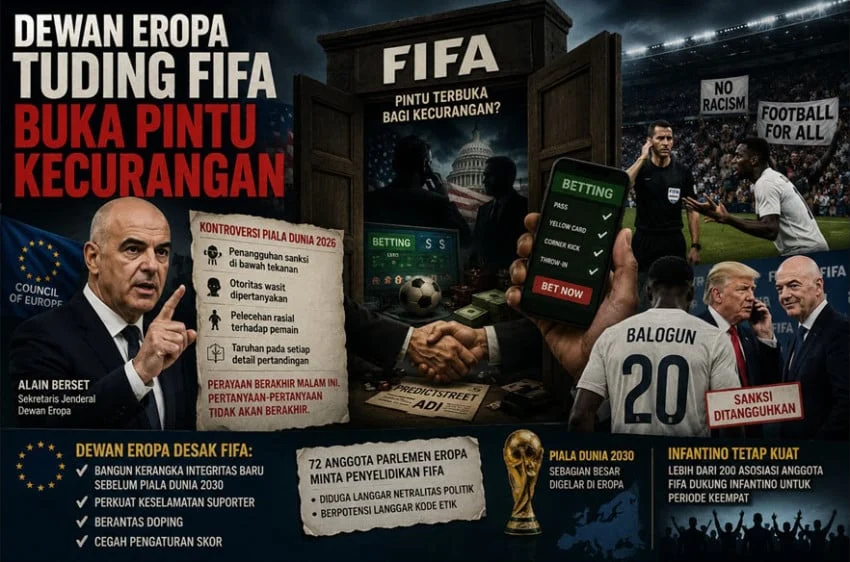
As the final whistle of the 2026 FIFA World Cup echoes, the world’s football governing body, FIFA, finds itself under intense scrutiny from the European Council. Alain Berset, the Secretary General of the European Council, has levied serious accusations against FIFA, alleging that the organization has "opened the door to cheating" within the burgeoning sports betting industry and has permitted political interference to undermine the integrity of the tournament. These criticisms come at a critical juncture, with Berset urging FIFA to establish a new integrity framework before the 2030 World Cup, a significant portion of which is slated to be hosted in Europe. The numerous controversies that have plagued the 2026 World Cup, Berset argues, have created a profound crisis of confidence in the governance of global football.
A Troubled Tournament Raises Red Flags
In a strongly worded open letter released on the eve of the tournament’s final match, Berset articulated his deep concerns, stating, "The FIFA World Cup 2026 has raised question after question." His assessment highlights a series of issues that, in his view, have tarnished the prestige and fairness of the event. These concerns range from the controversial suspension of sanctions, which Berset suggests may have been enacted under duress, to persistent questions surrounding refereeing authority. The report of racist abuse directed at players and the alarming proliferation of betting practices, which have expanded beyond match outcomes to encompass minute details within games, are also cited as significant affronts to the sport’s integrity. "The celebrations will end tonight. The questions will not," Berset declared, underscoring the lingering doubts and the urgent need for accountability.
Chronology of Concerns: A Pattern of Controversy
The FIFA World Cup, a quadrennial spectacle that captivates billions, has historically been a platform for athletic excellence and national pride. However, the 2026 edition, hosted across North America with matches in the United States, Canada, and Mexico, has been marred by a series of incidents that have drawn significant criticism. While the initial excitement surrounding the expanded tournament format, featuring 48 teams for the first time, was palpable, the latter stages have been overshadowed by governance issues.
The timeline of controversies, as outlined by Berset and reported by various media outlets, paints a concerning picture:
- Early Stages: Whispers of unusual betting patterns emerged, with oddsmakers reporting an unprecedented volume of wagers on specific in-game events, such as the number of corners or yellow cards in seemingly inconsequential matches. This raised early alarms about the potential for match-fixing or insider information influencing betting markets.
- Mid-Tournament: A significant controversy erupted concerning the handling of a potential sanction against a participating nation. Reports suggested that pressure from political entities or commercial sponsors played a role in the decision to suspend or mitigate sanctions, sparking debate about FIFA’s independence.
- Late Stages: As the tournament progressed, questions about the consistency and accuracy of refereeing decisions became more pronounced. Several high-profile matches saw contentious calls that significantly impacted results, leading to widespread fan and media dissatisfaction.
- Player Welfare and Conduct: The tournament was further overshadowed by allegations of racist abuse directed at players, highlighting ongoing challenges in combating discrimination within football. The effectiveness of current protocols for addressing such incidents came under scrutiny.
- Betting Expansion: The most alarming trend, as highlighted by Berset, has been the exponential growth of sports betting. This has moved beyond traditional outcomes to an intricate web of prop bets, creating a fertile ground for manipulation and increasing the risk of integrity breaches.
Supporting Data: The Growing Shadow of Sports Betting
The concerns raised by Berset regarding sports betting are not without empirical backing. The global sports betting market is a multi-billion dollar industry, and its growth has been inextricably linked to the popularity of major sporting events like the FIFA World Cup.
- Market Size: Industry analysts project the global sports betting market to reach over $150 billion by 2027, with football being the dominant sport. The FIFA World Cup, as the pinnacle of international football, represents a significant portion of this revenue.
- Technological Advancements: The proliferation of online betting platforms and mobile technology has made betting more accessible than ever before. This ease of access, while beneficial for revenue generation, also presents greater challenges for regulatory bodies to monitor and control.
- Types of Bets: The expansion of betting markets beyond simple win/loss/draw outcomes to include micro-betting on individual plays, passes, or fouls creates more opportunities for illicit influence. For instance, a bet on the exact minute a player receives a yellow card could be influenced by factors unrelated to the sport itself.
- Integrity Units: While organizations like FIFA and national football associations have integrity units, their capacity to monitor and investigate the vast and complex network of global betting activities is often stretched thin. The sheer volume of transactions and the anonymity offered by some platforms make tracing suspicious activity a formidable task.
Political Interference and the Erosion of Trust
The accusation of political interference is particularly sensitive, as it strikes at the heart of FIFA’s autonomy. Historically, FIFA has strived to maintain a degree of separation from national governments to ensure the smooth running of international competitions. However, Berset’s statement suggests that this separation may have been compromised.
- Historical Precedents: FIFA has faced accusations of political interference in the past, often related to bidding processes for World Cups or the imposition of sanctions on member associations. These instances have often led to investigations and reforms.
- Commercial Pressures: The immense commercial value of the World Cup means that national governments, particularly host nations, have a vested interest in the tournament’s success. This can create a delicate balancing act, where economic and political considerations might inadvertently influence decisions that should be purely sporting.
- Sovereign Influence: Governments can exert influence through various channels, including visa regulations, security arrangements, and even direct lobbying of FIFA officials. The perception, or reality, of such influence can erode trust in the fairness of the competition.
FIFA’s Response and the Path Forward
As of the publication of this article, FIFA has not issued a comprehensive official statement directly addressing Alain Berset’s specific accusations in detail. However, in response to broader criticisms regarding tournament integrity and governance, FIFA has consistently maintained its commitment to upholding the highest standards.
- Existing Integrity Measures: FIFA has stated that it has robust integrity programs in place, including the FIFA Integrity Department, which works with law enforcement agencies and betting monitoring companies to detect and prevent match manipulation. They often highlight their zero-tolerance policy towards match-fixing and corruption.
- Commitment to Fair Play: In public statements and press conferences, FIFA officials typically reiterate their dedication to fair play, the spirit of the game, and the protection of athletes from discrimination and abuse.
- Future Frameworks: While Berset’s letter calls for a "new integrity framework," FIFA has also indicated its ongoing efforts to review and enhance its governance structures and integrity protocols. This often involves consultations with stakeholders and independent experts.
Broader Impact and Implications: The Future of Football’s Integrity
Alain Berset’s strong condemnation of FIFA’s handling of the 2026 World Cup carries significant implications for the future of global football. The criticisms are not merely directed at a single tournament but at systemic issues that could jeopardize the sport’s credibility on a global scale.
- Erosion of Fan Trust: If fans perceive that the integrity of matches is compromised by corruption, cheating, or undue influence, their passion and engagement with the sport could wane. This would have a detrimental impact on viewership, attendance, and sponsorship revenue.
- Regulatory Scrutiny: The serious nature of Berset’s accusations is likely to attract increased attention from regulatory bodies and governments worldwide. This could lead to demands for greater transparency and accountability from FIFA, potentially resulting in stricter oversight or even legislative interventions.
- Impact on Youth Development: For aspiring young footballers, a tarnished sport sends a discouraging message. The dream of playing at the highest level can be undermined if the pathways to success are perceived as being rigged or unfair.
- The 2030 World Cup: With the 2030 World Cup partially hosted in Europe, Berset’s call for a new integrity framework becomes particularly urgent. European football federations and governments will likely be closely monitoring FIFA’s response and demanding concrete actions to address the concerns raised. Failure to do so could lead to significant diplomatic and sporting friction.
The coming months will be crucial for FIFA as it navigates these serious allegations. The organization faces the challenge of not only addressing the specific issues raised by the European Council but also demonstrating a genuine commitment to rebuilding trust and ensuring that future tournaments are conducted with the highest standards of integrity and fairness. The beautiful game, as it is often called, deserves nothing less.