The integrity of social assistance programs relies heavily on the precision of data, a challenge the Indonesian government is addressing through the Data Tunggal Sosial dan Ekonomi Nasional (DTSEN). As disparities between recorded data and the actual socioeconomic conditions of families can lead to misdirected aid, the Ministry of Social Affairs (Kemensos) has launched a proactive initiative, empowering the public to verify their status and submit corrections if their assigned "desil"—the classification of socioeconomic well-being—does not accurately reflect their reality. This move marks a significant shift toward community-driven data validation, aiming to minimize inclusion and exclusion errors that have historically plagued welfare distribution.
Understanding the Desil Framework
At the heart of the government’s welfare strategy is the desil system, a statistical classification that categorizes households into ten distinct tiers based on socioeconomic variables. These variables are comprehensive, encompassing individual demographics such as employment status and educational attainment, as well as household-specific markers, including building materials, floor type, electricity capacity, and asset ownership.
In this structure, Desil 1 represents the poorest 10 percent of the population, while Desil 10 denotes the wealthiest 10 percent. The utility of this system lies in its dynamic nature; it is not a static label but a fluid ranking that recalibrates as families experience life events such as births, deaths, changes in income, or shifts in employment. Because the data is subject to change, the government emphasizes that the desil is a living record that requires consistent updates to remain relevant for effective policy implementation.
The Importance of Data Accuracy and Social Justice
The primary objective of the DTSEN framework is to ensure that limited fiscal resources reach those who need them most. Inaccurate data creates two distinct problems: inclusion errors, where those who are economically stable receive assistance, and exclusion errors, where vulnerable families are left without the support they qualify for.
For instance, current guidelines suggest that households in Desil 1 through 4 are prioritized for the Family Hope Program (PKH) and staple food assistance (Bantuan Sembako). Meanwhile, households in Desil 5 may be considered for the Contribution Assistance Recipient (PBI-JK) program, which provides access to subsidized healthcare. By allowing citizens to challenge their desil status, the government is essentially crowdsourcing verification, which is crucial given the geographical vastness of Indonesia and the logistical difficulties of conducting physical door-to-door surveys for millions of households simultaneously.
How Citizens Can Exercise Their Right to Correction
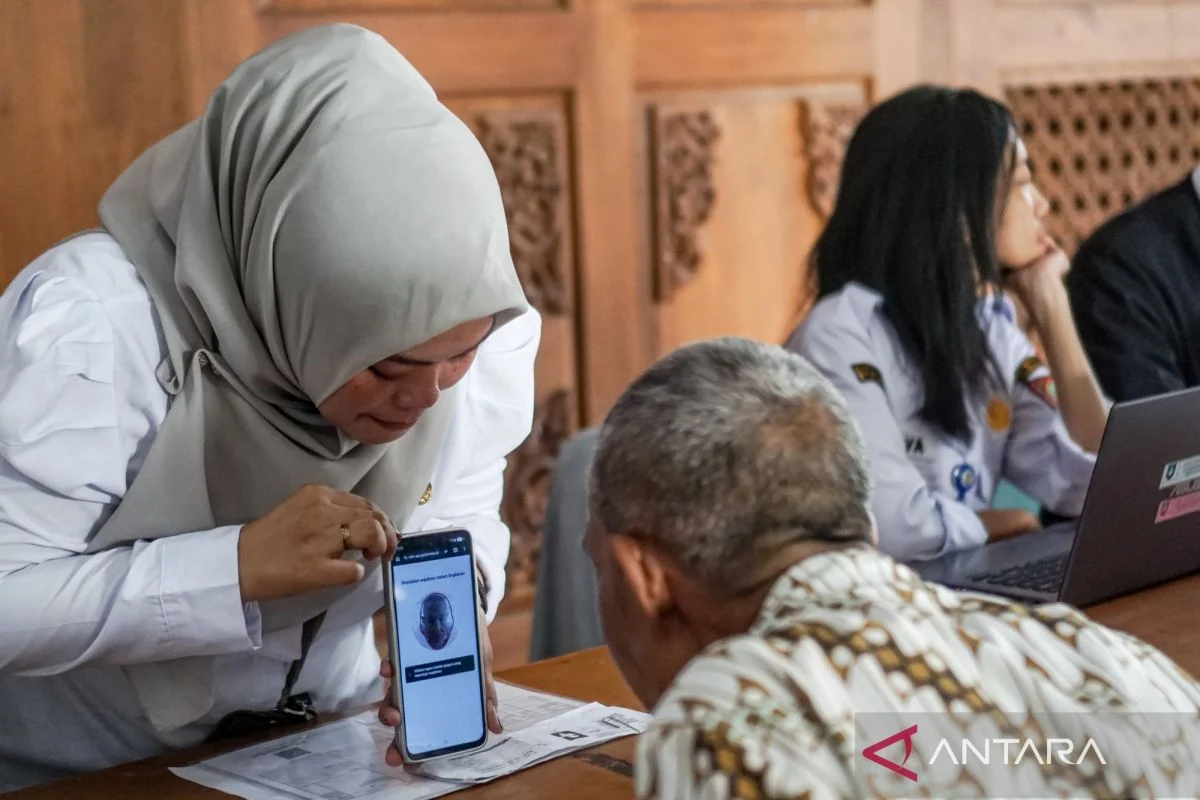
The government has streamlined the process for filing a "sanggah" (objection or correction) through both digital and traditional channels. The primary digital gateway is the Cek Bansos mobile application. Through this platform, users can enter their 16-digit National Identity Number (NIK) to view their current desil ranking. If the data is inconsistent with their actual living conditions—such as a household being categorized in a higher desil despite a significant loss of income—they may submit a formal request for review directly through the app.
However, the Ministry recognizes that not all citizens have reliable internet access or digital literacy. Therefore, the "Lapor Kemensos" WhatsApp service (0887-7171-171) and the dedicated Call Center (021-171) serve as vital alternative lifelines. These channels are monitored by administrative staff who catalog complaints and cross-reference them with the SIKS-NG (Next Generation Social Welfare Information System).
For those in rural or remote areas, the village or sub-district office remains the most accessible point of contact. Village officials, equipped with access to the SIKS-NG system, can assist residents in updating their data. This localized approach is particularly effective because village leaders often possess the "ground truth" regarding the daily struggles of their constituents, allowing for a more accurate verification process.
The Verification and Validation Cycle
It is critical to understand that filing a request for a change in desil does not yield an immediate shift in status. Once an objection is submitted, it enters a rigorous verification and validation cycle. This process involves cross-referencing the information with municipal records and, in many cases, conducting a field verification to confirm the household’s actual economic standing.
Minister of Social Affairs Saifullah Yusuf has repeatedly emphasized that a change in desil does not automatically result in the immediate cessation of aid. The government maintains a buffer period to ensure that families are not suddenly cut off from assistance before the verification is finalized. The update process follows a set schedule, with data for PKH and staple food assistance being refreshed on a quarterly basis. This cadence ensures that while the system remains responsive to real-time changes, it also maintains the stability necessary for households to plan their finances.
The Role of Public Participation and Transparency
The current initiative is part of a broader government effort to increase transparency in social assistance. By allowing citizens to report on their neighbors—either to flag those who are receiving aid unfairly or to bring attention to those in dire need who have been missed—the government is fostering a culture of accountability.
This mechanism is particularly important in light of recent findings where, due to data synchronization issues between the National Population and Family Planning Board (BKKBN) and the Central Statistics Agency (BPS), some individuals were inaccurately ranked. In one widely publicized case, even individuals with relatively high socioeconomic standing, such as legislators, were found to have been misclassified in lower desils. While these individuals did not receive aid, the incident highlighted the necessity of a public-facing correction mechanism to maintain trust in the system.
Fact-Based Analysis: The Broader Implications
The shift toward a more participatory data system has profound implications for the future of social welfare in Indonesia. Firstly, it reduces the administrative burden on the central government by leveraging local intelligence. Secondly, it empowers marginalized communities to advocate for their rights, turning them from passive recipients into active participants in the policy cycle.
However, the reliance on self-reporting and community reports also introduces risks. There is the potential for bias or local political influence to affect the reporting process. To mitigate this, the Ministry of Social Affairs must ensure that the verification of these "sanggah" requests is handled by impartial, data-driven systems that are protected from local favoritism.
Furthermore, the integration of data across multiple agencies—BPS, BKKBN, and Kemensos—is a complex technical undertaking. The synchronization of these datasets is intended to provide a "Single Identity" for social welfare, but it remains a work in progress. As the government continues to refine the DTSEN, the success of these welfare programs will increasingly depend on the quality of the raw data and the speed at which it can be validated.
Conclusion: A Collective Responsibility
The effort to refine the desil system is a testament to the government’s commitment to precision-based welfare. While technology provides the platform, the human element—the willingness of citizens to report their conditions honestly and the diligence of local officials to verify those claims—is what will ultimately determine the success of these programs.
Citizens are encouraged to perform regular checks of their status via the official channels. By doing so, they not only protect their own right to potential support but also contribute to a national database that is more reflective of the true economic tapestry of Indonesia. As the nation moves forward, the collaboration between the state and the public will be the cornerstone of a more equitable and efficient social safety net, ensuring that when the government extends a hand, it reaches the people who need it most.