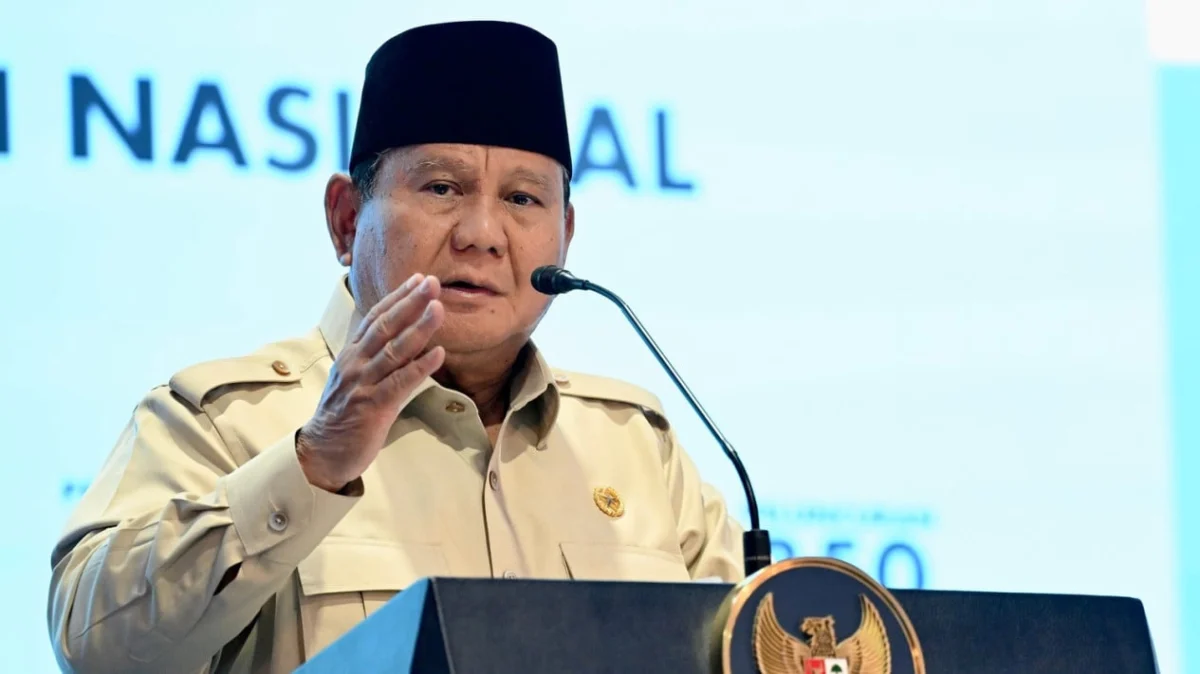
Jakarta, VIVA – In a pivotal address at a Cabinet Plenary Session held at Istana Merdeka on Monday, July 20, 2026, President Prabowo Subianto issued a resolute directive to the ministers of his "Red and White Cabinet," urging them to undertake a comprehensive study of global best practices in eliminating hunger. The President emphasized that no citizen in Indonesia should endure hunger, advocating for an open-minded approach to learning from other nations’ successes. This pronouncement underscored a core commitment of his administration to ensuring national food security and combating malnutrition.
The President’s mandate was unambiguous: "There must be no one in Indonesia who goes hungry. I ask that we learn from other countries. Do not be ashamed to learn." This statement set the tone for a broader discussion on national development priorities, with food security and human capital development at its forefront. He specifically instructed his ministers to dispatch expert teams to countries like Brazil, India, China, and Vietnam, nations recognized for their significant strides in lifting their populations out of food insecurity. "Send teams to India, send teams to Brazil, send teams to China, send teams to Vietnam. Learn how they eliminated hunger. Indonesia, a member of the G20, cannot have citizens who are hungry," Prabowo asserted, highlighting the nation’s international standing and its inherent responsibility to its populace.
Global Benchmarking for Food Security: Lessons from Developing Giants
The President’s call to emulate the successes of Brazil, India, China, and Vietnam is rooted in these nations’ diverse yet effective approaches to food security. Brazil, for instance, famously implemented the "Fome Zero" (Zero Hunger) program in the early 2000s, a multi-faceted initiative that combined direct cash transfers, food distribution, and support for family farming, significantly reducing extreme poverty and hunger. Its success demonstrated the potential of integrated social policies. India, despite its vast population and persistent challenges, has a robust Public Distribution System (PDS) providing subsidized food grains to millions, alongside various nutritional programs and agricultural reforms aimed at boosting domestic production and ensuring food accessibility.
China’s transformation in food security is perhaps the most dramatic, having lifted hundreds of millions out of poverty and food insecurity over the past few decades through comprehensive agricultural reforms, massive investments in infrastructure, and targeted poverty alleviation programs. Its success in achieving near-universal food sufficiency for its immense population offers invaluable insights into large-scale strategic planning and implementation. Vietnam, similarly, has transitioned from a food-deficit country to a major rice exporter, largely due to market-oriented agricultural reforms, land redistribution, and investments in rural development. These examples collectively offer a rich tapestry of policy frameworks, technological applications, and social safety nets that Indonesia could adapt and integrate into its own national strategy.
Indonesia, despite being an agricultural nation, has historically grappled with issues of food distribution, price volatility, and access, particularly in remote areas. While significant progress has been made in recent decades, pockets of food insecurity and malnutrition persist. According to recent data from the Global Food Security Index (GFSI), Indonesia has shown improvements in food availability and access, yet challenges remain in terms of quality and safety, as well as resilience to climate change and economic shocks. The President’s initiative signals a renewed, aggressive push to tackle these lingering issues by leveraging proven international models rather than reinventing the wheel. This strategic pivot towards comparative learning could accelerate Indonesia’s progress towards achieving Sustainable Development Goal (SDG) 2: Zero Hunger.
The "Free Nutritious Meal" Program: A Cornerstone Policy and Its Defense
A significant portion of President Prabowo’s address was dedicated to a fervent defense of his administration’s flagship "Makan Bergizi Gratis" (MBG) or Free Nutritious Meal program. This program, designed to provide daily nutritious meals to children, pregnant women, and the elderly, has been a central tenet of his campaign and early presidential agenda. The President expressed bewilderment and frustration at the criticisms labeling the MBG program as an "extravagance" or "wasteful spending."

"Providing nutritious food for Indonesian children, for pregnant mothers, for the elderly is considered wasteful," Prabowo remarked, highlighting what he perceived as a stark contradiction in public discourse. The MBG program aims to address critical public health issues, most notably stunting, which affects a significant portion of Indonesian children. Stunting, a chronic form of malnutrition, has long-term detrimental effects on cognitive development, educational attainment, and future economic productivity, trapping individuals and communities in a cycle of poverty. Official data indicates that approximately one-quarter of Indonesian children still suffer from stunting, a figure the government is determined to drastically reduce.
The President argued that the alleged "extravagance" of the MBG program pales in comparison to the "thousands of trillions" of rupiah reportedly lost to budget leakages and corruption over decades, which, he claimed, have gone largely uninvestigated or uncommented upon by critics. "It’s considered wasteful, but thousands of trillions that evaporate, that leave Indonesian soil every year for 34 years, there are no comments, no experts protest, no investigations," he stated emphatically. This strong rebuke implicitly challenged the priorities and perspectives of those who criticize social welfare spending while remaining silent on issues of systemic financial mismanagement or corruption.
Addressing Criticisms: Efficiency vs. Public Welfare
The debate surrounding the MBG program often revolves around its massive budget implications, its logistical complexities, and potential for inefficiencies or misuse of funds. Critics, including some economists and political commentators, have raised concerns about the fiscal sustainability of such a large-scale program, particularly in the context of Indonesia’s national budget and competing development priorities. Questions have also been posed regarding the implementation mechanisms, the quality control of the meals, and the potential for market distortions.
However, proponents, including the President, argue that the long-term benefits of eradicating hunger and stunting far outweigh the immediate costs. Investments in early childhood nutrition are widely recognized by public health experts and development economists as one of the most cost-effective interventions for national development. A healthy, well-nourished population is more productive, healthier, and contributes more significantly to economic growth. The World Bank and other international organizations have consistently highlighted the substantial economic returns on investments in nutrition, with studies suggesting that every dollar invested can yield up to $35 in economic benefits.
Prabowo’s defense thus framed the MBG program not as an expenditure but as a crucial investment in human capital and national resilience. He underscored the moral imperative to feed the nation’s vulnerable populations, particularly children who are the future. "We want to feed children who are clearly, at least a quarter of our children, stunting, and we are accused of wastefulness," he reiterated, emphasizing the tangible human cost of inaction.
The Broader Context: Indonesia’s Development Challenges
Indonesia’s journey towards comprehensive development is multifaceted, encompassing rapid economic growth, poverty reduction, and significant improvements in public health. However, persistent challenges like income inequality, regional disparities, and the aforementioned issues of stunting and food insecurity remain. As a G20 member, Indonesia bears the responsibility of addressing these domestic issues while also contributing to global development agendas. The President’s dual emphasis on learning from international peers and staunchly defending a key social program reflects a pragmatic approach to tackling these complex problems.
The "Red and White Cabinet" itself, formed under Prabowo’s leadership, is tasked with implementing a broad reform agenda aimed at accelerating development across various sectors. The focus on food security and nutrition is deeply integrated into this larger vision, recognizing that a healthy, educated populace is the bedrock of sustained economic progress and national strength. This strategic alignment underscores a shift towards more direct and impactful social interventions, moving beyond traditional economic indicators to prioritize human well-being.

Economic and Social Implications of Eradicating Hunger
The economic implications of successfully eradicating hunger and significantly reducing stunting are profound. A healthier workforce translates to increased productivity, reduced healthcare costs, and improved educational outcomes. Children who are not stunted perform better in school, are more likely to complete higher education, and are better equipped to enter the skilled labor force. This creates a virtuous cycle of human capital development, poverty reduction, and sustained economic growth. For a nation like Indonesia, with its young demographic dividend, maximizing the potential of its youth is paramount.
Socially, the elimination of hunger fosters greater equity and social cohesion. It reduces the burden on families struggling to provide adequate nutrition, allowing them to invest in other areas like education and housing. It also strengthens community resilience and reduces social unrest that can arise from extreme deprivation. By ensuring that every Indonesian has access to nutritious food, the government aims to create a more inclusive society where opportunities are more evenly distributed.
Looking Ahead: Implementation and Oversight
The President’s directives initiate a significant phase for the "Red and White Cabinet." The process of dispatching expert teams to study international models will require careful planning, clear objectives, and robust reporting mechanisms. The insights gathered from Brazil, India, China, and Vietnam will need to be meticulously analyzed and adapted to Indonesia’s unique socio-economic and geographical context. This is not merely about replication but about intelligent adaptation and innovation.
Simultaneously, the implementation of the Free Nutritious Meal program will require rigorous oversight to ensure transparency, efficiency, and effectiveness. Addressing criticisms about potential wastefulness will necessitate clear accountability frameworks, robust monitoring and evaluation systems, and proactive communication with the public. Demonstrating tangible positive outcomes, such as a measurable reduction in stunting rates and improved health indicators, will be crucial for garnering continued public support and silencing detractors.
The timeline for these initiatives is ambitious. The urgency conveyed by President Prabowo suggests a desire for swift action and demonstrable results within his term. The success of these programs will not only define his administration’s legacy but also significantly shape the future trajectory of Indonesia’s human development and national prosperity. The coming months will be critical in translating these presidential mandates into concrete policies and impactful programs that genuinely address the fundamental challenge of hunger and malnutrition across the archipelago.