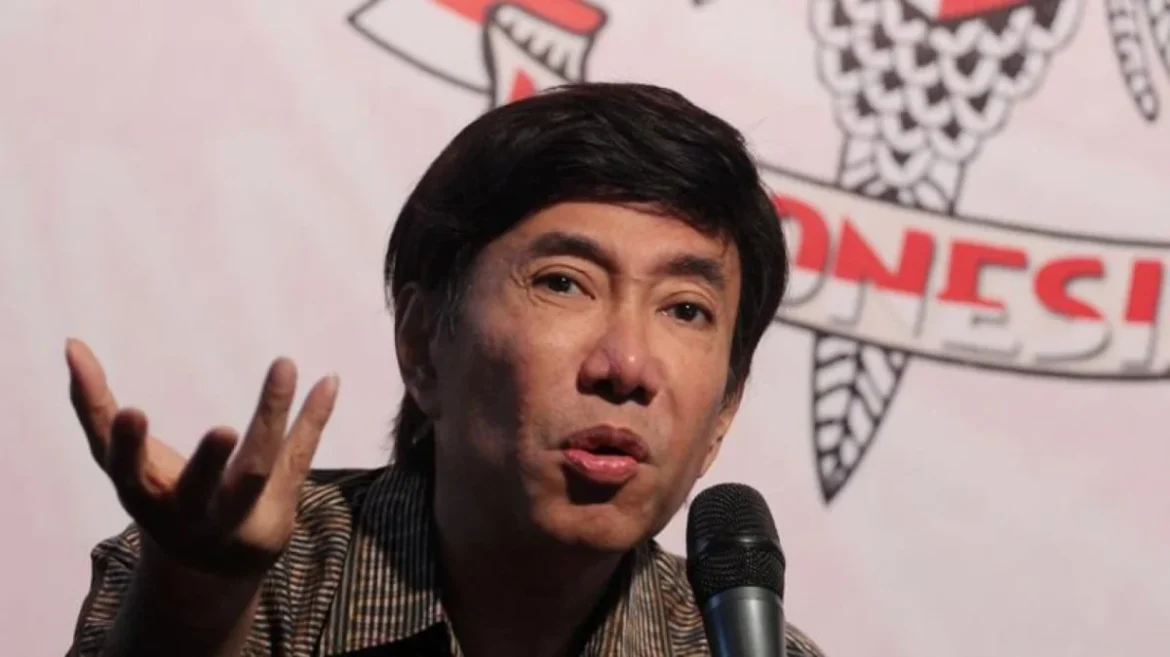
The passing of Guruh Soekarnoputra on Saturday, September 26, 2026, at the age of 73, has left an indelible void in the cultural and political landscape of Indonesia. A multifaceted figure, Guruh was not only known as the youngest son of Indonesia’s founding father, Sukarno, and former First Lady Fatmawati, but also as a visionary artist, choreographer, and a dedicated public servant. He breathed his last at Siloam Semanggi Hospital in Jakarta, following a period of medical treatment. His departure marks the end of an era for the Soekarno family, closing a chapter defined by artistic innovation and a lifelong commitment to national identity.
While the nation mourns the loss of a cultural icon, reflections on his life reveal a complex intellectual journey that extended far beyond the stage and the parliamentary halls. Guruh’s educational path was as diverse as his artistic repertoire, bridging the gap between historical curiosity in Europe and administrative professionalism in his homeland.
Early Life and Formative Years
Born on January 13, 1953, in Jakarta, Mohammad Guruh Irianto Soekarnoputra grew up amidst the profound political changes of the post-revolutionary era. As the younger brother of Megawati Soekarnoputri, the fifth President of the Republic of Indonesia, Guruh was raised in an environment that emphasized both intellectual rigor and the preservation of Indonesian culture. His early academic foundation was established at Perguruan Cikini, an institution known for its focus on character development and nationalist values. Following his primary and secondary schooling, he attended SMA Negeri 25 Jakarta, where he began to nurture the artistic sensibilities that would eventually define his career.
Academic Pursuits in the Netherlands
One of the most intriguing aspects of Guruh’s life was his decision to pursue higher education abroad. In the early 1970s, at a time when Indonesian students rarely ventured to the Netherlands for undergraduate studies due to the complex post-colonial relationship, Guruh enrolled at the University of Amsterdam.
His choice of study—Archaeology—underscored his deep fascination with the past and his desire to understand the roots of civilization. From 1971 to 1974, he immersed himself in the academic rigor of the Dutch university system. This period was significant, as it allowed him to view Indonesia’s rich cultural heritage through a global, analytical lens. Although he did not complete his degree at the University of Amsterdam, the three years spent in the Netherlands proved instrumental in shaping his later work in choreography and music composition. His exposure to European aesthetic theories and historical preservation techniques provided him with a unique framework to modernize traditional Indonesian performances.

A Return to Formal Education in Indonesia
Decades later, during the height of his career as a prominent figure in the Indonesian Democratic Party of Struggle (PDI-P), Guruh returned to the academic sphere. Recognizing the importance of formal credentials in public service, he enrolled at the Sekolah Tinggi Ilmu Administrasi Mandala Indonesia (STIAMI) in 2005.
Between 2005 and 2008, he focused his studies on State Administration, eventually earning his Bachelor’s degree in Public Administration. This academic transition was not merely symbolic; it reflected his desire to reconcile his creative impulses with the structural realities of governance. Following his undergraduate success, he continued his pursuit of higher learning by enrolling in a Master’s program, where he specialized in Human Resource Management in 2010. This specialization provided him with the necessary expertise to navigate the complex administrative requirements of his political career, ensuring that he could contribute effectively to legislative discussions on culture and education.
Chronology of Key Events
- January 13, 1953: Born in Jakarta as the son of Sukarno and Fatmawati.
- 1971–1974: Pursued studies in Archaeology at the University of Amsterdam, Netherlands.
- 1970s–1990s: Established himself as a leading choreographer and musician, known for the "Guruh Gipsy" project and various grand-scale cultural performances.
- 2005: Enrolled at STIAMI to pursue a degree in Public Administration.
- 2008: Awarded a Bachelor’s degree in Public Administration.
- 2010: Completed his Master’s degree in Management, with a focus on Human Resource Management.
- September 26, 2026: Passed away at Siloam Semanggi Hospital, Jakarta, at age 73.
The Intersection of Art and Administration
Guruh Soekarnoputra’s unique ability to blend the analytical nature of public administration with the fluidity of the arts set him apart from his contemporaries. His works were often grand, utilizing hundreds of dancers to convey the grandeur of Indonesian history. Scholars of Indonesian culture often point to his 1970s work as the catalyst for the "New Indonesian Music" movement, which effectively integrated Western progressive rock with traditional gamelan and regional motifs.
By obtaining a degree in Public Administration later in life, Guruh demonstrated a pragmatic approach to his political responsibilities. He argued that cultural policy should be treated with the same level of scientific rigor as economic or defense policy. His legislative work was frequently focused on the protection of intellectual property rights for artists and the preservation of Indonesia’s diverse cultural artifacts—a clear influence of his early interest in archaeology.
Funeral and Final Tributes
The final rites for Guruh Soekarnoputra were marked by deep symbolic significance. In a testament to his spiritual devotion, his remains were draped in the ihram cloth that he had used during his final umrah pilgrimage. This was accompanied by two pieces of batik belonging to his mother, Fatmawati, signifying his lifelong reverence for his familial roots and the values instilled in him during his youth.
The funeral drew a wide array of mourners, including political leaders, prominent artists, and representatives from cultural institutions across the archipelago. The collective presence of these individuals highlighted the bridge that Guruh built between the political elite and the creative community.

Implications and Legacy
The loss of Guruh Soekarnoputra invites a broader reflection on the role of the "intellectual-artist" in contemporary Indonesian society. As the nation continues to modernize, the challenges of preserving cultural identity while embracing global standards become increasingly prominent. Guruh’s life served as a blueprint for how one could engage with both worlds.
His academic path, though non-linear, illustrates that formal education remains a crucial tool for those seeking to influence public policy. By grounding his artistic passion in administrative knowledge, he left a legacy that encourages future generations to pursue multidisciplinary expertise.
Furthermore, his death has sparked renewed interest in his archives—both his music and his political writings. Experts suggest that his personal collection of archaeological notes and administrative research may hold untapped potential for scholars studying the intersection of statecraft and art.
Conclusion
Guruh Soekarnoputra will be remembered not only for his contributions to the arts but also for his dedication to the scholarly pursuit of knowledge. From the lecture halls of Amsterdam to the classrooms of STIAMI, he consistently sought to deepen his understanding of the world. As the nation honors his memory, the focus will remain on the rich cultural heritage he nurtured and the administrative frameworks he sought to improve. His life remains a poignant example of the power of lifelong learning and the enduring impact of a life dedicated to the service of art and country. His departure is a profound loss, but his contributions to the Indonesian intellectual and artistic canon will undoubtedly resonate for decades to come.