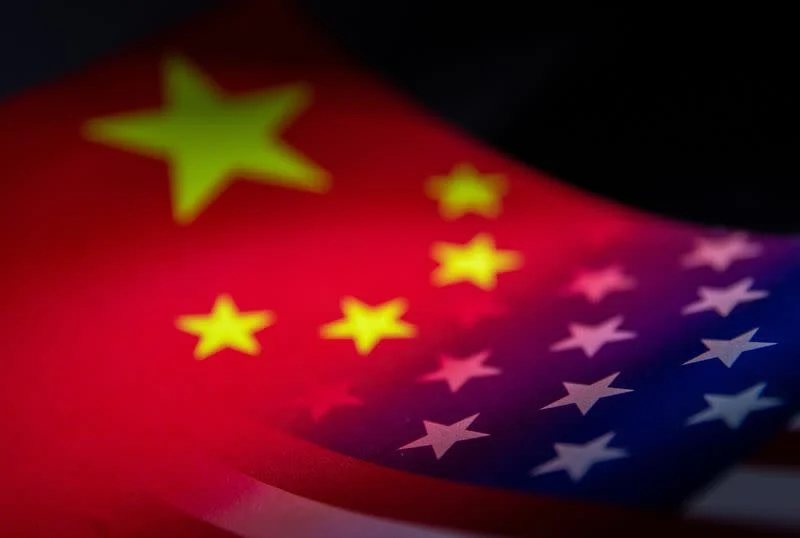
In a surprising yet significant diplomatic and economic pivot, the world’s two largest superpowers, the United States and China, have reached a major trade breakthrough. Amid years of fierce geopolitical competition and a lingering tariff standoff, Washington and Beijing have successfully bridged the gap to de-escalate trade tensions. The White House formally announced that China has committed to purchasing a substantial volume of American commodities, specifically agreeing to import at least 10 million metric tons of thermal and metallurgical coal from the United States by 2027, with a mirrored volume commitment already locked in for 2028.
This strategic trade agreement was finalized under the newly operational framework of the US-China Board of Trade. For global markets accustomed to persistent protectionism and retaliatory trade barriers between the two economic heavyweights, this sudden rapprochement marks a pivotal turning point. Beyond the multi-million-ton coal procurement deal, the two nations have agreed to enact highly favorable tariff reductions covering non-sensitive commodities valued at a staggering USD 30 billion. As global supply chains continue to navigate post-pandemic realignments and inflationary pressures, this bilateral cooperation signals a calculated effort to stabilize domestic manufacturing sectors and foster a more predictable international trading environment.
Chronology of the Detente: From Trade War to Strategic Dialogue
The path leading to this unexpected cooperative agreement has been defined by nearly a decade of escalating protectionist measures. The modern trade friction between Washington and Beijing effectively began in 2018, when the United States implemented sweeping tariffs on hundreds of billions of dollars worth of Chinese imports under Section 301 of the Trade Act of 1974. China swiftly responded with retaliatory tariffs targeting vital American agricultural exports, machinery, and energy products.
Over the subsequent years, the trade conflict expanded beyond traditional goods into a battle for technological supremacy, encompassing semiconductor manufacturing, artificial intelligence, telecommunications infrastructure, and critical mineral supply chains—most notably rare earth elements. Despite sporadic diplomatic engagements and the signing of the Phase One economic and trade agreement in early 2020, underlying structural disputes remained unresolved. Tariffs largely stayed in place, and bilateral trust eroded amid broader geopolitical tensions surrounding regional security and intellectual property rights.
The momentum toward the current breakthrough began taking shape in late 2025 and early 2026, as both economic superpowers recognized the mutual toll of prolonged decoupling. Sustained high inflation, volatile energy markets, and sluggish domestic growth in both economies forced a pragmatic reassessment in leadership circles. The recent extension of a vital trade truce—notably underscored by ongoing negotiations regarding critical minerals and rare earths—paved the way for deeper institutional engagement. The operationalization of the US-China Board of Trade served as the definitive catalyst, providing a dedicated neutral platform to negotiate targeted commercial concessions without the immediate pressure of broader geopolitical disputes.
Anatomy of the Deal: Coal Commitments and USD 30 Billion Tariff Cuts
At the core of the newly minted bilateral understanding is a dual-track approach focusing on heavy commodities and consumer-driven non-sensitive goods. The commitment by Chinese state-backed and private energy importers to secure a minimum of 10 million metric tons of American coal annually through 2027 and 2028 represents a major win for U.S. energy exporters. The arrangement provides long-term demand visibility for domestic coal producers—particularly in regions like the Powder River Basin and Appalachia—while ensuring that China secures reliable, high-grade fuel inputs for its massive industrial and energy infrastructure.
Simultaneously, the decision to implement preferential tariff rates on USD 30 billion worth of non-sensitive merchandise is expected to inject fresh liquidity into consumer markets on both sides of the Pacific. Rather than focusing exclusively on high-tech or defense-critical sectors, negotiators deliberately targeted consumer-facing and agricultural industries to demonstrate tangible economic benefits to businesses and households.
Under the agreed framework, the tariff reductions have been structured to benefit specific high-priority sectors in both nations:
U.S. Agricultural and Consumer Exports to China:
- Agricultural Commodities: Enhanced market access and reduced tariff burdens for American grain, soybean, and feed producers.
- Seafood: Lowered import barriers for key marine harvests originating from U.S. coastal fisheries.
- Timber and Forestry Products: Favorable tax structures for structural wood and paper products destined for Chinese construction and manufacturing sectors.
- Cosmetics and Personal Care: Streamlined entry processes and reduced duties for American beauty and wellness brands targeting China’s massive urban middle class.
- Medical Equipment: Facilitated trade flows for non-restricted medical devices, pharmaceuticals, and healthcare support technology.
Chinese Consumer and Industrial Exports to the United States:
- Small Household Appliances: Reduced tariff pressure on everyday kitchen and home utility electronics manufactured in Chinese industrial hubs.
- Toys and Recreational Goods: Lowered trade friction for children’s toys and seasonal products heavily demanded during Western retail holiday cycles.
- Holiday Decorations: Stabilized import costs for festive and celebratory merchandise distributed across North American retail chains.
- Child Safety Seats: Tariff relief on critical automotive safety infrastructure, directly benefiting American families purchasing certified infant and child transport seats.
Official Responses and Strategic Implications
While the formal announcement has been met with cautious optimism by international financial institutions, initial reactions from government officials and industry stakeholders underscore the delicate balance between cooperation and competition. Representatives from the U.S. Department of Commerce emphasized that the agreement does not signal a retreat from national security priorities or stringent export controls on advanced semiconductors and dual-use technologies. Instead, officials framed the deal as a pragmatic "guardrail" designed to maintain open commercial channels for foundational goods, thereby reducing the risk of catastrophic economic decoupling.
Conversely, trade representatives in Beijing have lauded the breakthrough as a victory for multilateralism and pragmatic diplomacy. Chinese state media outlets highlighted that easing tariff burdens on USD 30 billion worth of daily consumer goods will directly alleviate cost-of-living pressures for ordinary citizens while supporting employment in export-dependent manufacturing provinces. Economic analysts in Asia have similarly pointed out that the deal reflects a growing recognition in both capitals that total economic isolation is mathematically untenable.
However, industry groups have raised valid questions regarding enforcement and long-term viability. Energy market analysts note that while 10 million metric tons of coal is a commercially meaningful volume, its execution will depend heavily on international shipping rates, global commodity pricing fluctuations, and domestic environmental policy shifts within China, where the government has maintained a long-term trajectory toward carbon neutrality. Similarly, agricultural exporters have urged both governments to ensure that bureaucratic hurdles do not undermine the spirit of the newly established preferential tariff tiers.
Broader Economic Impact on Global Supply Chains
The easing of trade barriers between the United States and China carries profound implications for the global economy, particularly for developing nations and emerging markets caught in the crossfire of superpower rivalry. For years, third-party economies in Southeast Asia, Latin America, and Europe have had to navigate shifting supply chain realignments, currency volatility, and fragmented trade policies. A stabilized trade relationship between Washington and Beijing could help restore predictability to global logistics, dampening inflationary spikes driven by tariff-induced supply shocks.
Furthermore, the operational success of the US-China Board of Trade may serve as a vital blueprint for managing future economic friction. By compartmentalizing disputes—keeping national security safeguards separate from consumer and commodity trade—the two nations have demonstrated that targeted diplomacy can yield measurable results even amid deep geopolitical distrust.
As implementation timelines approach for the 2027 and 2028 coal delivery milestones and the rollout of the USD 30 billion tariff reductions, global markets will be watching closely. Whether this sudden display of bilateral cooperation marks the dawn of a lasting economic détente or merely a temporary tactical truce remains to be seen. Nonetheless, for millions of businesses, consumers, and agricultural producers worldwide, the renewed flow of commerce between the world’s two largest economies offers a welcome breath of stability in an otherwise turbulent global landscape.