The Central Statistics Agency of Indonesia is actively evaluating the prospect of integrating and utilizing national tax data to refine and update the National Socio-Economic Single Data framework. This strategic policy initiative aims to sharpen the country’s database granularity, thereby significantly improving the precision of welfare mapping and ensuring that state-sponsored social assistance programs reach the most deserving demographic segments.
The contemplation of incorporating fiscal and tax registries into national statistical models marks a potential paradigm shift in how the government measures poverty, economic stratification, and household purchasing power. By bridging statistical methodologies with fiscal administration records, authorities hope to eliminate long-standing inclusion and exclusion errors that have historically plagued social welfare distribution networks across the archipelago.
Methodological Challenges in Poverty Measurement
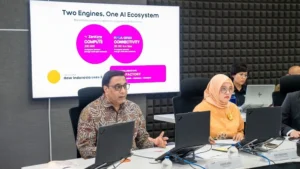
During a comprehensive academic and institutional presentation held at the Polytechnic of Statistics STIS in Jakarta, BPS Director of Methodology and Data Science Setia Pramana shed light on the structural limitations currently facing national poverty assessments. He explained that the government’s official measurement of national poverty levels relies predominantly on household expenditure approaches rather than direct income tracking.
This reliance on consumption patterns rather than earnings is not a methodological preference, but rather a structural necessity. For decades, Indonesian statistical agencies lacked a comprehensive, nationally integrated, and verified database concerning individual and household incomes. Consequently, household expenditure has served as a reliable, albeit indirect, proxy for standard of living and purchasing capacity.
"Why do we not use income? Because we do not possess a comprehensive income database, which is why we rely on expenditure," Setia stated during his address.
In socio-economic research, expenditure is frequently utilized because household consumption is generally considered easier to record and less prone to underreporting than earnings, particularly in economies with large informal sectors. However, relying solely on consumption can obscure the financial realities of certain segments of the population, such as middle-to-high income earners who underreport consumption or populations experiencing sudden economic shocks whose expenditure patterns lag behind income fluctuations.
Collaborative Horizons with the Directorate General of Taxes
To overcome these structural data deficits, BPS is exploring institutional bridges with the Directorate General of Taxes (DJP) under the Ministry of Finance. Leveraging fiscal records could provide statisticians with valuable proxy indicators regarding actual citizen earnings, corporate distributions, asset ownership, and capital gains—metrics that are notoriously difficult to capture through standard household surveys like the National Socio-Economic Survey (Susenas).
Setia emphasized that modern data governance requires robust cross-institutional synergy. In an era marked by rapid digitalization and integrated public administration numbers, data silos between government bodies are increasingly obsolete.
"When we talk about data, it is entirely feasible for us to collaborate with all existing ministries and government institutions," Setia underscored, pointing toward a future where tax administration microdata could securely and confidentially enrich statistical modeling.
The integration of tax databases into socio-economic mapping would align Indonesia with international best practices. Several developed and emerging economies routinely cross-reference tax filings, social security contributions, and census records to create dynamic, highly accurate registries of household welfare. This administrative data linkage minimizes survey fatigue among citizens, reduces operational costs for the government, and provides real-time updates during economic crises.
The Complexity of the National Socio-Economic Single Data
The initiative to integrate tax data is a vital component of the broader ongoing efforts to optimize the National Socio-Economic Single Data framework. This single data architecture is designed to serve as the foundational reference for all government interventions, ranging from targeted subsidies for liquefied petroleum gas and electricity to conditional cash transfers and educational scholarships.
Determining socio-economic deciles and measuring multidimensional poverty within this framework is a highly complex statistical undertaking. BPS previously revealed that its algorithms calculate and cross-analyze more than 40 distinct variables to determine household deciles. These variables span a wide spectrum of socio-economic indicators, including housing characteristics, access to sanitation and clean water, educational attainment of household members, ownership of durable goods, asset profiles, and occupational categories.
Despite the high number of variables, the absence of a direct, verified income metric remains a missing puzzle piece. While asset ownership and housing conditions reflect long-term wealth, they do not always capture short-term liquidity or sudden financial vulnerability. By introducing tax records into the multi-variable matrix, BPS aims to create a more robust composite index that balances long-term asset accumulation with immediate fiscal capacity.
Chronology of Data Integration Initiatives
The journey toward a unified socio-economic database in Indonesia has evolved over several distinct phases, driven by the urgent need for bureaucratic efficiency and fiscal optimization:
- The Fragmented Era (Pre-2015): Various ministries and agencies—including the Ministry of Social Affairs, the National Population and Family Planning Board, and BPS—maintained separate databases for poverty alleviation, leading to overlapping targets and high exclusion errors.
- The Unified Database Establishment (2015–2020): The government introduced the Unified Database, later managed by the National Team for the Acceleration of Poverty Reduction, to serve as a single reference point for social protection programs. However, update cycles were infrequent, causing discrepancies as household economic conditions shifted dynamically.
- The Push for Single Data Transformation (2021–2024): Accelerated by the COVID-19 pandemic, the urgency for real-time, accurate data became paramount. The government initiated comprehensive registration drives, such as the Registration of Social and Economic Conditions, laying the groundwork for the National Socio-Economic Single Data framework.
- The Inter-Agency Integration Phase (2025–Present): BPS began aggressively pursuing cross-sectoral data integration. Discussions shifted toward harmonizing statistical surveys with administrative registries held by fiscal, immigration, and civil registration authorities, culminating in the current exploration of tax data integration.
Implications for Social Assistance Targeting
The primary motivation behind refining the National Socio-Economic Single Data through tax data integration is the persistent challenge of misdirected social subsidies. Historically, studies by economic think tanks and development agencies have highlighted two major errors in social protection programs: inclusion errors, where non-eligible households receive assistance, and exclusion errors, where vulnerable families are left off the registry.
In a vast and diverse nation like Indonesia, where millions of workers operate in the informal economy, capturing economic mobility is exceptionally difficult. A household classified as poor during one survey cycle may experience an upward shift due to seasonal employment or micro-entrepreneurship, yet remain on the beneficiary lists due to infrequent data updates. Conversely, newly vulnerable families may fall through the cracks between census cycles.
By incorporating administrative tax data—such as annual income tax returns for formal workers, value-added tax data for certain transactions, and corporate registries for business owners—the government can establish a more dynamic verification mechanism. While informal workers may not appear in formal tax rolls, filtering out individuals and households with registered formal tax profiles will allow authorities to focus limited fiscal space entirely on the bottom deciles.
Furthermore, this integration supports the government’s grand strategy toward targeted subsidies. Indonesia has long subsidized commodities such as fuel and energy universally, which disproportionately benefits middle- and upper-class consumers. Transitioning to targeted, person-based subsidies requires an unassailable database. Enhanced single data managed by BPS, enriched by tax administration records, provides the technical backbone required to execute this complex fiscal reform safely.
Challenges and Data Governance Considerations
Despite the significant potential benefits, data integration between statistical agencies and tax authorities involves complex legal, technical, and ethical challenges. Privacy and data protection are paramount concerns. Under Indonesian law, particularly the Personal Data Protection Law, citizens’ tax records are classified as strictly confidential and protected by stringent secrecy provisions within tax regulations.
For the integration to proceed smoothly, policymakers will likely need to establish robust legal frameworks, secure interoperability protocols, and anonymization pipelines. BPS and the Directorate General of Taxes must ensure that data sharing strictly adheres to statutory mandates, guaranteeing that sensitive financial information is used exclusively for statistical modeling, welfare mapping, and policy formulation, rather than for aggressive tax enforcement against vulnerable populations who might otherwise register for aid.
Additionally, technical hurdles remain significant. Tax data primarily captures the formal sector—salaried employees in registered corporations and formal business entities. In contrast, a substantial portion of Indonesia’s workforce is engaged in informal labor, agriculture, and micro-enterprises that may not interface regularly with the tax system. Therefore, tax data cannot entirely replace household surveys but must instead serve as a complementary verification layer within the broader multi-variable index.
Broader Economic Impact
The successful integration of tax data into the National Socio-Economic Single Data framework carries profound implications for macroeconomic management and fiscal policy.
First, it enhances fiscal efficiency. By ensuring that social assistance funds are distributed with pinpoint accuracy, the government can optimize state expenditures, reduce fiscal leakage, and redirect saved resources toward productive capital investments, infrastructure, and human capital development.
Second, it fosters cross-institutional collaboration. The initiative breaks down traditional bureaucratic silos, encouraging ministries to view data as a national public asset rather than institutional property. This collaborative ethos is crucial for the realization of Indonesia’s broader digital governance transformation.
Finally, accurate welfare mapping provides researchers, policymakers, and international partners with reliable metrics to evaluate the long-term impact of poverty alleviation policies. As Indonesia navigates its path toward advanced economy status, precision in measuring inequality and social mobility is indispensable for designing inclusive growth strategies.
Conclusion
The consideration by BPS to integrate tax data into the National Socio-Economic Single Data framework represents a progressive step toward modernizing Indonesia’s statistical infrastructure. While methodological, legal, and technical hurdles must be carefully navigated, the potential rewards—ranging from eliminated misallocation of social assistance to a more sophisticated understanding of national income distribution—make it a critical policy frontier. As discussions between BPS and the tax authorities progress, the outcome of this initiative will likely redefine the future of social protection and welfare administration in the country for decades to come.