In an era where the escalating costs of computer hardware make even routine upgrades a matter of careful financial consideration, an ordinary household storage space has yielded an astonishing windfall. A technology enthusiast residing in Australia recently made a serendipitous discovery when an obsolete enterprise server, long relegated to collecting dust in a residential garage, turned out to house nearly two terabytes of enterprise-grade memory carrying an estimated market valuation of approximately $12,000.
The extraordinary find, which has since captured the attention of the global hardware community, sheds light on the paradoxical economics of the contemporary semiconductor market, where older-generation server components retain exceptional monetary value due to ongoing supply chain pressures and fluctuating manufacturing priorities.
Main Facts of the Discovery
The discovery came to light when a Reddit user operating under the handle VastOption875 published photographs and details of the hardware haul within the popular online technology forum r/LinusTechTips. According to the user, the server in question had previously been deployed in a professional corporate environment. When the company underwent a comprehensive hardware refresh cycle, replacing its aging infrastructure with newer architectures, the decommissioned server was gifted to the employee as surplus equipment.
For a considerable duration, the machine remained untouched, functioning essentially as heavy, obsolete machinery stored away in a garage. However, driven by curiosity and an ongoing interest in hardware experimentation, the user eventually decided to open the chassis to inspect its internal components.
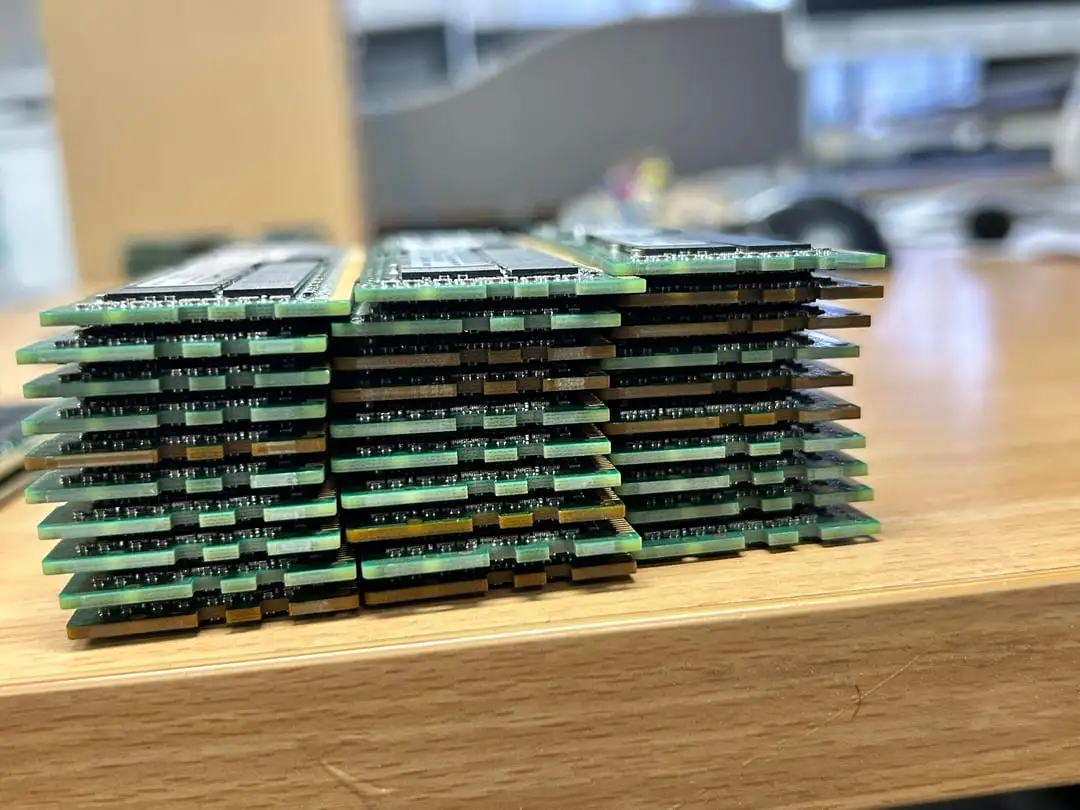
Rather than finding a standard, outdated desktop machine or hollow enterprise casing, the enthusiast uncovered a densely populated motherboard layout. A detailed inventory of the internal components revealed approximately 30 individual high-capacity DDR4 memory modules. Each module possessed a capacity of 64 gigabytes, operating at a speed of 2666 MT/s. When aggregated, the total memory capacity housed within the server reached an astonishing 1,920 gigabytes—just shy of the two-terabyte threshold.
Chronology of Events

The timeline leading up to this financial surprise spans several years of enterprise depreciation followed by sudden market revaluation:
- Initial Corporate Deployment: Years prior to the discovery, the server was integrated into a commercial data center or enterprise office network, performing heavy computational workloads that required massive amounts of random-access memory.
- Enterprise Retirement and Transfer: As part of standard technological lifecycle management, the corporation upgraded its server fleet to newer platforms—likely transitioning to later-generation Intel Xeon scalable processors or AMD EPYC solutions paired with DDR5 memory. During this transition, the older server was designated as e-waste or surplus and handed over to VastOption875.
- Period of Dormancy: The heavy server chassis was transported to the user’s garage in Australia, where it sat undisturbed, treated as low-value electronic clutter.
- The Inspection and Community Reveal: Driven by curiosity, the user opened the server casing in late 2026. Recognizing the sheer quantity of high-capacity modules, the owner cross-referenced the part numbers with current secondary market listings and subsequently posted the findings on Reddit, igniting widespread discussion regarding the unexpected residual value of legacy enterprise hardware.
Detailed Analysis of Supporting Data and Market Valuations
To understand why a box of used memory modules could command a price tag equivalent to a reliable used automobile, one must examine the current state of the global memory market. Over the past twelve to eighteen months, the semiconductor industry has experienced notable volatility. Consumer-grade DDR5 memory kits have witnessed substantial price corrections and upward surges driven by shifting fab allocations, growing demand from artificial intelligence infrastructure, and tighter global supply chains. Consequently, enterprise-grade memory has also faced secondary pricing pressures.
Market analysis of secondary hardware platforms and specialized reseller inventories indicates that high-density enterprise memory modules retain robust demand. Specifically, 64GB DDR4 Registered DIMMs (RDIMMs) manufactured by reputable brands frequently trade between $350 and $425 per individual module, depending on specifications, ECC capabilities, and manufacturer warranties.
Applying a conservative average of $400 per stick to the 30 discovered modules yields a total estimated market value of $12,000 USD (approximately 211 million Indonesian Rupiah). Even accounting for normal depreciation, testing overhead, and potential bulk-sale discounts, the residual value of the RAM significantly exceeds the original purchase price of the entire server system during its active deployment years.
Technical Specifications: Why Enterprise RAM Differs
Despite the mouth-watering valuation, industry analysts and hardware experts quickly pointed out a crucial caveat regarding the discovered hardware: this memory cannot be repurposed for a standard consumer desktop gaming rig.
The modules identified in the server are specifically classified as Error-Correcting Code Registered DIMMs (RDIMMs). Unlike consumer unbuffered DIMMs (UDIMMs) used in standard motherboards powered by mainstream Intel Core or AMD Ryzen desktop processors, RDIMMs are engineered explicitly for enterprise environments. They require specialized server or workstation motherboards capable of supporting enterprise-class processors, such as Intel Xeon Scalable or AMD EPYC architectures.

These specialized modules feature an onboard register that re-drives the control and address signals, reducing electrical load on the memory controller and allowing massive quantities of RAM to be installed stably across multiple channels—a necessity for virtualization, database management, and heavy computational rendering.
Consequently, while VastOption875 cannot simply slide these sticks into a home gaming PC to boost frame rates, the target demographic for such hardware—small business operators, independent data center hosts, homelab enthusiasts, and budget-conscious developers running local artificial intelligence models—creates a ready and lucrative secondary market.
Broader Industry Impact and Implications
The viral reception of this garage discovery serves as a wider commentary on how the perception of electronic waste has shifted in the mid-2020s. For decades, the tech community operated under the assumption that older hardware depreciated rapidly toward zero value within a span of five to seven years. Obsolete servers were frequently recycled for pennies per pound or left to gather dust in corporate storage facilities.
However, the persistent crunch in semiconductor manufacturing, combined with the explosive global appetite for computing power to support modern software workloads, has altered the depreciation curve. Components that were once written off as obsolete industrial scrap are now viewed as valuable commodities.
Furthermore, the incident highlights the economic potential hidden within corporate IT asset disposition (ITAD) processes. Organizations discarding old infrastructure often overlook the modular components housed within server chassis, focusing instead on the primary processor or storage drives. Incidents like this demonstrate that a thorough audit of decommissioned enterprise hardware can occasionally yield unexpected financial returns.
Conclusion
The discovery of nearly 2TB of high-density DDR4 server memory sitting quietly in an Australian garage illustrates the unpredictable nature of the modern hardware market. What began as an afterthought—a heavy, obsolete box handed down from an employer—transformed into a high-value asset worth thousands of dollars. As memory pricing continues to fluctuate and the demand for high-capacity enterprise infrastructure remains resilient, technology enthusiasts and businesses alike may begin looking at their storage rooms and garages with renewed attention, searching for their own hidden digital treasures.