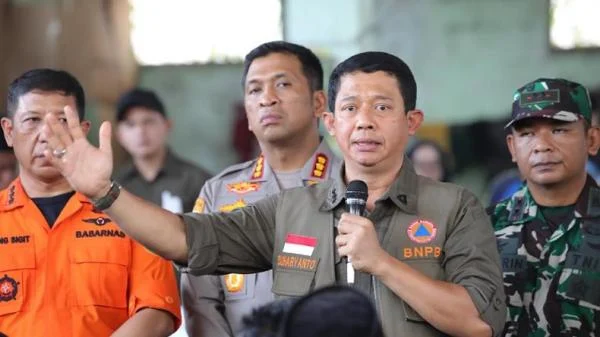
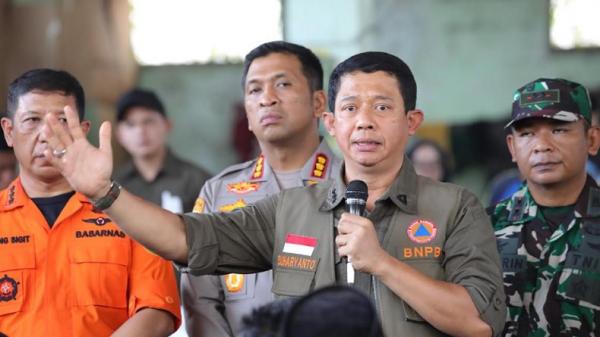
The Head of the National Disaster Management Agency (BNPB), Lieutenant General TNI Suharyanto, has issued a stern warning regarding the enforcement of regulations concerning forest and land fires (karhutla) in Indonesia. As the nation grapples with the heightened risks posed by the dry season, the BNPB chief underscored that there is absolutely no legal tolerance or loophole that justifies the burning of peatlands. This directive comes as authorities intensify efforts to mitigate the recurring ecological and health crises triggered by uncontrolled land clearing activities, particularly in vulnerable provinces like Central Kalimantan.
Referencing Presidential Instruction (Inpres) Number 11 of 2026, which focuses on strengthening the enforcement of prohibitions against land clearing through fire and the comprehensive control of forest and land fires, Suharyanto reiterated that these regulations are binding across all Indonesian territories. Speaking to reporters on Saturday, September 12, 2026, he emphasized that the legislative framework is robust and designed to preemptively address the environmental degradation often associated with slash-and-burn practices.
The Legislative Framework and Legal Clarity
The legal basis for this crackdown is anchored in the aforementioned Inpres, which serves as a cornerstone for current disaster mitigation strategies. According to Suharyanto, coordination efforts with the Provincial Government of Central Kalimantan have confirmed a total alignment between national mandates and regional regulations. The core of this legal consensus is the absolute prohibition of fire-based land clearing on peatlands during the dry season.
Suharyanto explicitly warned against the misuse of "local wisdom" or vague regional ordinances as a shield for illegal agricultural activities. Historically, some actors have attempted to justify traditional farming methods that involve fire, but the BNPB has made it clear that such arguments do not supersede national environmental security laws, especially when the nation faces climate-driven fire risks. Under the current guidelines, the use of fire for land management is permitted only under extremely narrow, strictly regulated conditions on mineral soil, and only during the rainy season when the risk of runaway fires is minimized. Any deviation from these protocols—specifically burning peatlands during the dry season—is classified as an illegal act, punishable under existing environmental statutes.
Chronology and Escalating Tensions
The urgency of this directive follows a period of heightened activity in fire-prone regions. In early September 2026, authorities reported a concerning surge in fire hotspots. Specifically, in Palangka Raya, Central Kalimantan, tens of hectares of land were engulfed in flames, with the fires trending toward the Sebangau National Park—a critical carbon sink and biodiversity hotspot.
The rapid spread of these fires has forced a coordinated response from the National Police (Polri) and local disaster response teams. To counter the threat, the police have deployed advanced technological resources, including thermal drones capable of detecting underground heat signatures in peatlands, alongside the installation of 220 boreholes to ensure water accessibility for suppression efforts. This tactical shift represents a transition from reactive firefighting to a more proactive, technology-driven monitoring approach.
Supporting Data and Environmental Impact
Peatlands are among the most sensitive ecosystems on the planet. When drained and burned, they release massive quantities of carbon dioxide, contributing significantly to Indonesia’s greenhouse gas emissions and global climate change. The 2026 dry season, exacerbated by meteorological phenomena, has rendered these areas particularly susceptible to combustion.
Data from the Ministry of Environment and Forestry (KLHK) and satellite imagery from the BNPB indicate that the majority of fire occurrences are human-induced. While smallholders and industrial agricultural firms often point to the efficiency of fire for clearing land, the long-term ecological cost is catastrophic. The haze resulting from these fires frequently crosses national borders, affecting air quality in neighboring countries such as Malaysia and Singapore, thereby turning domestic land-clearing issues into a matter of international diplomatic concern.
The economic implications are equally staggering. Beyond the immediate destruction of forest resources, the health costs associated with respiratory illnesses caused by the haze, the loss of agricultural productivity, and the disruption of transportation networks—specifically aviation due to low visibility—cost the Indonesian economy trillions of rupiah annually.

Official Responses and Multi-Stakeholder Coordination
The collaboration between the BNPB, the National Police, and local governments is designed to create a "zero-tolerance" environment. Police investigations are currently underway to identify parties responsible for the recent blazes. Law enforcement agencies have indicated that they will not hesitate to pursue criminal charges against both individual perpetrators and corporations found to be utilizing fire as a cost-cutting tool for land preparation.
Local government officials in Central Kalimantan have echoed the BNPB’s stance, stating that the economic gains from rapid land clearing are far outweighed by the social and environmental disasters caused by the resulting smoke. "We are working closely with village heads and community leaders to socialize these regulations," a local representative noted. "The message is clear: there are no exemptions for burning peatland."
Analysis: Implications of the Current Policy
The shift toward strict enforcement of Inpres 11/2026 signifies a maturation of Indonesia’s approach to disaster management. By focusing on the legal, technological, and social aspects of fire prevention, the government is attempting to decouple agricultural growth from environmental destruction. However, the success of this policy rests on the ability of local authorities to provide alternatives for smallholders who rely on traditional farming methods.
The use of thermal drones and boreholes is a positive step, yet the fundamental challenge remains the enforcement of the "no-burn" policy in remote areas. Experts argue that while legislation is necessary, it must be supported by increased incentives for sustainable farming, such as mechanical land clearing support and agricultural subsidies that reward forest conservation.
Furthermore, the integration of regional and national policies is a significant development. In the past, inconsistencies between regional regulations and national directives provided gaps that allowed for the continuation of illegal burning. The alignment of these legal frameworks, as highlighted by Suharyanto, closes these gaps and empowers law enforcement to act decisively.

Looking Ahead
As the dry season continues, the eyes of the nation remain fixed on the effectiveness of these new enforcement protocols. The prevention of large-scale fire events is crucial not only for the preservation of the Sebangau National Park and other protected areas but for the health and economic well-being of the Indonesian population.
The BNPB’s firm stance marks a pivotal moment in the fight against environmental crime. By emphasizing that the law is not a suggestion but a mandatory constraint, the government is signaling a permanent shift in how land use and fire prevention will be managed in the future. The combination of legislative pressure, technological surveillance, and local community engagement is the current strategy to break the cycle of seasonal fires that have plagued the archipelago for decades.
Ultimately, the goal is to transform the national perspective on land management, moving away from the dangerous convenience of fire toward a more sustainable, regulated, and technologically supported agricultural sector. The coming weeks will be a true test of this policy, as the effectiveness of the current enforcement will be measured against the harsh reality of the changing climate and the persistent pressures of human activity on the land. As Lieutenant General Suharyanto warned, the law is set, and the era of impunity for those who put the nation’s environment at risk is coming to a close.