As the anniversary of Indonesia’s independence draws closer each year, public discourse naturally turns to the patriotic displays of youth hoisting the national flag, the Red and White. Amidst the sea of white uniforms, crisp salutes, and synchronized marching drills, two distinct terms frequently emerge in public conversation: Paskibra and Paskibraka. While they sound remarkably similar and are often used interchangeably by the general public and media outlets alike, they represent fundamentally different entities with distinct operational scopes, legal statuses, institutional frameworks, and selection mechanisms. Recognizing these disparities is essential not only for linguistic accuracy but also for appreciating the deeply structured architecture of Indonesian youth leadership and national ceremonies.
At its core, the confusion arises because both organizations deal with the noble duty of raising the Sang Saka Merah Putih. However, a closer examination reveals that Paskibra serves as a broad, decentralized umbrella term for flag-raising troupes found across schools, community organizations, and private or public institutions nationwide. Conversely, Paskibraka is a highly formalized, state-sponsored national program regulated by rigorous legislative frameworks designed explicitly to cultivate ideologically grounded future leaders for the nation.
Defining Paskibra: The Grassroots Foundation of Youth Discipline
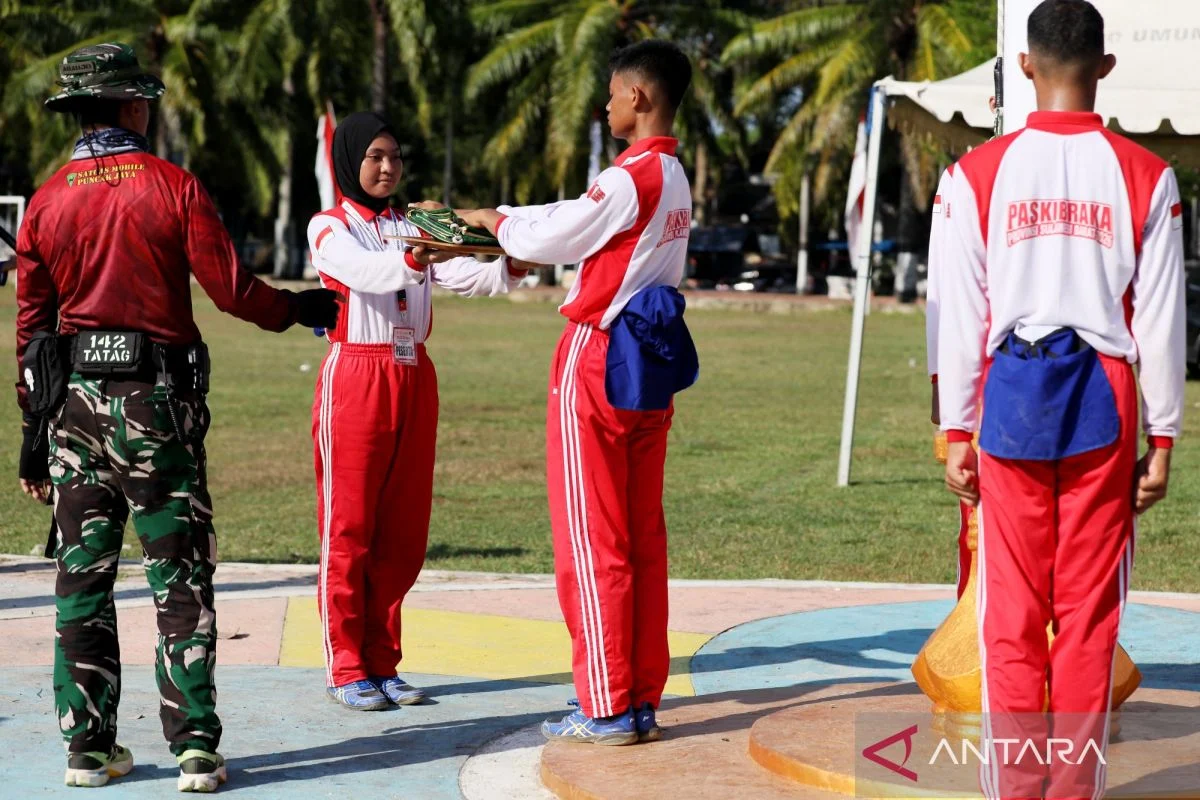
To understand the broader ecosystem of flag-raising units in Indonesia, one must examine Paskibra, an acronym for Pasukan Pengibar Bendera, or the Flag-Raising Troop. This designation is universally applied to any group of individuals tasked with executing flag-raising ceremonies within decentralized environments, most notably educational institutions ranging from junior high schools to universities, as well as various civil and corporate organizations.
Within the school environment, Paskibra typically functions as an extracurricular activity. It serves as a rigorous training ground where students cultivate essential life skills, including precision in marching drills (baris-berbaris), unwavering discipline, collaborative teamwork, leadership acumen, and a profound sense of personal responsibility. Because of its localized nature, Paskibra possesses a wide and flexible scope. Its existence is not tethered exclusively to national independence commemorations; rather, it operates year-round to support weekly school flag ceremonies, local institutional events, and regional civic gatherings.
The independence and flexibility of local Paskibra units mean they operate without centralized government mandates dictating their internal structures. Schools and organizations establish their own training schedules and internal regulations, making Paskibra the foundational bedrock where millions of Indonesian youths first experience the pride, rigor, and solemnity of ceremonial duties.
Defining Paskibraka: The Elite State-Sponsored Cadre Program
In stark contrast to the decentralized nature of standard school troupes, Paskibraka stands as a prestigious, highly regulated government initiative. An acronym for Pasukan Pengibar Bendera Pusaka, which translates to the Heirloom Flag-Raising Troop, Paskibraka occupies a formal institutional status backed by stringent legal frameworks. The program’s operational guidelines and national objectives are anchored in Presidential Regulation Number 51 of 2022 concerning the Pasukan Pengibar Bendera Pusaka Program.
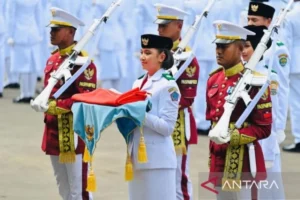
Under this legislative framework, Paskibraka transcends the traditional boundaries of ceremonial duties. It is officially classified as a state-sponsored leadership incubation program aimed at cultivating young citizens grounded in Pancasila, the state ideology. The primary duty of Paskibraka members is to execute the solemn flag-raising and lowering ceremonies during the commemoration of the Anniversary of the Proclamation of Independence of the Republic of Indonesia on August 17, as well as during the official Pancasila Sanctity Day ceremonies.
The pathway to becoming a Paskibraka member is notoriously competitive. Candidates undergo rigorous, multi-tiered selection processes that begin at the municipal or regency level, progress to provincial levels, and culminate at the national level in the nation’s capital. These evaluations test physical endurance, mental resilience, psychological stability, and deep intellectual comprehension of national history and civic duties. Once selected, these youths undergo intensive quarantine and training camps managed by state agencies, interacting with high-ranking military and government officials. Upon the completion of their tenure, members transition into the Alumni Association, known as Purna Paskibraka, where they continue to receive ideological mentoring and community leadership development.
Core Structural and Operational Differences
A systematic analysis of Paskibra and Paskibraka highlights four fundamental points of divergence that separate the two entities in practice:
-
Scope of Assignment and Jurisdiction: Paskibra operates on a generalized, decentralized level, serving schools, local institutions, and private organizations for everyday or routine ceremonial needs. Paskibraka, meanwhile, is strictly designated for high-profile state ceremonies at various administrative tiers, ranging from local government offices to the Presidential Palace.
-
Selection Mechanism and Training: Paskibra units are formed through internal, autonomous mechanisms established by individual schools or organizations. Conversely, Paskibraka candidates must navigate a standardized, highly competitive, and strictly monitored selection hierarchy overseen by government bodies, ensuring uniform quality across the board.
-
Institutional Status and Legal Foundation: Paskibra remains an informal, descriptive term for any flag-raising troop without specific national legislation. Paskibraka enjoys a formal institutional identity anchored explicitly in state legislation, specifically Perpres No. 51/2022, granting it official state-program status.
-
Primary Objectives: While Paskibra focuses primarily on ceremonial execution and extracurricular discipline development at the local level, Paskibraka serves a dual mandate: executing premier state ceremonies while acting as a deliberate ideological laboratory for the nation’s future leaders.
The Historical Evolution and Chronology of Paskibraka
The rich heritage of Paskibraka traces back to the turbulent era of the Indonesian National Revolution. In 1946, while the young republic’s capital was temporarily relocated to Yogyakarta due to security threats, President Sukarno faced the historic task of organizing the first anniversary of Indonesian independence at the Gedung Agung presidential palace.
To orchestrate the sacred flag-raising ceremony, President Sukarno entrusted the mission to Major (Navy) Husein Mutahar, a trusted aide and visionary statesman. Recognizing the profound symbolic weight of the moment, Mutahar conceived the idea that the sacred Heirloom Flag should be hoisted by exemplary young citizens representing various regions of the archipelago. However, due to the severe logistical constraints and security blockades of the revolutionary war, bringing youths from across the islands proved impossible. Instead, Mutahar selected five extraordinary youths residing in Yogyakarta—three girls and two boys—to execute the historic hoisting, thereby laying the philosophical foundation for youth-led national ceremonies.
Two decades later, in 1967, President Soeharto instructed Husein Mutahar to resurrect and refine the tradition for the contemporary era. Tasked once again with managing the sacred flag ceremony, Mutahar restructured the formation into a deeply symbolic three-tiered configuration that persists to this day. This innovative design divided the troop into the 17 Formation (acting as an escort and vanguard, symbolizing the date 17), the 8 Formation (the core color guard, symbolizing the month of August), and the 45 Formation (the security detail, symbolizing the year 1945). Together, the numbers 17, 8, and 45 immortalize the sacred date of Indonesia’s independence: August 17, 1945.
The terminology itself underwent a formal evolution in 1973. Acknowledging the need for a distinct, dignified title for these elite youths, national youth leader and statesman Idik Sulaeman coined the acronym "Paskibraka." The name was meticulously synthesized from four distinct Indonesian words: PASukan (Troop), KIBar (to fly or wave), bendeRA (flag), and PusaKA (heirloom).
Broader Societal Implications and Modern Significance
The distinction between Paskibra and Paskibraka carries profound implications for educational policy, civic education, and youth development in modern Indonesia. Experts in public administration and educational sociology note that maintaining a clear boundary between the two terms protects the integrity of both institutions. It ensures that the rigorous standards, ideological training, and state-level prestige associated with Paskibraka are properly understood, while honoring the grassroots, inclusive contributions of millions of students participating in local Paskibra units across the country.
In recent years, the management of Paskibraka has undergone administrative modernization, transitioning from sports and youth ministries to specialized state bodies focused on Pancasila ideology promotion. This shift underscores the government’s commitment to ensuring that participation in Paskibraka is not merely an exercise in marching precision, but a transformative socio-political milestone. Alumni of the program frequently ascend to prominent roles in public service, military leadership, civil society, and academia, validating the original vision of Husein Mutahar and President Sukarno.
Ultimately, while Paskibra and Paskibraka share a visual aesthetic defined by white uniforms, rigorous discipline, and the deep emotional resonance of hoisting the Red and White, they serve distinct operational realities. Paskibra represents the widespread, accessible spirit of national service cultivated in classrooms across the archipelago, whereas Paskibraka stands as the pinnacle of state-sponsored youth leadership and ideological development. Acknowledging this nuance enriches the public’s appreciation of Indonesia’s national ceremonies, honoring both the local volunteers who sustain patriotic traditions daily and the elite cadres who shoulder the solemn duty of state-level commemoration.