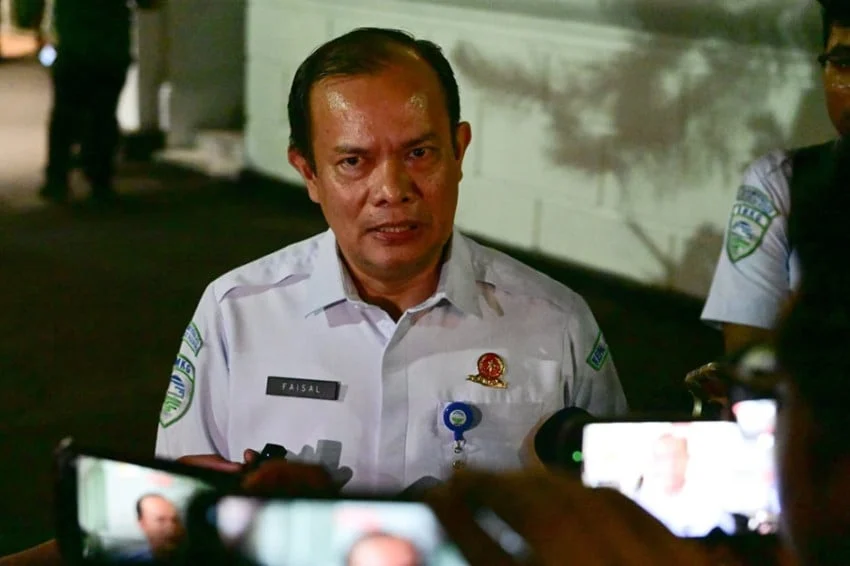
The Head of the Indonesian Agency for Meteorology, Climatology, and Geophysics (BMKG), Teuku Faisal Fathani, has unveiled an innovative tactical approach involving shallow well drilling to address and mitigate recurrent forest and land fires, commonly known in Indonesia as karhutla. Speaking after a high-level limited cabinet meeting at the Presidential Palace complex in Jakarta on Thursday, September 24, 2026, Faisal detailed the strategy discussed directly with President Prabowo Subianto. The primary focus of this methodology centers on vulnerable peatland ecosystems, which have historically presented severe challenges during firefighting operations due to subterranean combustion that defies traditional surface extinguishing methods.
The introduction of this technique marks a strategic evolution in Indonesia’s ongoing battle against seasonal fires that frequently blanket parts of Sumatra and Kalimantan in hazardous haze, impacting regional public health, education, and economic stability. By shifting toward proactive ground-level interventions backed by tactical hydrological management, the government aims to suppress fires swiftly before they escalate into massive environmental catastrophes.
Mechanics of the Shallow Drilling Technique
The shallow well drilling technique operates on the principle of localized water extraction to feed portable high-pressure pumps. According to Faisal, this method empowers ground task forces to establish immediate water sources directly adjacent to or within fire-prone sectors, bypassing the logistical nightmare of transporting water via tankers over charred or inaccessible terrain.
Once a shallow well is drilled into the water table—which is typically high in peatland regions—portable pumps are deployed to extract the subterranean water. This setup creates a localized fire suppression radius spanning approximately 200 meters from each drilling point.
"If we look at how we are strengthening our capabilities, it is the ground task force that we are reinforcing to directly tackle forest and land fires in affected areas," Faisal stated. "There are several methods and numerous techniques that were discussed, one of which is shallow drilling, followed by pumping using portable equipment to extinguish fires within roughly a 200-meter radius from the drilling point."
This approach addresses one of the primary logistical bottlenecks in peatland firefighting: the scarcity of accessible surface water during prolonged dry spells. Peatlands are inherently carbon-rich wetlands that, when drained or dried out, become highly combustible down to several meters below the surface. Traditional surface water spraying often fails because it only cools the top layer while underground peat continues to smolder. By utilizing shallow wells, firefighters can continuously saturate the peat layers from within the affected zone, effectively drowning the fire from the roots up.
Broader Institutional Framework and Community Integration
The discussion surrounding shallow well drilling did not occur in a vacuum. It forms part of a comprehensive national strategy spearheaded by President Prabowo Subianto to restructure and optimize Indonesia’s disaster prevention and environmental management architecture. During the same cabinet sessions, the administration announced the establishment of the National Peatland and Mangrove Management Agency (Badan Pengelola Gambut dan Mangrove Nasional), which operates directly under the authority of the President. This institutional elevation underscores the gravity with which the current administration views ecological preservation and climate resilience.
Complementing the technological deployment of shallow wells and the overarching mandate of the new agency is a strong emphasis on community-level preparedness. The government has prioritized the mobilization of rural populations through specialized entities known as Fire Care Community Groups (Kelompok Masyarakat Peduli Api). These grassroots organizations are trained to act as first responders, capable of implementing early suppression measures and enforcing fire prevention protocols around local settlements before professional task forces arrive.
By combining top-down policy directives, advanced meteorological early warning systems provided by BMKG, localized hydrological engineering like shallow wells, and bottom-up community vigilance, Indonesia is attempting a multi-layered defense mechanism against the perennial threat of karhutla.
Background Context and Historical Chronology of Karhutla in Indonesia
Forest and land fires have posed a persistent environmental, economic, and diplomatic challenge for Indonesia for decades. The crisis typically peaks during the dry season, which is often exacerbated by climate phenomena such as El Niño, leading to prolonged drought conditions across the archipelago.
Historically, the chronology of major karhutla events reveals severe ecological and economic setbacks:
- 1997–1998: One of the worst fire crises in Indonesian history, fueled by a severe El Niño event, resulting in millions of hectares of burned land, massive carbon emissions, and a thick haze that disrupted regional aviation and public health across Southeast Asia.
- 2015: Another catastrophic fire season scorched approximately 2.6 million hectares of land, predominantly in Sumatra and Kalimantan, causing an estimated USD 16 billion in economic losses and triggering widespread respiratory illnesses.
- 2019: Despite improved policy frameworks and stricter law enforcement, another significant surge in fires burned nearly 1.6 million hectares, prompting a renewed push by the government to revamp peatland restoration initiatives.
- 2020–2024: Enhanced monitoring, rapid response protocols, and favorable La Niña conditions in certain years helped suppress widespread fires, though localized hotspots continued to threaten biodiversity and air quality.
- 2025–2026: The current administration under President Prabowo Subianto transitioned toward structural reforms, culminating in the creation of specialized management agencies and the adoption of localized tactical innovations like the shallow well method introduced by BMKG in late September 2026.
The vulnerability of Indonesian peatlands is rooted in historical land conversion practices. Peatlands naturally store vast quantities of carbon. When these areas are drained for agricultural expansion, particularly for palm oil and pulpwood plantations, the dry organic matter becomes highly susceptible to ignition. Once ignited, peat fires are notoriously difficult to extinguish, often burning underground for weeks or months, defying rainstorms and emitting immense quantities of greenhouse gases.
Expert Analysis and Strategic Implications
Environmental analysts and disaster management experts have cautiously welcomed the introduction of the shallow well technique, viewing it as a pragmatic tactical adjustment. For years, critics argued that Indonesia’s firefighting strategy relied too heavily on expensive and reactive aerial water bombing, which treats symptoms rather than the root cause and is heavily constrained by thick smoke and weather conditions.
By empowering ground task forces with decentralized, low-cost hydrological tools like portable pumps and shallow wells, the government is shifting toward a more sustainable and economically viable intervention model. Ground operations, when properly equipped and strategically positioned, offer higher precision in extinguishing subterranean peat fires compared to indiscriminate aerial drops.
Furthermore, the integration of local communities through the Fire Care Community Groups addresses the human element of fire prevention. Empirical data from previous wildfire seasons consistently shows that the vast majority of fires are ignited by human activity—either through land-clearing practices for smallholder agriculture or accidental negligence. Empowering villagers to monitor, report, and initiate early containment creates an immediate deterrent network that state agencies alone cannot achieve over Indonesia’s vast archipelagic landscape.
However, experts emphasize that while shallow wells and community policing are vital tactical tools, long-term success will ultimately depend on rigorous enforcement of moratoriums on peatland drainage, mandatory restoration of degraded hydrological functions, and addressing the socio-economic drivers of slash-and-burn practices.
As Indonesia navigates intensifying climate volatility, the combination of advanced meteorological forecasting from BMKG, institutional oversight under the newly formed National Peatland and Mangrove Management Agency, and ground-level innovations like shallow well drilling establishes a comprehensive framework designed to safeguard the nation’s ecological integrity and public well-being for the foreseeable future.