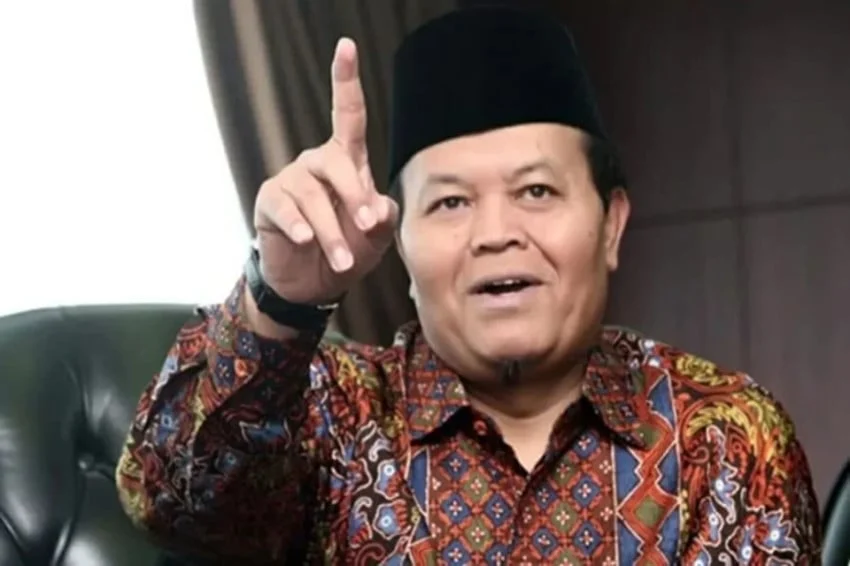
JAKARTA — In a significant political realignment within the Prosperous Justice Party (PKS), veteran Indonesian lawmaker Hidayat Nur Wahid (HNW) has officially stepped down from his high-profile position as the Deputy Speaker of the People’s Consultative Assembly (MPR RI). The strategic decision, announced by PKS Secretary-General Muhammad Kholid on Tuesday, November 10, 2026, is not a retirement from public service or a demotion, but rather a calculated pivot. HNW has been reassigned by the party’s central leadership to spearhead Indonesia’s parliamentary diplomacy on the global stage as
the new Chairman of the Inter-Parliamentary Cooperation Agency (BKSAP) of the House of Representatives (DPR RI).
This high-stakes internal reshuffle underscores PKS’s ambition to amplify its diplomatic footprint internationally, leveraging HNW’s extensive political experience, legislative acumen, and robust global network. While relinquishing his leadership role in the MPR—a key state institution responsible for safeguarding and amending the 1945 Constitution—HNW assumes a critical diplomatic vanguard position within the legislature, where parliamentary networking intersects with foreign policy, global solidarity, and humanitarian advocacy.
The Strategic Rationale Behind the Reassignment
The decision to transition HNW from the MPR leadership to the chairmanship of BKSAP DPR RI was born out of a comprehensive evaluation of Indonesia’s current geopolitical needs. According to PKS Secretary-General Muhammad Kholid, the party views parliamentary diplomacy as an indispensable arm of national sovereignty and soft power projection. In an increasingly polarized global landscape, inter-parliamentary bodies provide a flexible, responsive channel for dialogue that complements traditional state-to-state diplomacy conducted by the executive branch.
"PKS has entrusted Bapak Hidayat Nur Wahid with the crucial mission of strengthening Indonesia’s parliamentary diplomacy," Kholid stated during the official briefing. "His extensive experience, distinguished capacity, and deep international network serve as vital assets for building robust cooperation with the parliaments of various nations, while persistently championing the interests of the Indonesian nation and universal humanitarian values."
Kholid emphasized that inter-parliamentary diplomacy holds strategic weight in cementing international relations, fostering mutual trust, and mobilizing collective support for global peace and justice. By placing a senior statesman of HNW’s caliber at the helm of BKSAP, PKS aims to elevate the agency’s proactive stance in addressing transnational challenges, ranging from geopolitical conflicts to human rights concerns and economic cooperation.
Focus on the Islamic World and Global Humanitarian Causes
A central pillar of HNW’s new mandate as BKSAP Chairman involves recalibrating and deepening ties with the legislative bodies of nations within the Islamic world, while concurrently expanding diplomatic outreach to countries committed to peace, multilateralism, and international law. This dual-track approach reflects PKS’s longstanding foreign policy priorities, which traditionally place a heavy emphasis on solidarity with oppressed populations globally, most notably the Palestinian cause.
HNW has long been recognized as one of Indonesia’s most vocal and consistent advocates for Palestinian independence within the national legislature. His appointment to BKSAP is widely interpreted as a tactical move to institutionalize and sharpen this advocacy at the international parliamentary level, utilizing forums such as the Inter-Parliamentary Union (IPU) and the Parliamentary Union of the OIC Member States (PUIC).
"We hope that he can strengthen parliamentary cooperation across the Islamic world while simultaneously building broader cross-regional support," Kholid asserted. "The defense of Palestine remains an urgent humanitarian responsibility that must be collectively championed by the global community."
This diplomatic focus aligns closely with broader domestic expectations in Indonesia, where successive administrations—including the government led by President Prabowo Subianto—have maintained an unwavering constitutional and moral commitment to supporting Palestinian self-determination. By steering BKSAP, HNW is expected to act as a legislative bridge, aligning parliamentary resolutions and cross-border lobbying efforts with Indonesia’s official anti-colonial foreign policy posture.
The Institutional Significance of BKSAP and the MPR
To fully grasp the gravity of this transition, it is necessary to examine the constitutional and functional roles of the two institutions involved: the MPR RI and the BKSAP DPR RI.
The MPR is Indonesia’s supreme legislative body, comprising members of both the DPR (House of Representatives) and the DPD (Regional Representative Council). Its leadership positions carry immense symbolic and political weight, involving the stewardship of constitutional deliberations, the inauguration of presidents and vice presidents, and the oversight of national consensus pillars. Serving as MPR Deputy Speaker places a politician at the very apex of domestic governance.
Conversely, BKSAP operates as a specialized agency within the DPR RI specifically mandated to manage, develop, and foster friendly relations between the Indonesian parliament and parliaments of other countries. It acts as the legislative branch’s foreign ministry, engaging in bilateral and multilateral parliamentary diplomacy, hosting foreign delegations, and representing Indonesia in global parliamentary organizations.
While transitioning from MPR Deputy Speaker to BKSAP Chairman may appear outwardly as a shift from a broader constitutional role to a specialized functional post, within the hierarchy of parliamentary influence, leading BKSAP offers distinct advantages for an experienced statesman like HNW. It grants him an unobstructed global platform to project Indonesia’s voice on pressing international crises, bypassing some of the domestic administrative constraints inherent in running the supreme assembly.
Chronology of a Legislative Transition
The announcement of HNW’s resignation from the MPR leadership and his subsequent appointment to BKSAP concludes weeks of internal deliberations within the PKS central executive board.
- Initial Consultations: Following the consolidation of the current legislative term and the stabilization of the executive-legislative dynamics under the Prabowo administration, PKS leadership began evaluating how to maximize its political capital and legislative influence.
- Strategic Review of Global Commitments: Recognizing escalating geopolitical tensions in the Middle East and shifting multilateral alliances, the party identified a strategic vacuum in proactive parliamentary diplomacy that required experienced leadership.
- Selection of Hidayat Nur Wahid: Given his academic background, historical tenure as MPR Speaker (2004–2009), and decades of active engagement in international Islamic and humanitarian forums, HNW was unanimously identified as the ideal candidate to revitalize BKSAP.
- Formal Resignation and Reassignment: On November 10, 2026, the party formally announced the leadership transition, detailing HNW’s departure from his MPR deputy post and outlining his new responsibilities at the head of the parliamentary cooperation agency.
- Parliamentary Ratification: Following the political announcement, administrative procedures within the DPR leadership structure are initiated to formally install HNW as the Chairman of BKSAP, succeeding the previous incumbent in accordance with internal legislative rules.
Background Profile: Hidayat Nur Wahid’s Legislative Journey
Hidayat Nur Wahid is widely regarded as one of the founding figures and intellectual heavyweights of the modern Indonesian Islamic political movement. Born in Klaten, Central Java, in 1960, HNW pursued rigorous academic training in Islamic theology and philosophy, earning his Master’s and Ph.D. degrees from the prestigious Al-Azhar University in Cairo, Egypt. His deep international exposure during his formative academic years laid the foundation for his fluency in global diplomatic discourse.
Entering national politics during the turbulent reformasi era of the late 1990s, HNW became a founding member of the Justice Party (PK), which later transformed into the Prosperous Justice Party (PKS). He served as the party’s president from 2000 to 2004, steering its growth into a disciplined, ideologically coherent opposition and coalition force.
His legislative career reached an early zenith when he was elected as the Speaker of the MPR RI for the 2004–2009 term, presiding over the state institution during a crucial period of democratic consolidation following the fall of the Suharto regime. Over subsequent decades, HNW has consistently retained his seat in the DPR RI, representing critical constituencies in Jakarta, and has repeatedly been trusted by his party to hold high-ranking leadership positions, including serving as MPR Deputy Speaker across multiple legislative periods.
Beyond his institutional roles, HNW has maintained an active presence in international civil society networks, participating in global conferences addressing human rights, interfaith dialogue, and minority rights. This extensive background makes his transition to BKSAP a natural continuation of his lifelong vocation in bridging domestic Islamic values with international diplomacy.
Implications for Indonesian Foreign Policy and Domestic Politics
The reassignment of HNW carries several noteworthy implications for both Indonesia’s foreign relations and the domestic political ecosystem:
First, it signals a more assertive and values-driven parliamentary diplomacy. While the Ministry of Foreign Affairs under the executive branch must navigate delicate diplomatic protocols and economic realpolitik, parliamentary bodies like BKSAP enjoy greater latitude to voice moral imperatives, critique human rights abuses, and express solidarity with marginalized populations without triggering direct diplomatic crises. Under HNW, BKSAP is expected to amplify its advocacy on international platforms, particularly regarding Palestinian statehood, Islamophobia, and humanitarian crises across the Global South.
Second, the move reflects PKS’s internal talent management strategy. By placing a senior leader in charge of BKSAP, PKS ensures that its most articulate and internationally recognized figures are positioned where their specific skill sets yield maximum strategic utility. This allows younger cadres to step into domestic leadership roles within the MPR while retaining seasoned oversight on crucial foreign policy fronts.
Third, the transition highlights the growing importance of "parliamentary soft power" in Indonesia’s broader foreign policy architecture. As Indonesia seeks to position itself as a credible, independent middle power capable of mediating global conflicts and bridging divides between the West and the Global South, synchronized efforts between the executive branch and legislative diplomacy become increasingly vital.
Conclusion
Hidayat Nur Wahid’s transition from the Deputy Speaker of the MPR RI to the Chairman of BKSAP DPR RI marks a notable chapter in contemporary Indonesian legislative politics. Far from a step back, the reassignment positions one of the country’s most experienced statesmen at the forefront of international parliamentary engagement. With a clear mandate to deepen ties with the Islamic world, expand global networks, and relentlessly champion humanitarian causes such as Palestinian independence, HNW’s leadership at BKSAP is poised to inject renewed vigor into Indonesia’s global legislative diplomacy in the years ahead.