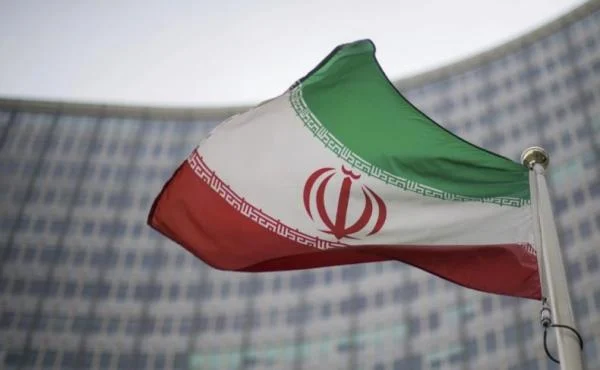
Tehran, Sunday, November 1, 2026 — The Islamic Republic of Iran has formally designated the British Royal Navy and the British Royal Air Force as "terrorist organizations," marking a significant and unprecedented escalation in diplomatic hostility between London and Tehran. In a parallel move, the Iranian Foreign Ministry announced that the United Kingdom’s Secret Intelligence Service, commonly known as MI6, has been officially blacklisted as a "hostile entity." This sweeping geopolitical maneuver, broadcast via the state-run IRNA news agency, serves as a direct retaliatory response to the United Kingdom’s earlier decision to categorize the Islamic Revolutionary Guard Corps (IRGC) as a terrorist organization under the State Threats Act on July 13, 2026.
The Catalyst for Diplomatic Rupture
The decision, ratified by the Supreme National Security Council of Iran, represents the culmination of months of deteriorating relations. The Iranian government’s statement explicitly framed the action as a necessary countermeasure against what it characterized as the "malign activities" of the British state. Tehran has long harbored grievances regarding the UK’s role in global sanctions regimes, but the recent legislative move in London—formally labeling the IRGC, a branch of the Iranian Armed Forces, as a terrorist organization—triggered a definitive shift in Iran’s diplomatic posture.
For the British government, the decision to invoke the State Threats Act was presented as a response to alleged subversive activities and regional instability attributed to the IRGC. However, Tehran views this not merely as a policy disagreement but as an existential threat to its security apparatus. By targeting the specific branches of the British military that operate extensively in the Middle East—namely the Navy and the Air Force—Iran is signaling a shift toward treating British military assets as legitimate targets within its sphere of influence.
Chronology of Escalation: From February to November 2026
The current hostilities did not emerge in a vacuum; they are the byproduct of a volatile 2026. The timeline of this year has been defined by a series of direct confrontations and failed diplomatic bridges:
- February 28, 2026: A pivotal moment occurred when the United States and Israel launched coordinated military strikes against targets inside Iran. This operation shattered existing regional norms and triggered a wave of retaliatory strikes across the Middle East.
- June 17, 2026: In a brief glimmer of hope, Washington and Tehran signed a Memorandum of Understanding (MoU) aimed at de-escalation. The agreement was intended to manage rising tensions, particularly regarding maritime security in the vital trade artery of the Strait of Hormuz.
- July 13, 2026: The United Kingdom enacted the State Threats Act, officially designating the IRGC as a terrorist organization. This move signaled that London was aligning itself more aggressively with the hardline containment strategies favored by Washington.
- September 28, 2026: A high-profile incident occurred when a military installation housing U.S. personnel in the United Kingdom reportedly faced a credible sabotage threat, leading to a surge in rhetoric from U.S. leadership, specifically former President Donald Trump, who accused Iran of orchestrated aggression.
- October 5, 2026: Citing extreme concerns over potential Iranian missile or drone strikes, the U.S. military ordered the urgent relocation of its fleet of long-range bombers from British bases, illustrating the fragility of the military cooperation between the two nations.
- November 1, 2026: Iran’s formal designation of the British armed services cements a new, adversarial reality in the U.K.-Iran relationship.
Military and Logistical Implications
Tehran’s justification for this designation extends beyond the "terrorist" labeling of the IRGC. The Iranian Foreign Ministry has explicitly accused London of complicity in the ongoing conflict between Iran and the U.S.-Israel axis. Specifically, Iranian officials allege that the United Kingdom has provided essential logistical support, including access to military bases and intelligence-sharing, which has facilitated operations against Iranian territory.
From a strategic perspective, the classification of the British Royal Navy as a "terrorist organization" creates significant risks for maritime transit. The Strait of Hormuz, through which approximately 20% of the world’s petroleum passes, is a zone of constant friction. If the IRGC and the Iranian Navy treat British vessels as "terrorist" targets, the insurance premiums for commercial shipping in the region will likely skyrocket, further destabilizing global energy markets.
Furthermore, the targeting of MI6 as a "hostile entity" suggests that Iranian intelligence services will likely intensify counter-intelligence operations against British interests. This could manifest in increased cyber-attacks, the expulsion of diplomatic personnel, or the curtailing of intelligence cooperation on issues of mutual concern, such as regional counter-narcotics or anti-extremism efforts.

Analysis of Regional Security Dynamics
The regional security architecture in the Middle East has entered a phase of profound uncertainty. The 2026 conflict cycle has demonstrated that traditional diplomacy—exemplified by the June 17 MoU—is currently unable to contain the structural drivers of the conflict. The involvement of the United Kingdom as a primary target of Iranian policy indicates that the conflict is no longer confined to the immediate Persian Gulf theater but has extended to encompass the global reach of the Western military-intelligence complex.
The United States, while currently managing its own complex relationship with Iran, remains the primary security guarantor for the UK’s interests in the region. However, the movement of American assets away from British soil in early October highlights a growing divide regarding risk management. The U.S. appears to be prioritizing the protection of its own strategic assets, leaving the United Kingdom to navigate the fallout of its aggressive legislative stance against the IRGC with fewer protective layers.
International Reaction and Future Outlook
As of this reporting, the British Foreign Office has yet to issue a comprehensive response to the Iranian designation. However, analysts suggest that London is unlikely to reverse its stance on the IRGC, as doing so would be viewed as a capitulation to Iranian pressure. Instead, the United Kingdom may seek to bolster its naval presence in the region to protect its interests and ensure the safety of its personnel, potentially triggering a "tit-for-tat" escalation cycle that could spiral into direct naval skirmishes.
The international community, particularly the United Nations and European Union member states, remains caught in the middle. The European Union has previously attempted to maintain a distinct diplomatic track with Iran, but the current escalation makes such efforts increasingly untenable. The prospect of renewed nuclear talks or regional security dialogues, which were once the cornerstone of Western policy toward Iran, now appears distant.
Conclusion: A New Cold War in the Gulf?
The designation of the British Royal Navy, Air Force, and MI6 as terrorist and hostile entities is not merely a symbolic gesture; it is a tactical shift that signals Iran’s readiness to confront Western powers on a broader scale. By removing the veil of traditional diplomatic protocol, Tehran has effectively signaled that it no longer views the United Kingdom as a neutral or manageable actor in the region.
As the international community watches these developments, the primary concern remains the potential for miscalculation. In a climate where military branches are labeled as terrorist groups, the rules of engagement become blurred. With the Strait of Hormuz acting as a flashpoint and the regional military buildup showing no signs of slowing, the coming months will likely test the resilience of international law and the efficacy of global efforts to prevent a wider, uncontrolled conflict. The "state of threat" has evolved from a matter of rhetoric to a permanent feature of the regional landscape, leaving the world to grapple with the consequences of a significantly deepened divide between Tehran and the Western alliance.