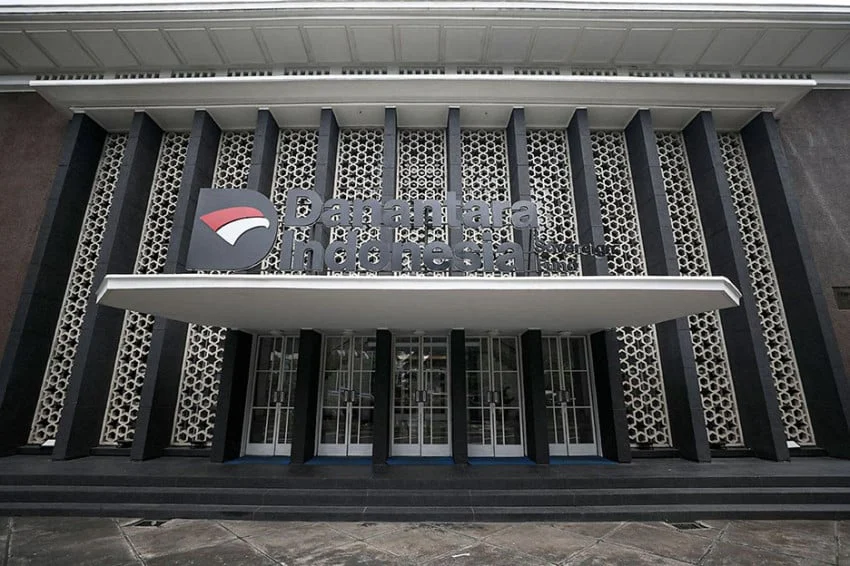
The recent participation of Danantara Indonesia in the prestigious international forum hosted by TIME magazine in New York City has ignited significant discourse regarding Indonesia’s strategy for global economic positioning. By positioning itself alongside global industry titans such as Toyota and American Airlines, Danantara—Indonesia’s newly inaugurated sovereign wealth management entity—has effectively signaled its ambition to become a credible player in the international investment landscape. However, as the organization seeks to cement its place on the global stage, experts suggest that this high-profile visibility is merely the first step in a long-term journey to attract foreign direct investment (FDI) through sustained performance and robust governance.
The Strategic Significance of Global Visibility
For emerging national entities, the challenge often lies in the "liability of foreignness"—the inherent disadvantage that new or foreign institutions face when attempting to enter established global markets. By engaging with a platform as globally recognized as TIME, Danantara is utilizing a proven communication strategy: credibility transfer.
Nugroho Agung Prasetyo, a senior Public Relations practitioner and lecturer at the London School of Public Relations (LSPR), explains that visibility in such forums is not merely about brand exposure. "In the realm of reputation management, presence at a highly credible forum strengthens international visibility while simultaneously opening doors to stakeholders who might otherwise be inaccessible," says Prasetyo.
The strategy behind appearing alongside established global brands serves a dual purpose. First, it places Danantara within a specific "peer group," creating a psychological association between the Indonesian entity and the stability of established multinational corporations. Second, it allows the organization to define its identity on its own terms before the global investment community, rather than relying on secondary narratives.
Background: The Emergence of Danantara
Danantara, formally established to manage and optimize Indonesia’s sovereign assets, is modeled after successful sovereign wealth funds (SWFs) seen in other emerging and developed economies. Its mandate is to consolidate state-owned enterprises (SOEs) and other strategic assets to foster more efficient capital allocation, increase investment returns, and provide a buffer for the national economy against global volatility.
The timing of its appearance at the TIME forum is deliberate. As Indonesia undergoes a transition in leadership and policy direction, the state is keen to assure global markets that it remains a "business-friendly" environment. By showcasing its institutional structure in New York, the financial capital of the world, Danantara is effectively signaling a shift toward more professionalized and transparent asset management.
Navigating Skepticism and Clarifying Financial Commitments
The transition to global prominence is rarely without scrutiny. Recent reports in the Indonesian media touched upon concerns regarding the financial implications of such international appearances, specifically regarding sponsorship rumors for the TIME100 Next 2026 event.
Danantara has been proactive in addressing these narratives. The organization clarified that while its branding and logo were featured prominently during the event, there was no capital outflow in the form of sponsorship fees. This clarification is critical for domestic stakeholders, who are often sensitive to how state resources are utilized in promotional activities. In international business, "barter" or strategic partnership agreements are common, yet they are often misunderstood by the public. By clarifying its financial stance, Danantara has attempted to mitigate potential reputational risk before it could escalate into a domestic political issue.
The Mechanism of Credibility Transfer
The concept of credibility transfer is central to how Danantara’s participation in the TIME forum should be analyzed. In behavioral economics and marketing, the "halo effect" suggests that individuals and institutions are perceived more favorably when they are associated with high-reputation entities.
When Danantara shares a platform with, for instance, a global logistics giant or a major automotive manufacturer, it subconsciously signals to investors that the organization adheres to global standards of reporting, compliance, and corporate governance. For an institutional investor—such as pension funds or private equity firms from Europe or North America—this association reduces the perceived risk of entering the Indonesian market.

Economic Context: Why Indonesia Needs This Now
Indonesia has set ambitious economic growth targets, aiming to escape the "middle-income trap" and achieve high-income status by 2045. To reach these goals, the country requires sustained annual GDP growth of 6% to 7%, a feat that cannot be achieved by domestic savings alone.
Data from the Investment Coordinating Board (BKPM) indicates that while FDI flows into Indonesia have been resilient, there is an ongoing need to diversify the sources of investment. Currently, a significant portion of investment originates from neighboring Asian countries like Singapore, China, and Japan. While these partnerships remain vital, diversifying into Western capital markets—which are heavily influenced by the sentiment expressed in forums like those hosted by TIME—is a necessary strategic pivot.
Building Long-Term Trust: The Post-Event Reality
While a high-profile debut is beneficial for initial awareness, experts warn that "brand equity" is fragile. The real work for Danantara begins when the cameras stop flashing. International investors are notoriously data-driven; they are less impressed by high-profile event attendance and more focused on institutional transparency, legal certainty, and consistent yield performance.
"Presence is just the introduction," says Prasetyo. "The sustainment of this reputation depends entirely on the organization’s performance and credible governance. If the international community sees that Danantara delivers on its promises of efficient asset management, that is when true trust is built."
Challenges Ahead for Sovereign Wealth Entities
As Danantara scales its operations, it will likely face several challenges:
- Regulatory Harmonization: Ensuring that its operations are compliant not only with Indonesian law but also with the expectations of international financial markets.
- Transparency Standards: Providing regular, verifiable reports on its asset performance to attract international institutional partners.
- Governance Autonomy: Demonstrating that its investment decisions are based on commercial viability rather than short-term political pressures.
If Danantara can navigate these challenges, its appearance in New York will be viewed in retrospect as a pivotal moment in its history—the point at which it transitioned from a domestic entity to a global participant.
Conclusion: A Calculated Step Forward
The participation of Danantara in the TIME forum represents a maturation of Indonesia’s communication strategy regarding its national assets. By moving away from purely domestic-facing messaging and adopting a global posture, the organization is acknowledging that it operates in an interconnected financial ecosystem.
However, it is vital to manage expectations. International branding is a marathon, not a sprint. The "visibility" gained in New York provides the platform, but the "reputation" will be earned through years of disciplined asset management, transparent communication, and the successful execution of investment strategies that benefit both the Indonesian state and its global partners.
Ultimately, the event serves as a clear message to the world: Indonesia is ready to participate in the global arena with a sophisticated, institutional approach. Whether that message translates into long-term capital inflow depends on the organization’s ability to turn the spotlight of the TIME forum into a sustained beacon of credibility and performance. As the global investment community watches, Danantara’s next moves—in terms of deal-making, governance, and institutional communication—will be the true litmus test of its newfound global reputation.
For the Indonesian government, this is a test of its commitment to global economic integration. If managed correctly, the visibility achieved in New York could become a cornerstone of the nation’s economic diplomacy, positioning Indonesia not just as a destination for foreign capital, but as a trusted partner in the global financial system. The road ahead is complex, but the path has been clearly set, and the international stage is now aware of the presence of Danantara.