YouTube has officially announced a sweeping suite of updates designed to transform how creators collaborate and connect with global audiences during live broadcasts. As competition among major social media platforms intensifies, Google-owned YouTube is streamlining its infrastructure to make live collaboration as frictionless as possible. The newly unveiled features eliminate the traditional technical barriers of live streaming, such as third-party software setups, while introducing gamification and AI-powered localization tools aimed at maximizing creator reach and audience engagement.
The announcement, which forms a core component of the platform’s strategic roadmap leading into the early 2027 rollout, reflects a broader industry shift toward interactive, multi-creator digital broadcasting. By integrating natively supported co-host capabilities, YouTube is directly addressing the evolving demands of digital content creators who seek simpler, faster, and more integrated methods to produce collaborative live content.
Streamlining Live Collaboration Without External Software
Historically, collaborative live streaming on desktop and professional setups required complex third-party software integrations such as OBS Studio, Streamlabs, or specialized multi-streaming hardware. Creators had to manually coordinate stream keys, audio routing, and visual layouts, which often presented a steep learning curve for non-technical channels.
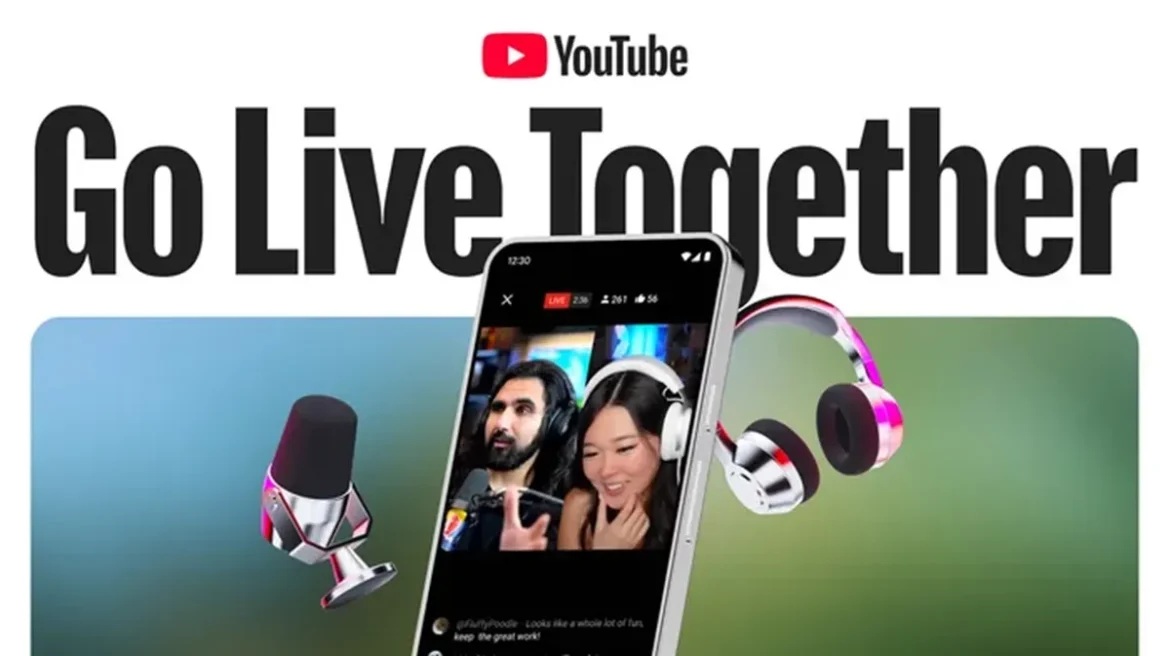
The updated "Go Live Together" ecosystem addresses this hurdle by introducing a dedicated co-host matching and search system directly within the native YouTube interface. Under the new architecture, creators can utilize a "Browse" function to identify other channels currently broadcasting live, or leverage a proprietary "Quick-match" algorithm. This automated matching system pairs creators based on thematic content, audience demographics, and shared interests, facilitating instant co-hosting sessions within a single unified broadcast window.
This native integration reduces hardware and software dependencies, allowing mobile and desktop creators alike to launch multi-person streams with minimal preparation. Industry observers note that this functionality closely mirrors the collaborative live formats popularized by short-form and social video platforms like TikTok and Instagram Live, signaling YouTube’s intent to capture a larger share of casual, spontaneous live interactions.
Gamification and Interactivity: The Introduction of Live Showdown

To combat viewer fatigue and maintain high engagement metrics throughout longer broadcast windows, YouTube is introducing a competitive feature known as "Live Showdown." This interactive format allows two collaborating creators to engage in a structured, head-to-head competition directly within their shared live stream.
During a Live Showdown, audience participation is monetized and gamified through platform-native features, including standard live chat, digital gifting, and Super Chats. Financial contributions and engagement metrics from viewers are dynamically aggregated and translated into a real-time scoring system. This score is displayed prominently on-screen, providing immediate feedback to both the creators and the audience regarding the progress of the competition.
This mechanism not only incentivizes deeper viewer interaction but also drives revenue generation for creators through heightened Super Chat utilization. By turning standard live streams into gamified events, YouTube aims to increase average watch times and foster stronger community loyalty across participating channels.
Expanding Beyond Live: The "Watch With" Feature and Global Accessibility
In tandem with live broadcasting enhancements, YouTube is expanding its "Watch With" feature. Initially tested in limited environments, the capability is now being rolled out to a wider array of long-form video content that meets specific eligibility criteria. This allows creators to host watch parties and reactions around pre-recorded, long-form content, bridging the gap between asynchronous video libraries and synchronous live engagement.
Perhaps the most technologically significant addition to the update is the integration of "Live auto dubbing." This tool utilizes advanced machine learning and neural translation models to translate a creator’s spoken words into multiple languages in real time.
Internal data provided by YouTube underscores the critical economic necessity of localization. According to platform metrics, more than 40 percent of total live stream watch time originates from viewers outside a creator’s home country. Historically, language barriers restricted the organic cross-border growth of live broadcasts. By deploying real-time auto dubbing, YouTube aims to dismantle these linguistic barriers, enabling global audiences to consume live content seamlessly in their preferred languages.
Chronology and Strategic Rollout Timeline

The development of these features represents the culmination of a multi-year effort by YouTube to bolster community-driven tools. The journey began with the introduction of the standard "Collaboration" tag and shared-video features, which allowed creators to co-author single uploads without complex editing workflows.
Following the successful adoption of asynchronous collaboration, engineering teams shifted focus toward real-time environments. Throughout late 2025 and 2026, beta testing for enhanced mobile streaming and multi-user integration laid the groundwork for the current ecosystem expansion.
The fully realized suite of tools—including the enhanced Go Live Together search mechanisms, Live Showdown mechanics, and real-time auto dubbing—is officially scheduled for a phased global rollout starting in early 2027. Initial preview builds are expected to launch selectively among top-tier verified partners before expanding to the broader creator community.
Market Implications and Industry Analysis
The introduction of native co-hosting and real-time dubbing carries profound implications for the digital media landscape. From an economic perspective, lowering the barrier to entry for live streaming encourages higher frequency broadcasting. Increased live frequency directly correlates with higher ad-impression inventory and enhanced opportunities for direct viewer monetization via Super Chats and digital gifts.
Furthermore, the integration of real-time machine translation alters the competitive dynamics of international digital content. Creators who previously operated within strict domestic silos can now realistically target multilingual global markets without investing in dedicated translation or localization teams. This levels the playing field for mid-tier creators, enabling them to scale their channel reach internationally.
As platforms like Twitch, TikTok, and Meta properties vie for dominance in the live-streaming economy, YouTube’s strategy relies heavily on leveraging its vast infrastructure, sophisticated algorithmic recommendation engines, and established monetization frameworks. By combining effortless multi-creator collaboration with AI-driven global accessibility, YouTube is positioning its ecosystem to capture the next generation of digital media consumption.