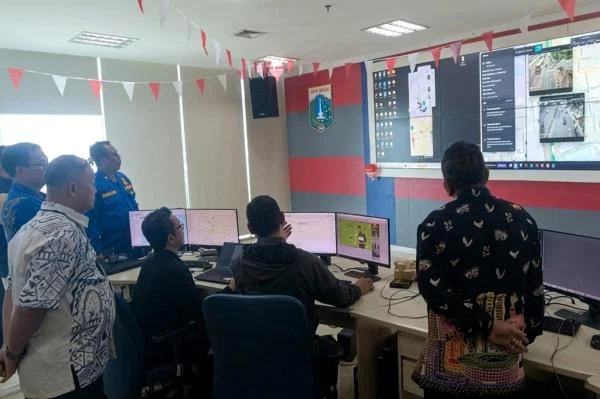
The Jakarta Provincial Government, through its Department of Communication, Informatics, and Statistics (Diskominfotik), has officially launched JAK-Respond, an advanced, integrated digital dashboard designed to unify critical urban management data. By consolidating GPS location data from TETRA (Terrestrial Trunked Radio) handheld radios, live CCTV feeds, real-time traffic updates, and meteorological information into a single Geographic Information System (GIS) interface, the city aims to fundamentally transform how municipal authorities monitor and respond to public service challenges and emergency situations across the capital.
The Evolution of Urban Command and Control
For years, the operational landscape of the Jakarta provincial administration was characterized by fragmented data silos. Officials and emergency responders were previously required to navigate between multiple, disparate software platforms to gain a holistic view of events occurring on the ground. A dispatcher monitoring the location of field officers would have to switch applications to view traffic cameras or verify local weather conditions, creating significant latency in decision-making processes.
The introduction of JAK-Respond serves as a technological bridge, eliminating the friction caused by platform switching. By centralizing these streams, the Diskominfotik has created a command-and-control environment that mimics modern smart city frameworks seen in global metropolitan hubs like Singapore or London. This move is part of a broader, multi-year digital transformation strategy intended to make Jakarta a truly "Smart City," where data-driven insights dictate policy and operational deployment.
Technical Architecture and Core Features
At the heart of the JAK-Respond system is a robust GIS-based architecture that maps the vast expanse of Jakarta’s 661.5 square kilometers. The system’s primary utility lies in its real-time spatial awareness.
Key technical features of the dashboard include:
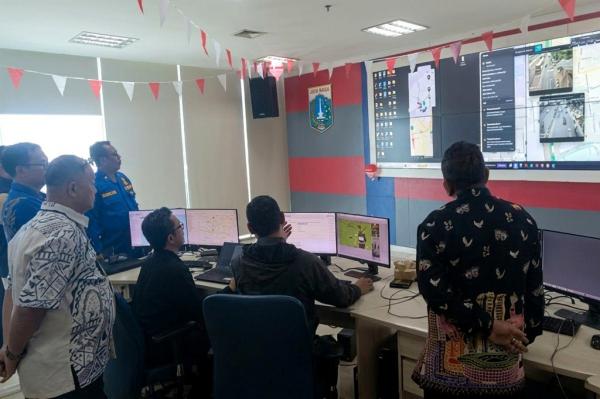
- TETRA GPS Integration: The integration of TETRA handheld devices allows the central command to track the exact coordinates of field personnel. This is particularly vital for public order, sanitation, and emergency service teams, ensuring that the closest available units are dispatched to a reported incident.
- Unified CCTV Network: The dashboard aggregates thousands of high-definition CCTV feeds across the city, providing visual confirmation of road incidents, flooding, or public safety concerns without the need for secondary verification.
- Dynamic Environmental Data: By layering weather data directly onto the map, the system allows for predictive analysis. For instance, if heavy rainfall is detected in a specific catchment area, the dashboard highlights potential flood-prone zones, allowing authorities to pre-position resources.
- Real-time Traffic Intelligence: Aggregated traffic flow data allows for better routing of emergency vehicles through Jakarta’s notorious traffic congestion, a critical factor in reducing emergency response times.
Chronology of the Digital Integration Effort
The journey toward a centralized dashboard has been a methodical progression. The provincial government has spent the last several years upgrading its telecommunications infrastructure, specifically shifting toward digital radio networks like TETRA to ensure secure and reliable communication.
Earlier in 2026, the administration emphasized the need for better coordination between the provincial government and district-level (kecamatan) offices. Following the recent initiative by Governor Pramono Anung to conduct regular, rotating meetings across Jakarta’s 44 districts to address grassroots problems, the necessity for a technological tool that connects these districts to the central administration became paramount. JAK-Respond was developed as the logistical backbone to support this governance model, ensuring that when the Governor or district officials identify a localized issue, the central command has the real-time data to support a swift resolution.
Official Perspectives and Operational Efficiency
Aditia Prana Kusuma, Head of the Unit for the Management of Electronic Systems Networks at Diskominfotik DKI Jakarta, has been a key proponent of this transition. According to his assessments, the shift is not merely about convenience; it is about accountability and measurable impact.
"The objective is to minimize the time between the reporting of an incident and the delivery of a solution," stated Kusuma. "By reducing the administrative burden on our operators and providing them with a ‘single source of truth’ on their screens, we are effectively increasing the human capacity of our workforce. An operator who no longer has to toggle between four different systems is an operator who can focus on the nuance of the emergency at hand."
While the system is currently being used internally by government agencies, analysts suggest that the next phase of the project could involve public-facing modules, potentially allowing citizens to see real-time updates on public service interventions, thereby increasing transparency in the civil service.
Broader Implications for Jakarta’s Governance
The implementation of JAK-Respond carries significant weight for the future of the capital. As Jakarta transitions its status and evolves its urban management needs, the ability to maintain a bird’s-eye view of municipal operations is a competitive advantage.

- Reduced Emergency Response Latency: In a city as dense as Jakarta, seconds matter during a fire, a flood, or a medical emergency. Centralizing the location of resources ensures the fastest possible mobilization.
- Resource Optimization: By monitoring the location of all government assets—from trash collection vehicles to maintenance crews—the city can eliminate redundant travel and ensure that personnel are distributed optimally throughout the city based on demand rather than fixed, outdated schedules.
- Data-Driven Policy Making: Over time, the historical data collected by JAK-Respond will provide a treasure trove of information regarding urban patterns. This will allow the government to identify "hot spots" for traffic, crime, or infrastructure damage, enabling proactive rather than reactive infrastructure spending.
- Strengthened Inter-agency Coordination: Often, the biggest hurdle in urban management is communication between different departments (e.g., Public Works vs. Public Safety). JAK-Respond creates a common operating picture, forcing agencies to work from the same data set and reducing the finger-pointing that occurs when coordination breaks down.
Challenges and Future Considerations
Despite the clear benefits, the implementation of such a comprehensive digital tool is not without its hurdles. Cybersecurity remains a top priority; as the city integrates more critical infrastructure into a single digital dashboard, the system becomes a high-value target for potential cyber threats. The Diskominfotik will need to ensure that the encryption protocols for the TETRA network and the GIS servers are continuously updated to meet international security standards.
Furthermore, the "human factor" remains a challenge. For the system to be effective, personnel at the district and provincial levels must be rigorously trained. The shift from traditional, paper-heavy or siloed communication to a fully digital, integrated dashboard requires a cultural shift within the civil service.
Conclusion: A New Standard for City Management
The development of JAK-Respond marks a definitive step forward for Jakarta. By embracing integrated technology, the provincial government is signaling a commitment to modernization and efficiency that transcends traditional bureaucracy. As the system matures and its data streams become more sophisticated, it is expected to become the primary interface for every major operational decision in the city.
For the residents of Jakarta, the success of this dashboard may not always be visible, but it will be felt in the form of faster emergency responses, more efficient street repairs, and a more responsive government. As the city continues to navigate the complexities of rapid urbanization, tools like JAK-Respond will be the essential infrastructure required to keep the capital running smoothly, safely, and efficiently in the years to come. The integration of technology into the core of Jakarta’s governance is no longer a luxury; it is the fundamental requirement for a modern, functional metropolis.