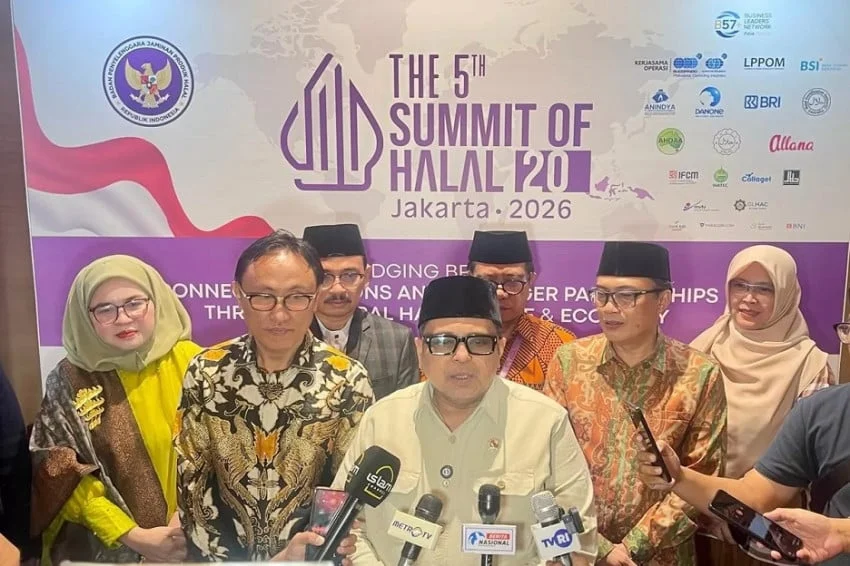
The conclusion of The 5th Summit of Halal 20 (H20) 2026 in Jakarta has marked a pivotal milestone in the global Islamic economy, as Head of the Halal Product Assurance Agency (BPJPH) Ahmad Haikal Hasan announced that more than 80 countries have formally expressed their readiness to comply with Indonesia’s mandatory halal certification requirements. This development follows years of intensive diplomatic outreach, regulatory harmonization efforts, and international summits aimed at streamlining the global halal supply chain. The forum, which saw direct participation from 48 nations, serves as a critical validation of Indonesia’s position as a global leader in the halal industry and underscores the maturing nature of international trade standards regarding religious dietary and manufacturing protocols.
The Significance of the H20 2026 Summit
The 5th Summit of Halal 20 (H20) acted as a primary platform for stakeholders to reconcile disparate national standards into a more cohesive, globally recognized framework. As Indonesia moves toward full implementation of its mandatory halal labeling, the necessity for cross-border cooperation has never been higher. By convening representatives from 48 countries in Jakarta, the summit provided a neutral, collaborative space for regulatory bodies, certification agencies, and industry leaders to discuss the technicalities of the Indonesian Halal Law.
The presence of these international delegates is not merely symbolic; it represents a functional alignment of certification systems. For international exporters, Indonesia’s mandate is not viewed as a trade barrier but rather as a standardized threshold for entry into one of the world’s largest consumer markets. The discussions focused on Mutual Recognition Agreements (MRAs), which are essential for ensuring that halal certificates issued by foreign agencies are accepted by BPJPH, thereby preventing logistical bottlenecks for imported goods.
Chronology of Indonesia’s Mandatory Halal Journey
The trajectory toward mandatory halal certification in Indonesia has been a multi-year process characterized by phased implementation and legislative adjustment. The journey can be traced through several key stages:
- Legislative Foundation (2014-2019): The enactment of Law No. 33 of 2014 regarding Halal Product Assurance established the BPJPH, shifting the authority of halal certification from the Indonesian Ulema Council (MUI) to the state. This moved the process from a voluntary, NGO-led system to a government-mandated regulatory framework.
- The Establishment of BPJPH (2017): The formal formation of the agency marked the beginning of administrative centralization, setting the stage for the transition toward mandatory requirements.
- Phased Implementation (2019-2024): During this period, the government began requiring mandatory certification for food and beverage products, slaughterhouses, and raw materials, while providing grace periods for small and medium enterprises (SMEs).
- International Harmonization (2022-2026): With the introduction of the H20 summits, Indonesia began aggressively pursuing international partnerships to ensure that imported products meet the high standards of the Indonesian halal ecosystem.
- Full Mandatory Implementation (2026 and Beyond): Following the 2026 summit, the focus has shifted to rigorous enforcement, with the government signaling that the global community is sufficiently prepared to adhere to these requirements.
Supporting Data and Market Context
The urgency behind Indonesia’s push for mandatory halal certification is supported by the sheer scale of the global halal market. According to the State of the Global Islamic Economy (SGIE) Report, global Muslim consumer spending on food and beverages is projected to exceed $1.5 trillion annually. Indonesia, home to the world’s largest Muslim population, remains the primary consumer hub.
Data from the Ministry of Trade indicates that the value of imported processed food products into Indonesia has seen a steady increase, with a significant portion originating from non-OIC (Organization of Islamic Cooperation) countries. By ensuring that over 80 countries have aligned their certification processes with Indonesian standards, BPJPH is mitigating the risk of trade disruptions. The 48 countries represented at the summit account for approximately 70% of Indonesia’s food and pharmaceutical imports, making their alignment a strategic victory for trade continuity.
Official Response: The View from BPJPH
Ahmad Haikal Hasan, speaking to the press after the summit, emphasized that the acceptance by these 80 nations is the result of persistent diplomatic efforts. "We have been engaged in continuous socialization and transparent communication," Hasan noted. "The fact that 48 nations were present at this summit to discuss implementation details confirms that the global market has moved past the initial skepticism and is now focused on operational execution."
Hasan addressed concerns regarding the impact on foreign suppliers by highlighting that the transition is being managed through a spirit of cooperation rather than exclusion. The government’s approach has been to provide technical assistance to foreign halal certification bodies, helping them audit their local producers to meet the standards required by the Indonesian government. "The world is ready," Hasan stated. "The dialogue we have fostered ensures that global supply chains remain uninterrupted as we enforce our national regulations."
Economic and Regulatory Implications
The move toward mandatory certification carries profound implications for both domestic and international markets. For foreign corporations, the requirement means updating supply chain traceability, ensuring that every additive, flavor, and processing agent in their products is accounted for. While this creates an initial administrative burden, it also provides long-term security. Once a product is certified for the Indonesian market, it often meets or exceeds the halal requirements of other major Muslim-majority markets, such as Malaysia, the Middle East, and North Africa.
For Indonesia, the mandate is a tool for consumer protection and domestic industry growth. By enforcing strict standards, the government ensures that the domestic market is not flooded with products of dubious halal status. Furthermore, it creates a competitive environment where Indonesian local manufacturers are encouraged to professionalize their production lines to keep pace with international standards.
Analytical Perspective: Challenges Ahead
Despite the optimism expressed at the summit, observers note that several challenges remain. The primary concern is the capacity of local Indonesian auditors to handle the influx of international certification applications. The administrative burden of verifying thousands of foreign products requires a robust digital infrastructure. BPJPH has already begun investing in integrated digital portals to automate the certification process, but the integration of foreign data remains a technical hurdle.
Additionally, there is the challenge of "Halal Literacy." While large multinational corporations are well-versed in these requirements, small-scale international exporters may still find the regulatory landscape daunting. The success of the 2026 mandate will depend heavily on the Indonesian government’s ability to maintain clear communication channels and provide ongoing support to these smaller stakeholders.
Broader Impact on Global Trade
The alignment of 80 countries with Indonesia’s halal standards effectively creates a "Halal Common Market" of sorts. As global standards become more uniform, the cost of certification is expected to decrease over time through the elimination of redundant testing and auditing. This is a significant development for international trade, as it reduces the "halal tax" that previously hindered exporters.
Furthermore, the collaboration between these nations suggests that halal is becoming an increasingly recognized quality assurance standard, transcending religious requirements and entering the realm of general consumer safety and hygiene. The transparency required for halal certification—such as supply chain audits and ingredient disclosure—aligns with modern consumer trends toward healthier and more ethical consumption.
Conclusion
The 5th Summit of Halal 20 has provided the necessary momentum to solidify Indonesia’s role as the anchor of the global halal economy. With 80 countries now in alignment, the implementation of mandatory certification in Indonesia is no longer just a domestic policy; it is a global trade standard. As BPJPH moves into the enforcement phase, the focus will transition from diplomatic consensus to logistical excellence. The success of this initiative will be measured by the seamless integration of global products into the Indonesian market, ensuring that the country’s massive consumer base is served by products that strictly adhere to the highest standards of halal integrity. For the international business community, the message from Jakarta is clear: the path forward for the global Islamic economy is one of standardization, cooperation, and rigorous regulatory compliance.