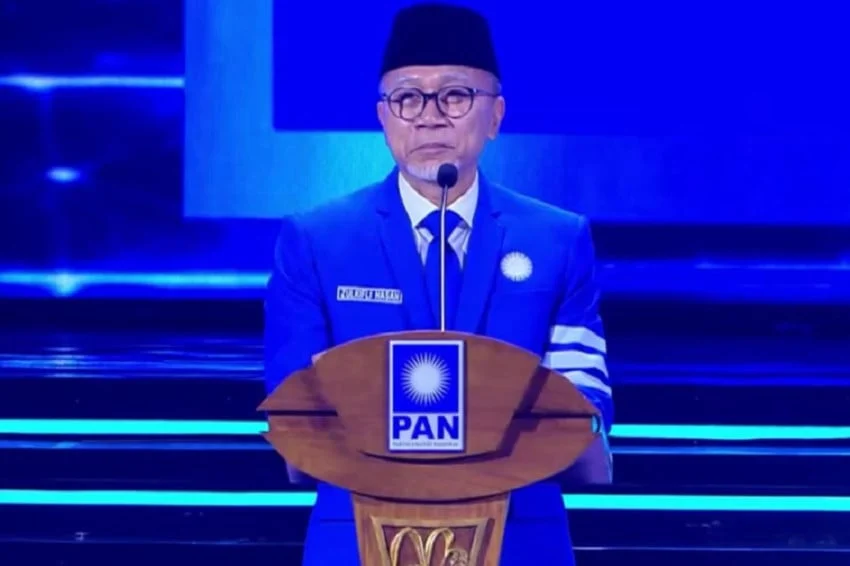
The 28th anniversary of the National Mandate Party (PAN), held at the Jakarta International Convention Center (JICC) in Senayan, Jakarta, on Friday evening, September 18, 2026, served as a definitive platform for party leadership to reaffirm its political trajectory. Amidst a backdrop of shifting alliances in the Indonesian political landscape, Chairman Zulkifli Hasan, commonly known as Zulhas, delivered a robust address emphasizing that the party’s alignment with President Prabowo Subianto is not a product of recent political expediency, but rather the result of a decades-long historical bond.
This declaration of loyalty comes at a time when the Indonesian political ecosystem is recalibrating following the 2024 general elections. By framing the relationship between PAN and the President through the lens of historical perseverance rather than mere transactional politics, Zulhas sought to solidify the party’s identity as a steadfast partner in the governing coalition.
A Historical Context of Political Alliance
To understand the weight of Zulhas’s statements, it is necessary to examine the historical trajectory of the relationship between PAN and Prabowo Subianto. Their political partnership traces back long before the successful 2024 presidential campaign. For many years, the two entities found themselves on the same side of the ideological aisle, often operating in opposition to the ruling government.
During the 2014 and 2019 presidential elections, PAN stood firmly behind Prabowo Subianto’s candidacy. Despite the losses incurred in those cycles, the party maintained its support, navigating through periods of political marginalization and internal party pressure to shift allegiances. It was not until the 2024 electoral cycle that this long-term commitment culminated in a decisive victory.
Zulhas noted during his speech that the relationship between the party and the President has been tested by the volatile nature of Indonesian politics. He emphasized that the decision to remain in the fold—even after two consecutive presidential defeats—was rooted in a shared vision for the nation’s development rather than short-term political gains or immediate access to executive power.
Beyond Political Calculation
One of the central themes of the 28th-anniversary celebration was the rejection of the notion that political alliances are solely determined by rational choice theory or "kalkulasi politik" (political calculation). In the modern era, where parties frequently switch sides to ensure survival or maximize ministerial representation, PAN’s narrative of loyalty stands as an outlier.
Zulhas explicitly addressed critics who questioned why the party consistently chose to back a candidate who had faced significant electoral hurdles. He argued that the alliance transcends the goal of forming a government. By characterizing the partnership as a "struggle" that has spanned decades, the leadership aims to appeal to the party’s grassroots supporters, reinforcing the idea that PAN is a party of principle.
From an analytical perspective, this rhetoric serves two purposes. First, it legitimizes the party’s current position within the Prabowo administration by framing it as a well-earned reward for past loyalty. Second, it creates a psychological barrier for any future attempts by rivals to entice the party away from its current alignment, as doing so would require dismantling a narrative of "unwavering loyalty" that the party has spent years building.
The Significance of the 28th Anniversary
The anniversary event at JICC was not merely a ceremonial gathering; it functioned as a strategic rally. With the 2029 general elections on the horizon, PAN is signaling its intent to maintain relevance and potentially increase its parliamentary footprint.
The presence of President Prabowo Subianto at the event, where he referred to the attendees as "kawan seperjuangan yang setia" (loyal comrades-in-arms), provided a significant boost to the party’s prestige. This mutual exchange of affirmation suggests a high level of institutional trust between the executive branch and the party leadership.
The celebration also highlighted the transition of PAN from a party that has traditionally played a secondary role in coalitions to one that seeks to be a foundational pillar of the current administration. As the party looks toward the next legislative cycle, the leadership has set ambitious targets, including an objective to rank among the top four political parties in Indonesia by 2029.
Supporting Data and Legislative Impact
PAN’s performance in the 2024 elections provided the necessary momentum for this bold outlook. Having secured a consistent presence in the House of Representatives (DPR), the party has leveraged its position to influence national policy.
According to political observers, the current stability of the government coalition is heavily dependent on the cohesion of parties like PAN. Since 2024, the party has consistently supported the President’s key legislative agendas, including infrastructure development, economic reforms, and social welfare programs. This alignment has resulted in a period of legislative productivity that is rarely seen in fragmented coalition systems.
The data suggests that this loyalty has been rewarded. PAN currently holds key ministerial positions and influential roles within the cabinet, allowing the party to implement its platform at the national level. However, this proximity to power also brings the challenge of maintaining an independent identity while being inextricably linked to the administration’s policy outcomes.
Implications for the 2029 Political Landscape
As Indonesia looks toward the next electoral cycle, the discourse surrounding loyalty and historical alliance is likely to intensify. The "Prabowo-PAN" narrative will be tested as economic challenges and social dynamics shift.
Analysts suggest that the political landscape in 2029 will be shaped by how well these established alliances deliver on their promises to the electorate. If the current administration succeeds in its economic objectives, the alliance will be viewed as a successful, long-term strategic partnership. Conversely, if economic stagnation or social unrest occurs, the narrative of "loyal comrades" may be weaponized by political opponents to characterize the party as an enabler of failed policies.
For PAN, the strategy is clear: solidify the base, maintain the connection to the President, and leverage the 28th-anniversary momentum to build a platform for national expansion. By emphasizing the "long and winding" history of their cooperation, Zulhas is effectively insulating the party from short-term criticism and creating a legacy-based justification for their continued political trajectory.
Conclusion
The 28th anniversary of PAN has served to clarify the party’s position in the national hierarchy. Through the rhetoric of its chairman, the party has positioned itself as the most reliable partner in the current governing coalition. While critics may point to the complexities of Indonesian political shifts, the party’s narrative remains focused on the long-term struggle and the perceived success of their shared vision.
As the political year unfolds, the focus will remain on whether this commitment to loyalty—a commodity that is often undervalued in modern, pragmatic politics—will yield the electoral growth that the party leadership is aiming for in 2029. For now, the bond between the National Mandate Party and President Prabowo Subianto remains the cornerstone of their political strategy, providing a sense of stability in an otherwise fluid and unpredictable political environment. The event at JICC was not just a celebration of the past; it was a clear declaration of intent for the future, centered on the belief that historical perseverance is the most potent tool in the pursuit of political longevity.