The automotive industry is witnessing a seismic shift in the hierarchy of high-performance vehicle manufacturing as Rimac Group officially completes a transformative acquisition, effectively ending the direct ownership of the legendary French marque Bugatti by the Volkswagen Group and Porsche. This monumental corporate restructuring, finalized following a strategic buyout by a consortium of investors led by HOF Capital and BlueFive Capital, marks the beginning of a new era for Bugatti. By acquiring the remaining stakes held by Porsche in both the Rimac Group and the Bugatti Rimac joint venture, the move grants Mate Rimac, the visionary founder of the Croatian electric vehicle powerhouse, unprecedented autonomy to steer the future of the brand.
The Anatomy of the Transaction
The complexity of this deal lies in the intricate unraveling of a corporate structure that was, until recently, considered the pinnacle of automotive consolidation. The transaction specifically involves the acquisition of a 21 percent stake in the Rimac Group previously held by Porsche, alongside a 45 percent stake in the Bugatti Rimac joint venture.
The consortium of investors, which includes HOF Capital, BlueFive Capital, and a collection of prominent private equity entities from the United States and Europe, has provided the necessary capital to pivot Bugatti away from its status as a subsidiary of the Volkswagen Group. While Porsche retains a role as a strategic partner, the direct managerial and ownership ties that tethered Bugatti to the broader Volkswagen corporate machine have been severed. This transition places Mate Rimac firmly in the driver’s seat as President of Bugatti, a role that empowers him to execute a vision that balances the brand’s storied heritage with the aggressive innovation that defines the Rimac brand.
A Chronology of the Bugatti-Rimac Evolution
To understand the magnitude of this shift, one must look at the timeline of the partnership that brought these two titans together:
- 2021: The Strategic Pivot: Volkswagen Group, seeking to streamline its portfolio and reduce the complexity of its luxury holdings, entered into an agreement to merge Bugatti with Rimac Automobili. This resulted in the formation of the "Bugatti Rimac" joint venture. At the time, the deal was lauded as a masterstroke, allowing Bugatti to tap into Rimac’s cutting-edge EV technology while allowing Volkswagen to distance itself from the high-cost, low-volume hypercar segment.
- 2022–2023: The Integration Phase: During this period, the companies focused on merging engineering teams, sharing facility resources in Zagreb and Molsheim, and exploring the hybrid potential of future powertrains.
- 2024: The Strategic Realignment: Market conditions and the shifting regulatory environment regarding high-performance combustion engines prompted a re-evaluation of the brand’s long-term roadmap. The internal push for greater independence from the conglomerate’s bureaucratic oversight grew.
- 2026: The Final Buyout: The current consortium-led acquisition marks the culmination of these efforts, formalizing the independence of the entity and establishing a new governance structure that favors agility over corporate consolidation.
The Paradox of Electrification: The Case of the Tourbillon
Perhaps the most significant aspect of this corporate transition is the unexpected technological trajectory the brand has taken. When the Bugatti-Rimac partnership was first announced in 2021, industry analysts and enthusiasts alike assumed the collaboration was a clear mandate to transition Bugatti toward a fully electric future, leveraging Rimac’s expertise in battery density and high-output motor design.
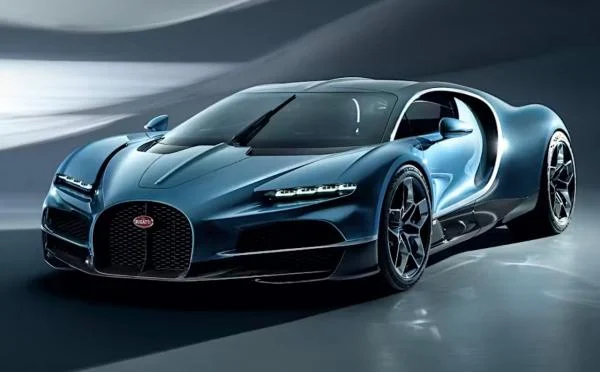
However, the reality has diverged sharply from that expectation. Under Mate Rimac’s leadership, the brand has demonstrated that its commitment to "the best" does not necessarily equate to a sole commitment to electric motors. The recent unveiling of the Bugatti Tourbillon serves as the definitive proof of this strategy. The Tourbillon, a successor to the Chiron, intentionally retains a massive, naturally aspirated V16 engine as the heart of its powertrain.
This decision serves as a calculated hedge against the rapid push toward total electrification in the ultra-luxury segment. By integrating a high-performance combustion core with advanced electrical assistance, Bugatti is positioning itself as a custodian of traditional mechanical art while simultaneously utilizing Rimac’s electrical expertise to push performance boundaries. This "best of both worlds" approach is a direct reflection of Mate Rimac’s philosophy: that hypercar buyers are less interested in the badge of "EV" and more interested in the visceral, tactile, and sonic experience of a masterfully engineered machine.

Broader Economic and Market Implications
The divestment by Porsche and the Volkswagen Group is more than a change in board members; it is a signal of the broader fragmentation of the automotive industry. As major conglomerates focus on the mass-market transition to electric vehicles and the development of autonomous driving software, they are increasingly finding that the "halo" brands—ultra-luxury, low-volume manufacturers—do not fit neatly into their quarterly reporting models.
By offloading Bugatti to a consortium, Volkswagen Group has successfully reduced its exposure to the volatility of the hypercar market while retaining a brand-building association with cutting-edge engineering. For the investors involved in the buyout, the acquisition represents a bet on the enduring value of internal combustion in the ultra-high-net-worth collector market. Data from recent auctions and private sales of limited-edition hypercars suggest that the value of combustion-powered masterpieces is not depreciating, but rather appreciating as they become more exclusive in a world increasingly dominated by standardized battery-electric vehicles.
The Road Ahead: Governance and Innovation
With the deal finalized, the governance of the new entity is expected to prioritize speed. As President, Mate Rimac is tasked with maintaining the "Bugatti standard"—the expectation of unparalleled luxury, speed, and craftsmanship—while operating with the lean, fast-paced culture of a technology startup.
Analysts suggest that the focus will remain on:

- Supply Chain Independence: Reducing reliance on the Volkswagen Group’s centralized supply chain and building a bespoke network tailored to the specific needs of the Tourbillon and its successors.
- Technological Synergies: Continuing to refine the proprietary battery and motor technology that can be shared between the Rimac Nevera and future Bugatti platforms, effectively amortizing R&D costs across two distinct but complementary brands.
- Market Expansion: Leveraging the new investor network to penetrate emerging luxury markets in Asia and the Middle East, where demand for bespoke, high-performance vehicles remains robust.
Industry Reactions and Market Sentiment
While the official statements from the Volkswagen Group have been predictably diplomatic, emphasizing a "continued partnership and synergy," industry insiders note that the move allows Porsche to clean up its balance sheet and focus its resources on its own electrification roadmap, particularly the development of the Macan EV and the upcoming electric 718 series.
For the collector community, the news has been met with cautious optimism. There is a palpable relief that the brand has not been absorbed into a larger, more utilitarian automotive conglomerate, which might have diluted the exclusivity of the Bugatti nameplate. Instead, the brand enters this new chapter with the backing of investors who are likely focused on long-term brand equity rather than immediate, short-term volume growth.
Conclusion: A New Paradigm for Hypercars
The acquisition of Bugatti by the investor consortium led by HOF Capital and BlueFive Capital is a milestone that will be studied in business schools for years to come. It represents the successful "spin-off" of a heritage brand from a global giant, facilitated by the very technology—electrification—that many thought would force its obsolescence.
As the automotive world moves toward an uncertain future defined by shifting regulations and changing consumer preferences, Bugatti, under the stewardship of Mate Rimac, appears to be charting a course that rejects the binary choice between "old-world" combustion and "new-world" electrification. By embracing the complexity of both, and by securing the financial independence to execute this vision without the constraints of a traditional corporate parent, Bugatti is arguably better positioned today than it has been at any point in the last two decades. The brand remains a standard-bearer for the pinnacle of engineering, and with this change in ownership, it gains the agility required to survive and thrive in an era where the only constant in the automotive industry is the necessity of radical change.