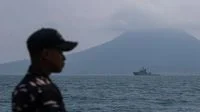
The mysterious disappearance of five journalists, two boat crew members, and a local guide near the volatile Mount Anak Krakatau on Monday, September 7, has prompted extensive investigations into the environmental and meteorological conditions present at the time of the incident. Ida Pramudawardani, the Acting Director of Public Meteorology at the Meteorology, Climatology, and Geophysics Agency (BMKG), provided critical meteorological data regarding the events of that afternoon. According to official agency records, the weather surrounding the disaster zone was classified as generally favorable, characterized by partly cloudy skies and gentle winds. Despite these relatively calm surface conditions, satellite imagery revealed significant atmospheric hazards in the form of towering volcanic ash plumes, shedding new light on the complexities and perils of maritime reporting in active volcanic zones.
The incident has reignited urgent conversations concerning journalist safety, the protocols surrounding media coverage of natural disasters, and the inherent unpredictability of Indonesia’s most active maritime volcanoes. As search and rescue operations intensified in the days following the disappearance, understanding the precise meteorological and geological environment became paramount for investigators attempting to piece together the final moments of the voyage.
Chronology of the Voyage and Subsequent Disappearance
The sequence of events began on Monday, September 7, when a party consisting of five media professionals, two vessel operators, and a local guide departed from the Pagedongan Pier located in Carita, Pandeglang Regency, Banten Province. The delegation utilized a chartered speedboat to navigate the Sunda Strait waters toward Mount Anak Krakatau. The primary objective of the excursion was to document the heightened eruptive activity of the volcano, which had intensified dramatically since the preceding weekend, drawing intense media interest nationwide.
At approximately 14:00 Western Indonesia Time (WIB), the vessel and its occupants officially lost contact with shore-based teams and newsrooms. As hours passed without radio communication or visual confirmation of their return, emergency protocols were triggered. The individuals confirmed to be on board the vessel included M. Bagus Khoirunnas, a journalist representing the state news agency ANTARA; Ari Basuki, reporting for Merdeka; Yudhis, representing iNews; Daus, an international news correspondent for Anadolu Agency; and Donal, working as an independent freelance photojournalist. Accompanying the media crew were experienced local maritime personnel, identified as boat operators Warta (55) and Surakman (60), alongside Heriyanto (49), who served as the local expedition guide.
Favorable Surface Weather Overshadowed by Volcanic Hazards
Addressing the press at the parliamentary complex in Jakarta on Thursday, September 10, Ida Pramudawardani detailed the atmospheric conditions captured by BMKG monitoring stations during the critical afternoon hours when the group lost contact. Official records indicated that between 14:00 and 18:00 WIB, the regional weather was predominantly stable.
"From 2:00 PM until 6:00 PM, the weather conditions were good. Therefore, there was no indication or detection of rainfall," Ida stated during her briefing.
Furthermore, BMKG data confirmed that surface wind speeds peaked at approximately 15 knots, equivalent to roughly 7.5 meters per second—a manageable velocity for maritime navigation in the Sunda Strait. Oceanographic observations similarly indicated that sea wave heights within the immediate vicinity of Anak Krakatau remained at a maximum of one meter. Based purely on maritime and meteorological metrics, authorities initially concluded that standard sea conditions should not have posed an immediate threat to the structural integrity or stability of the speedboat.
However, Ida emphasized that surface stability did not equate to a hazard-free environment. While marine and weather conditions appeared benign, the upper atmosphere presented severe environmental challenges driven directly by ongoing volcanic activity.
The Threat of Dense Volcanic Ash and High-Altitude Plumes
While surface winds and waves were calm, satellite telemetry and atmospheric monitoring equipment highlighted a far more ominous atmospheric phenomenon: dense volcanic ash dispersion. BMKG satellite imaging confirmed that persistent ash columns resulting from the ongoing eruptions were actively spreading across the region, reaching extraordinary altitudes.
"Because on that Monday, ash was still being monitored via satellite imagery up to a height of around 50,000 feet, which is roughly 15,000 meters," Ida explained.
The presence of a volcanic ash plume extending to 50,000 feet indicates a significant explosive phase of Mount Anak Krakatau. Volcanic ash poses multiple immediate and severe threats to both aviation and maritime operations. Inhalation of microscopic silicate particles can cause acute respiratory distress and mechanical failure in combustion engines. Furthermore, heavy ash fall drastically reduces horizontal and vertical visibility, creating hazardous navigation conditions for small vessels attempting to maneuver near the caldera.
Although the surface waters appeared calm, the interaction between heavy ash fallout, potential localized sea-surface turbulence caused by underwater seismic shifts, and reduced visibility likely compounded the dangers faced by the boat operators.
Contextualizing the Eruption of Mount Anak Krakatau
Mount Anak Krakatau, translating literally to the "Child of Krakatoa," occupies a legendary and perilous position in Indonesian geography. Emerging from the caldera formed by the cataclysmic 1883 eruption of the original Krakatoa volcano, the island has experienced continuous growth interrupted by frequent explosive cycles. In December 2018, a massive flank collapse of Anak Krakatau triggered a devastating tsunami along the coastlines of Banten and Lampung, resulting in hundreds of fatalities and prompting heightened scientific scrutiny and hazard monitoring by Indonesian authorities.
The eruption sequence leading up to the September 7 incident began accumulating momentum late in the preceding week. Strombolian and Vulcanian explosions sent ash plumes high into the stratosphere, frequently captivating the public imagination and drawing journalists eager to document the raw power of geological forces. The waters surrounding the archipelago are notoriously dynamic, characterized by complex tidal currents, swift changes in wind direction, and unpredictable swells generated by the funneling effect of the Sunda Strait.
Broader Implications for Media Safety and Disaster Journalism
The disappearance of the journalists near Anak Krakatau has triggered a profound reevaluation within Indonesian media circles regarding safety protocols, risk assessment, and ethical boundaries when reporting on active natural disasters. Covering volcanic eruptions requires specialized training, heavy-duty personal protective equipment, and continuous coordination with geological authorities such as the Center for Volcanology and Geological Hazard Mitigation (PVMBG) and the BMKG.
Industry observers have noted that intense editorial competition to secure exclusive imagery and breaking coverage can sometimes lead field teams to push operational boundaries. Operating a small speedboat in close proximity to a violently erupting stratovolcano exposes personnel to a cascading array of hazards, ranging from sudden ballistic projectile impacts and pyroclastic surges to asphyxiation from toxic volcanic gases and dense ash clouds.
In the wake of the incident, professional journalistic organizations and labor unions have called for stricter enforcement of standard operating procedures (SOPs) for field reporting in high-risk zones. Media institutions are increasingly urged to prioritize the physical safety of reporters, camera operators, and support staff over speed of delivery, ensuring that comprehensive risk analyses are conducted before any field assignment is approved.
Conclusion and Ongoing Response
As search and rescue teams, supported by local authorities, the Indonesian Navy, and volunteer maritime communities, continue their exhaustive sweeps across the Sunda Strait, the data provided by the BMKG serves as a vital component in reconstructing the timeline of the disaster. While surface weather and wave heights were uncommonly favorable, the invisible and atmospheric perils posed by a 50,000-foot volcanic ash column underscore the multi-dimensional dangers inherent to Mount Anak Krakatau. The tragic incident remains a sobering reminder of the formidable power of nature and the heavy sacrifices often demanded in the pursuit of truth and public information.