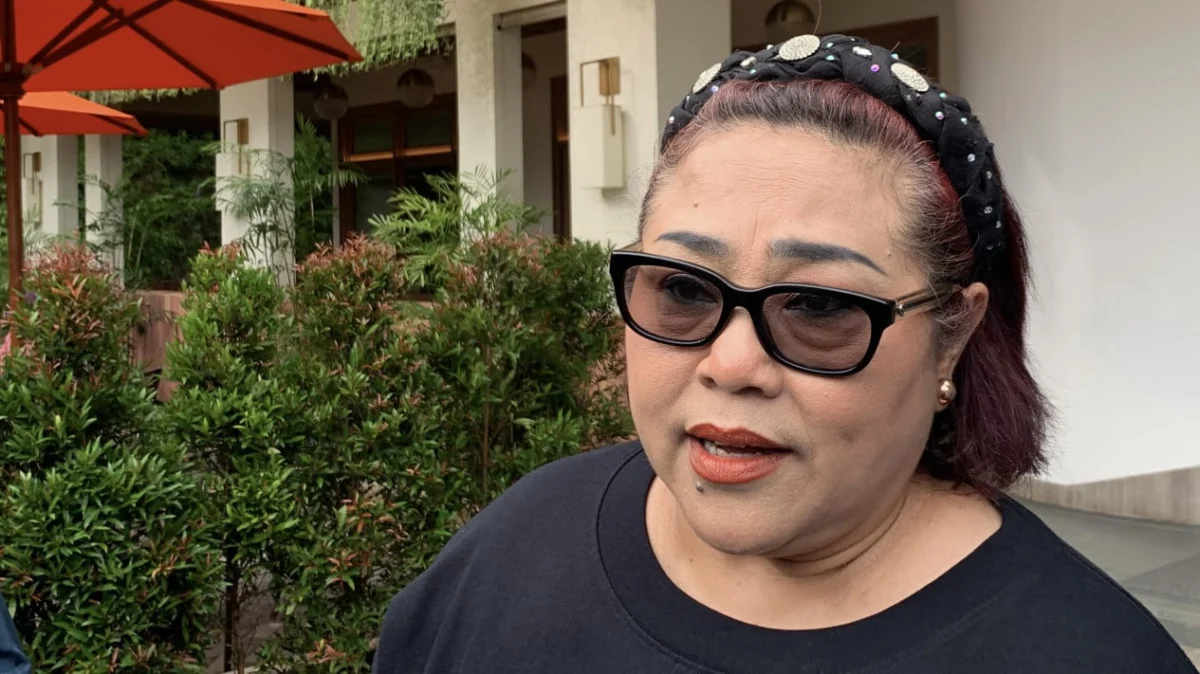
The landscape of the Indonesian entertainment industry, particularly its storied comedy circuit, has long been a subject of public fascination. Behind the laughter, glamour, and grueling schedules of live performances lie complex personal histories that occasionally surface decades later. Recently, veteran comedian Tri Retno Prayudati, widely known as Nunung, shared a remarkably candid chapter of her romantic past during a televised talk show appearance. The legendary Srimulat performer revealed that during her peak years of popularity, she found herself inadvertently entangled with a significant number of married men—a situation that on multiple occasions led to public confrontations and backstage drama.
The revelations, which quickly circulated across digital media platforms, shed light on the personal vulnerabilities faced by performers in the golden era of traditional Indonesian theater. Nunung’s recounting offers a rare glimpse into the intersection of sudden fame, the mechanics of touring performance troupes, and the challenges of navigating personal boundaries in an era predating modern digital verification and social media transparency.
Main Facts and the Talk Show Revelation
During a recent guest appearance on a popular YouTube talk show program, the veteran comedian addressed long-standing rumors regarding her romantic history. When queried about past relationships with married individuals, Nunung did not evade the question. Instead, she confirmed that over the course of her earlier career, approximately 13 men who pursued or maintained romantic proximity to her were later revealed to be legally married.
The admission immediately drew widespread attention, not merely due to the numerical scale of the involvement, but because of the dramatic consequences that followed. Nunung detailed how several of these situations escalated into direct confrontations with the legal spouses of the men in question. Among these incidents, one particular event stood out in her memory: a tense direct confrontation that took place backstage during a live Srimulat performance.
According to the comedian, the situations typically arose from a fundamental lack of initial transparency on the part of her suitors. In an era where background checks were non-existent and interpersonal communication relied heavily on face-to-face interaction and landlines, verifying a romantic prospect’s marital status proved considerably more difficult than it is in the contemporary digital landscape.
Chronology of Events and the Srimulat Era Context
To fully understand Nunung’s disclosures, industry analysts and entertainment historians point to the cultural and logistical framework of the Srimulat comedy troupe during its heyday. Founded in Solo in 1950 by Teguh Slamet Rahardjo and Srimulat, the troupe grew to become an iconic institution in Indonesian entertainment, eventually establishing branches in major cities such as Jakarta, Surabaya, and Semarang.
During the 1980s and 1990s, Srimulat performers were veritable superstars. Their schedules involved relentless touring, daily live television broadcasts, and continuous interaction with enthusiastic audiences. Nunung joined the troupe as a young performer, quickly rising through the ranks to become one of its most recognizable comedic anchors. Her natural wit, expressive physical comedy, and charismatic stage presence made her a magnet for public attention.
In this high-tempo environment, performers frequently interacted with fans after shows. Nunung explained that the typical pattern involved admirers approaching her after a performance, initiating casual conversation, and eventually inviting her out for meals or social gatherings.
"Usually, it starts with audience members who enjoy the show," Nunung recounted during the broadcast. "They initiate a conversation, then ask to meet up for a meal. Of course, I would ask them directly, ‘Do you have a wife?’ If they said no, then I would think, ‘Oh, alright.’ But the reality was that we simply did not know the truth."
Despite her routine practice of inquiring about their marital status, several men reportedly concealed their families. As time progressed and the relationships developed beyond casual acquaintanceships, the truth inevitably emerged, frequently triggered by external discoveries or direct intervention by the spouses.
The Backstage Confrontation: Anatomy of a Public Climax
The most vivid anecdote shared by the comedian involved an intense encounter at a Srimulat performance venue. Backstage areas during live theatrical productions are notoriously chaotic, serving as dressing rooms, prop storage, and transit zones for actors preparing for their cues.
On this particular evening, the routine preparation was abruptly interrupted when an unidentified woman breached the backstage security perimeter, searching frantically for the comedian.
"She confronted me right behind the Srimulat stage," Nunung recalled. "She was searching everywhere, shouting, ‘Where is Nunung? Where is Nunung?’ demanding to know what kind of relationship I had with her husband."
In the high-pressure environment of live theater, such an unexpected intrusion could easily derail a performance. Nunung noted that during the initial moments of the confrontation, she experienced genuine confusion. Due to the sheer volume of admirers and acquaintances she encountered daily, she often could not immediately identify the specific individual the aggrieved spouse was referencing. Rather than escalating the conflict defensively, the comedian frequently relied on diffuse responses or lighthearted deflection to de-escalate tensions in chaotic environments where hundreds of cast and crew members were moving about.
Broader Industry Implications and Personal Vulnerability
Industry observers and sociologists specializing in Indonesian media culture have analyzed Nunung’s disclosures not merely as celebrity gossip, but as a reflection of gender dynamics within the entertainment industry during the late 20th century. Female performers, particularly those catapulted into sudden fame via touring troupes like Srimulat, often occupied a precarious social position.
On one hand, they enjoyed immense public adulation, financial independence, and cultural influence. On the other hand, they were frequently subjected to intense public scrutiny, moral policing, and the occupational hazards of unwanted or deceptive romantic advances. Public figures in comedy, despite their outward projection of humor and resilience, often navigated complex personal lives isolated from standard support systems.
Furthermore, the revelation highlights the evolving nature of accountability and relationship transparency over the decades. In contemporary media culture, public figures face rigorous background scrutiny, and digital footprints often make deception regarding marital status significantly harder to sustain. In contrast, the analog era of the 1980s and 1990s allowed individuals greater latitude to compartmentalize their personal lives, often leaving unwitting third parties to bear the brunt of public fallout when deceptions collapsed.
Public and Media Reaction
The broadcast of Nunung’s interview generated widespread discussion across social media platforms, with netizens expressing a mixture of sympathy, amusement, and philosophical reflection on the realities of the entertainment industry’s past. Many commentators highlighted the comedian’s trademark resilience, noting that her ability to recount such stressful historical episodes with humor and detachment is characteristic of the professional demeanor that has sustained her career across multiple generations.
Media outlets and cultural commentators have also noted that Nunung’s transparency contributes to a broader cultural shift in Indonesia, where veteran artists increasingly feel empowered to share unfiltered memoirs of their youth without fear of disproportionate moral judgment. By framing her past experiences not as deliberate scandals, but as occupational hazards born of naivety and the unique pressures of life in a legendary touring troupe, Nunung provides a humanizing perspective on a celebrated public persona.
As the Indonesian entertainment industry continues to evolve, historical retrospectives from foundational figures like Nunung serve as vital records of a bygone era. They remind contemporary audiences of the human stories behind the historic stages, bridging the gap between legendary theatrical triumphs and the complex, often challenging personal lives of the artists who brought them to life.