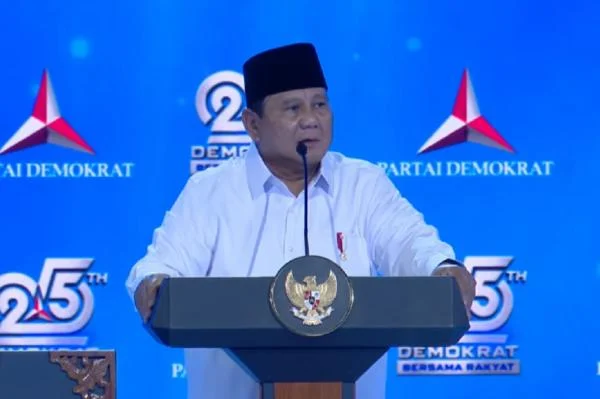
President Prabowo Subianto underscored the immense complexity of governing a nation as vast as Indonesia during the silver anniversary celebration of the Democratic Party, held at the Indonesia Arena in Jakarta on September 9, 2026. Addressing a large gathering of party cadres, officials, and political observers, the President framed the country’s ongoing developmental hurdles not as indicators of failure, but as natural consequences of Indonesia’s unparalleled geographical and demographic scale.
The event served as a significant platform for the President to reflect on the state of the nation as it approaches its ninth decade of independence. With Indonesia celebrating its 81st year of sovereignty, the discourse shifted toward the necessity of institutional stability and the acknowledgment of the massive logistical burdens inherent in managing the world’s fourth most populous nation.
The Geography of Governance: Scaling Challenges
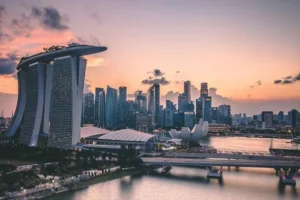
President Prabowo’s primary message centered on the concept of "proportionality in governance." By drawing a sharp contrast between Indonesia and Singapore, he aimed to illustrate the sheer magnitude of the public service infrastructure required to maintain the Indonesian state.
"We have many shortcomings and we face many challenges. We are a very large country, which inherently means our problems are also of a large scale," Prabowo stated. He noted that while Singapore is often cited as a benchmark for efficiency, the domestic administrative reality of Indonesia requires a completely different logistical paradigm.
The President provided a stark statistical comparison: Singapore operates approximately 300 schools to serve its entire student population. In contrast, Indonesia manages over 300,000 educational institutions. This figure accounts for the geographical dispersion of the archipelago, including remote mountain regions and isolated islands that remain difficult to access. This comparison serves as a reminder that the national budget and bureaucratic efforts must be stretched across thousands of kilometers, a complexity that is often overlooked in international development comparisons.
Contextualizing the Democratic Party’s 25th Anniversary
The choice of the Indonesia Arena for this celebration was symbolic of the Democratic Party’s trajectory over the past quarter-century. Founded in 2001, the party has navigated the shifting tides of Indonesian democracy, experiencing both the heights of executive power during the two-term presidency of Susilo Bambang Yudhoyono (SBY) and the challenges of being in the opposition.
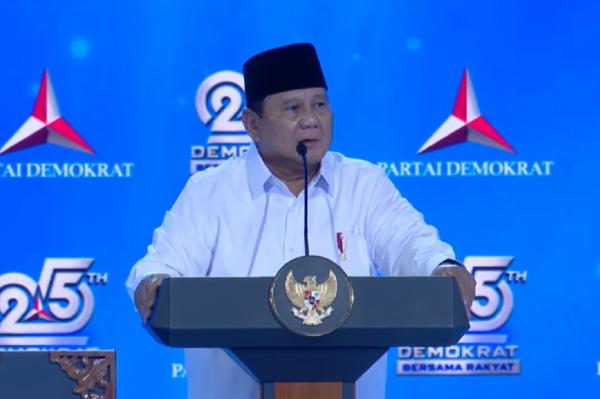
During the event, President Prabowo took a moment to commend SBY and the party’s leadership for their political maturity. He specifically praised the Democratic Party’s conduct during periods when they were not in power, noting that they consistently avoided vitriolic rhetoric or efforts to undermine the government of the day. This acknowledgment is significant, as it highlights a shift toward a more collaborative political culture in the current administration, where cooperation is prioritized over partisan confrontation.
Chronology and Political Evolution
To understand the significance of this anniversary, one must look at the timeline of the Democratic Party’s role in shaping modern Indonesia:
- 2001: The Democratic Party is established, setting the stage for a new era of political competition in the post-Reformasi landscape.
- 2004: The party sees a meteoric rise as Susilo Bambang Yudhoyono is elected as the first directly elected President of Indonesia, marking a turning point in the nation’s democratic history.
- 2009: The party secures a second consecutive presidential term, cementing its influence in the executive branch.
- 2014–2024: The party transitions into an opposition role, focusing on institutional consolidation and internal reform.
- 2026: Celebrating 25 years, the party now occupies a collaborative space within the national coalition, focusing on long-term policy continuity.
The event at the Indonesia Arena was not merely a celebration of a political entity but a reflection of the evolution of the Indonesian political system itself—moving from the volatile early years of the 2000s to a more stable, albeit complex, era of coalition governance.
Supporting Data and Macroeconomic Implications
The challenges alluded to by President Prabowo are supported by extensive macroeconomic data. Indonesia’s Gini coefficient and regional development disparities remain high. Managing 17,000 islands requires a level of infrastructure spending that is significantly higher than that of compact, city-state economies.
Currently, the Indonesian government is focusing on the "Golden Indonesia 2045" vision, which aims to propel the nation into the world’s top five economies. However, this goal is predicated on overcoming the very "large scale" challenges mentioned by the President:
- Educational Equity: Ensuring that the 300,000+ schools referenced by the President receive equitable funding, teacher training, and digital infrastructure.
- Logistical Connectivity: Reducing the cost of goods and services by closing the infrastructure gap between Java and the outer islands.
- Human Capital Development: Transitioning the labor force from traditional sectors to high-value technology and manufacturing roles.
The President’s remarks imply that while the state has made significant strides, the sheer volume of the population—now exceeding 280 million—necessitates a patient, long-term approach to policy implementation.
Official Responses and Political Sentiment
The rhetoric used by President Prabowo received a warm reception from the audience, which included key political figures from the current ruling coalition. Observers suggest that this alignment is part of a broader strategy to solidify a "national consensus" government. By highlighting the unity of the nation at 81 years old, the President is reinforcing a narrative of resilience.

"Alhamdulillah, our nation, at the age of 81, remains firm and united. Despite our differences, we are robust, and we are growing stronger as we face the future," Prabowo added.
Analysts from the Centre for Strategic and International Studies (CSIS) note that such statements are crucial for maintaining domestic stability. By framing challenges as a byproduct of success and scale rather than failure, the administration is attempting to manage public expectations while maintaining a sense of national pride.
Broader Impact: The Path Forward
The implications of this discourse for the remainder of the presidential term are clear. The government intends to double down on decentralization efforts while simultaneously strengthening the central government’s ability to coordinate large-scale national projects.
Furthermore, the emphasis on the Democratic Party’s past behavior suggests that President Prabowo is fostering an environment where political dissent is channeled through established institutional mechanisms rather than through disruptive or inflammatory public campaigns. This "politics of harmony" is expected to be a hallmark of his administration as he navigates the second half of his tenure.
In conclusion, the 25th anniversary of the Democratic Party served as more than a celebratory milestone; it was a state-level assessment of the Indonesian project. By acknowledging the vastness of the challenges—ranging from the sheer number of schools to the geographical diversity of the archipelago—President Prabowo has signaled that the administration’s focus will remain on long-term systemic stability. As the nation moves toward its ninth decade, the message remains one of cautious optimism: Indonesia’s size is its greatest challenge, but, if managed with unity and consistency, it remains its greatest potential asset.