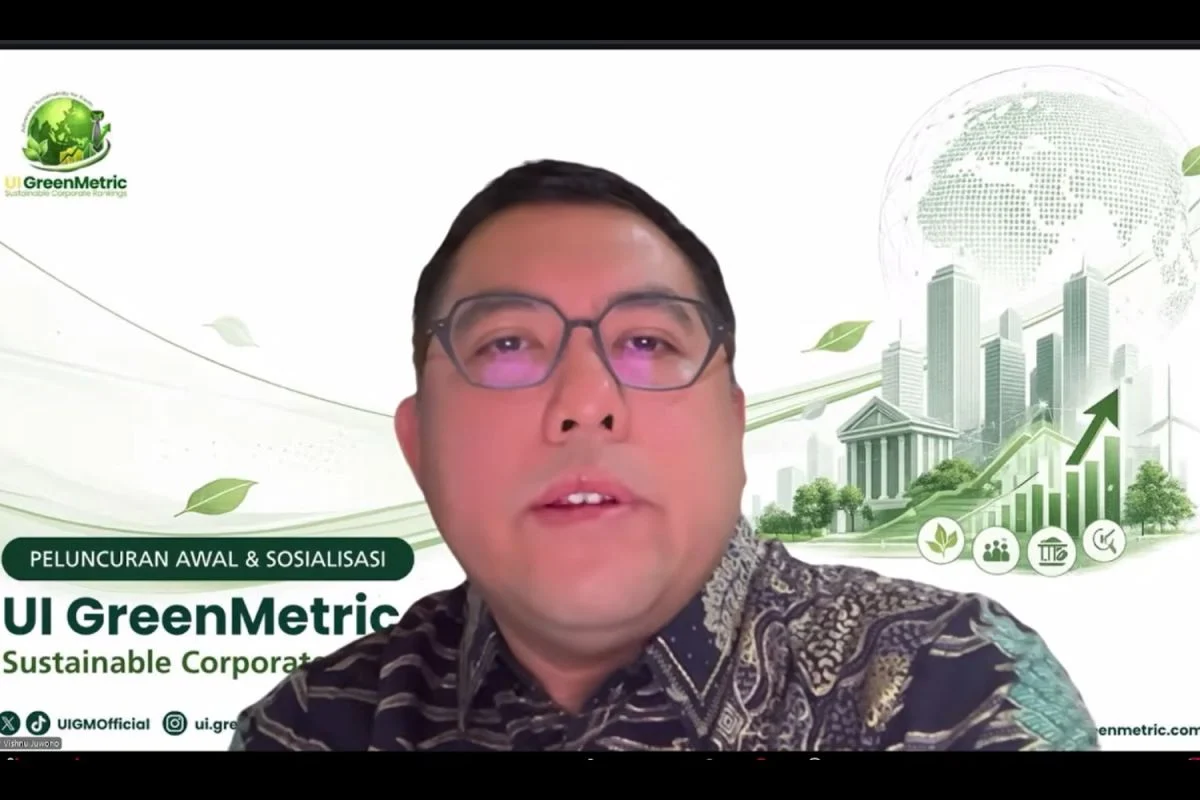
Depok, Indonesia – In a significant expansion of its global sustainability efforts, UI GreenMetric has officially introduced the UI GreenMetric Sustainable Corporate Rankings. The initiative, unveiled through an online soft launch and socialization event, marks a pivotal step in extending UI GreenMetric’s established influence beyond academic institutions into the corporate sector, aiming to foster greater contribution to sustainable development worldwide. This move underscores a growing global consensus on the imperative for cross-sector collaboration to address pressing environmental, social, and governance (ESG) challenges, positioning corporations as critical agents of change.
The Genesis of an Expansion: From Academia to Industry
UI GreenMetric, globally renowned for its comprehensive ranking of universities based on their sustainability performance, has been a trailblazer in promoting green practices within higher education since its inception in 2010. Its annual World University Rankings have served as a crucial benchmark, inspiring universities across continents to adopt more sustainable policies and infrastructure. However, the escalating complexity and urgency of global sustainability issues, from climate change to social equity, have increasingly highlighted the indispensable role of the private sector. Corporations, with their vast resources, innovative capacity, and extensive supply chains, possess unparalleled potential to drive meaningful change.
The decision to broaden its scope to corporate entities reflects a strategic recognition that achieving the United Nations Sustainable Development Goals (SDGs) by 2030 requires a concerted effort from all societal pillars. Dr. Vishnu Juwono, Chairman of UI GreenMetric, articulated this vision from the University of Indonesia (UI) campus in Depok, emphasizing that contemporary sustainability challenges necessitate robust collaboration across diverse sectors. "The private sector holds a vital role in supporting sustainable development through sound governance, responsible environmental management, and the creation of positive social impact," Dr. Juwono stated, underscoring the shift from mere compliance to proactive sustainability leadership. This expansion is not just about ranking; it is about providing a structured framework for companies to assess, improve, and publicly demonstrate their commitment to sustainability.
Key Drivers and Stakeholder Perspectives
The launch event brought together leading voices who provided critical insights into the strategic importance of this new ranking system. Their statements collectively painted a picture of a dynamic landscape where ESG principles are rapidly becoming non-negotiable for long-term business viability and societal well-being.
Dr. Vishnu Juwono’s Vision: The Private Sector as a Sustainability Catalyst
Dr. Juwono elaborated on the multifaceted role of corporations in the sustainability agenda. He highlighted that good governance within companies is the bedrock upon which effective environmental and social strategies are built. This includes transparent decision-making, ethical leadership, and robust accountability mechanisms that ensure sustainability is embedded at every level of operations. Furthermore, he stressed the importance of responsible environmental management, encompassing everything from resource efficiency and waste reduction to emissions control and biodiversity conservation. Finally, the creation of positive social impact – through fair labor practices, community engagement, and contributions to social development – completes the holistic approach to corporate sustainability. The UI GreenMetric Sustainable Corporate Rankings are designed to be an instrument that encourages companies to systematically measure, evaluate, and elevate their ESG performance across these critical dimensions.
Prof. Dr. Sylvia Veronica Nalurita Purnama Siregar on ESG Governance and Transparency
Adding a crucial academic perspective, Prof. Dr. Sylvia Veronica Nalurita Purnama Siregar, Secretary of the Board of Professors at the Faculty of Economics and Business, University of Indonesia (FEB UI), delved into the profound impact of ESG governance. She explained how robust ESG frameworks significantly strengthen corporate accountability, leading to more informed and ethical decision-making. In an era where public scrutiny of business practices is at an all-time high, transparency is paramount. ESG governance provides a structured approach for companies to address escalating public expectations regarding ethical conduct, environmental stewardship, and social responsibility. This not only mitigates risks associated with poor governance but also enhances corporate reputation, fostering trust among stakeholders, including investors, customers, and employees. The integration of ESG principles into core business strategy moves beyond mere compliance, evolving into a strategic advantage that drives long-term value creation.
OJK’s Endorsement: Strengthening Indonesia’s Sustainable Finance Ecosystem
The financial sector’s role in driving corporate sustainability was a central theme, addressed by R. Joko Siswanto, Director of Sustainable Finance at the Directorate of Sustainable Finance Development and Governance (DUKB-DSKT) of the Financial Services Authority (OJK). His remarks underscored the critical importance of strengthening Indonesia’s sustainable finance ecosystem. OJK, as the primary financial regulator, has been actively promoting sustainable finance initiatives, recognizing that capital allocation plays a crucial role in transitioning to a green economy. Mr. Siswanto highlighted ESG as a foundational pillar of corporate governance that is essential for creating long-term value. Investors globally are increasingly integrating ESG factors into their investment decisions, recognizing that companies with strong ESG performance often demonstrate greater resilience, innovation, and profitability. OJK’s support for initiatives like the UI GreenMetric Sustainable Corporate Rankings signals a clear regulatory push for Indonesian companies to embrace sustainability, not just as a moral imperative, but as a financial necessity. This aligns with broader global trends where ESG investing has surged, with global sustainable investment assets exceeding $30 trillion, demonstrating a clear market demand for responsible corporate practices.
Methodology and Implementation: A Framework for Continuous Improvement
At the heart of any credible ranking system lies a robust and transparent methodology. Rahmi, Manager of Operations, Data, and Service Development for UI GreenMetric, provided insights into the meticulous design of the corporate ranking framework. She explained that the methodology is conceived as a comprehensive benchmark, based on measurable indicators, specifically tailored to assist companies in several key areas. This includes identifying opportunities for improvement across their operations, strengthening transparency in their reporting, and fostering an organizational culture committed to continuous improvement.
While specific categories of indicators were not detailed in the initial announcement, drawing from UI GreenMetric’s university ranking expertise, it can be inferred that the corporate framework would likely encompass domains such as:
- Environmental Performance: Energy efficiency and renewable energy adoption, water management, waste management and recycling, greenhouse gas emissions, biodiversity protection, and sustainable sourcing.
- Social Impact: Labor practices, human rights, community engagement, diversity and inclusion, employee health and safety, and supply chain responsibility.
- Governance: Board structure and independence, executive compensation, business ethics, anti-corruption policies, data privacy, and shareholder rights.
The emphasis on "measurable indicators" ensures that the ranking is objective and data-driven, allowing companies to track their progress over time and benchmark themselves against peers. This approach moves beyond qualitative assessments, providing tangible metrics for performance evaluation and targeted improvements, thereby facilitating a culture where sustainability is not just an add-on but an integral part of business strategy.
The Imperative for Corporate Sustainability in Indonesia
Indonesia, as a G20 economy and a nation rich in biodiversity, faces significant environmental and social challenges while simultaneously possessing immense potential for sustainable growth. The launch of the UI GreenMetric Sustainable Corporate Rankings comes at a critical juncture for the country. Indonesia has committed to ambitious climate targets under the Paris Agreement, including reducing greenhouse gas emissions by 31.89% independently and 43.2% with international support by 2030 (as per its updated Nationally Determined Contribution, NDC). Achieving these targets will require substantial contributions from the corporate sector.
Economically, embracing ESG principles can significantly boost the global competitiveness of Indonesian industries. International investors, supply chain partners, and consumers are increasingly prioritizing sustainability. Companies with strong ESG credentials are more likely to attract foreign direct investment (FDI), secure favorable financing terms, and access new markets that demand ethical and environmentally responsible products and services. For instance, the European Union’s Carbon Border Adjustment Mechanism (CBAM) and similar regulatory initiatives globally highlight the growing need for companies to demonstrate their carbon footprint and broader sustainability efforts to remain competitive in international trade.
Beyond economic benefits, the positive social and environmental impacts are profound. Responsible corporate practices can lead to cleaner air and water, healthier ecosystems, improved working conditions, and stronger community development. By fostering a culture of sustainability within its corporate sector, Indonesia can accelerate its progress towards the SDGs, improve public health, and enhance the overall quality of life for its citizens. This also aligns with the broader national agenda of fostering a green economy and building resilience against climate change impacts.
Broader Implications and Future Outlook
The UI GreenMetric Sustainable Corporate Rankings represent more than just a new evaluation tool; they signify a strategic shift in how sustainability is perceived and pursued within the Indonesian business landscape and potentially beyond.
Impact on Corporate Behavior: The existence of a public ranking system can act as a powerful incentive for companies. It encourages them to move beyond minimal compliance with regulations to proactive leadership in sustainability. Companies will likely invest more in green technologies, sustainable supply chains, and social programs to improve their standing in the rankings, thereby enhancing their brand reputation and attracting talent and investment. This competitive dynamic can foster a race to the top, driving continuous innovation in sustainable business practices.
Role in Policy-Making: The data generated by these rankings can provide invaluable insights for policymakers. It can highlight sectors that are lagging in sustainability performance, identify best practices, and inform the development of more effective government policies and regulatory frameworks to support a green transition. For instance, if certain industries consistently rank low in water management, it might signal a need for targeted incentives or regulations in that area.
Global Benchmarking and Influence: By providing a credible and transparent ranking system, UI GreenMetric can help position Indonesian companies on the global sustainability stage. It offers a framework for international comparison, allowing Indonesian businesses to benchmark their performance against global leaders and demonstrate their commitment to international sustainability standards. This initiative also reinforces UI GreenMetric’s own commitment to innovating and leading the global sustainability agenda, building on its decade-plus experience in university rankings.
Challenges and Opportunities: While the potential benefits are immense, the implementation of such a ranking system will not be without its challenges. These include ensuring accurate and verifiable data submission from companies, managing the diversity of industries and their unique sustainability footprints, and securing widespread corporate buy-in. However, these challenges are outweighed by the significant opportunities for fostering innovation, driving green economic growth, attracting responsible investment, and ultimately contributing to a more sustainable and resilient future for Indonesia and the world. The UI GreenMetric Sustainable Corporate Rankings are poised to become a critical catalyst in this transformative journey, urging corporations to not only measure their financial success but also their lasting impact on the planet and its people.