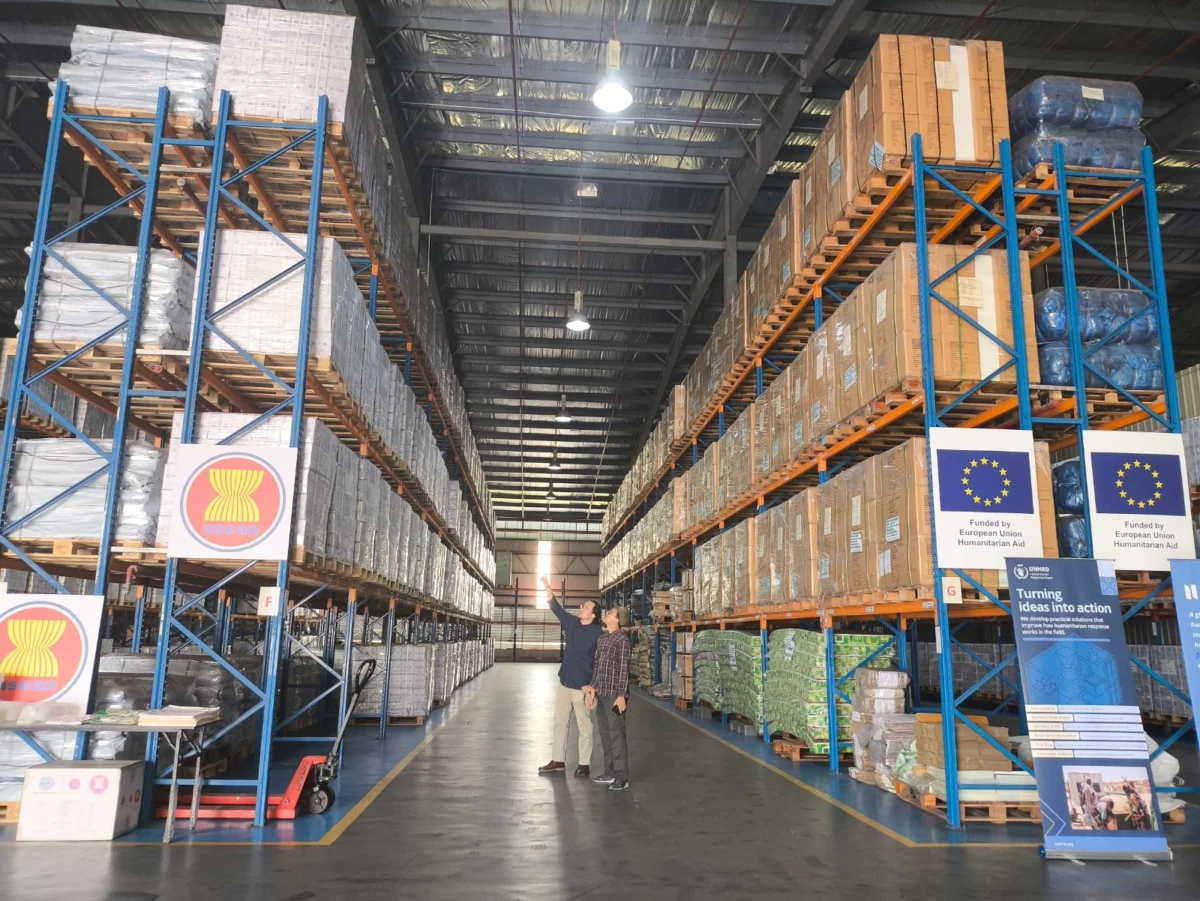
The Muhammadiyah Disaster Management Center (MDMC), known in Indonesia as Lembaga Resiliensi Bencana (LRB), has taken a pivotal step towards solidifying its global humanitarian footprint by participating in the World Food Programme (WFP) and United Nations Humanitarian Response Depot (UNHRD) Partners Meeting in Subang, Malaysia, held from July 21 to 22, 2026. This strategic engagement culminated in a significant agreement allowing MDMC to pre-position humanitarian logistics stock at the WFP-UNHRD facility in Malaysia, one of five crucial global depots serving the vast Asia-Pacific region. This development is poised to transform the facility into a primary regional logistics readiness hub for Muhammadiyah, amplifying its capacity for swift and effective disaster response across the region.
The two-day meeting served as a crucial platform for humanitarian actors, suppliers, and private sector entities to enhance coordination and strengthen the global humanitarian supply chain. On July 21, the initial day of the meeting, discussions focused intently on fostering collaboration with Non-Governmental Organizations (NGOs), civil society organizations, and existing UNHRD partners. This segment was designed to integrate diverse local and regional capabilities into the broader UNHRD network, ensuring a more cohesive and adaptable response mechanism. The following day, July 22, shifted its focus towards engaging suppliers, manufacturers, and the private sector, aiming to bolster the localization of humanitarian supply chains. This involved exploring innovative procurement strategies, enhancing local production capabilities, and strengthening partnerships that could expedite the delivery of critical aid during emergencies. MDMC’s participation across both days underscored its comprehensive approach to humanitarian action, recognizing the interconnectedness of operational readiness, strategic partnerships, and robust supply chain management.
Representing MDMC PP Muhammadiyah at this seminal event was Abdoel Malik, the Deputy Secretary, who was accompanied by two promising young Muhammadiyah cadres: Bagas Wahyu Pratama, a dedicated volunteer from the Muhammadiyah Covid-19 Command Center (MCCC), and Hamzah Dzulkarnain, currently pursuing postgraduate studies at the International Islamic University Malaysia (IIUM). Their presence highlighted Muhammadiyah’s commitment to nurturing future leaders in humanitarian work and leveraging academic expertise in its practical endeavors. Abdoel Malik articulated the profound significance of this opportunity, stating, “This is an excellent chance to strengthen Muhammadiyah’s humanitarian affairs regionally, in line with the mandate of the muktamar. MDMC interprets Muhammadiyah’s internationalization through tangible and measurable actions via MuhammadiyahAID.” This statement encapsulates the organization’s strategic vision to expand its humanitarian reach beyond Indonesia’s borders, translating its long-standing domestic expertise into a more pronounced international presence.
The decision to establish Malaysia as a regional hub is not arbitrary; it is a meticulously planned strategic move that leverages existing organizational strengths. The presence of the Pimpinan Cabang Istimewa Muhammadiyah (PCIM) Malaysia, a special branch of Muhammadiyah operating in the country, was a key factor in this choice. PCIM Malaysia is deemed capable and well-positioned to serve as a principal operational support system for humanitarian activities in the region. To ensure the highest level of preparedness and efficiency, MDMC PP plans to implement a comprehensive online capacity-building program specifically designed for the management and volunteers of PCIM Malaysia. This initiative aims to equip them with the necessary skills, knowledge, and operational protocols to effectively manage the logistics hub and coordinate regional responses, aligning with Abdoel Malik’s assertion that “humanitarian work must be carried out in an organized and collective manner, supported by reliable competence.”
Background Context: Muhammadiyah’s Humanitarian Legacy and Global Ambitions
Muhammadiyah, one of Indonesia’s largest Islamic organizations, boasts a venerable history spanning over a century, deeply rooted in social welfare, education, and healthcare. Founded in 1912 by Ahmad Dahlan, its mission has consistently revolved around improving the lives of communities through practical, faith-inspired action. Over the decades, Muhammadiyah has established an extensive network of schools, universities, hospitals, and orphanages, becoming a cornerstone of Indonesia’s social fabric. Its humanitarian arm, MDMC, was established to formalize and professionalize its disaster response efforts, particularly in the face of Indonesia’s frequent natural calamities, ranging from earthquakes and tsunamis to volcanic eruptions and floods. MDMC has been at the forefront of numerous national disaster responses, gaining invaluable experience in emergency relief, recovery, and rehabilitation. Notable operations include the 2004 Aceh tsunami, the 2006 Yogyakarta earthquake, the 2018 Lombok earthquakes, and the Palu tsunami and earthquake, among others. These experiences have honed MDMC’s capabilities in rapid assessment, search and rescue, medical aid, psychological support, and long-term recovery programs.
The organization’s current “internationalization” mandate, ratified during a recent muktamar (general congress), marks a deliberate pivot towards extending its humanitarian and social impact globally. This mandate is a recognition of Muhammadiyah’s mature capabilities and its moral obligation to contribute to global challenges, reflecting the Islamic principle of rahmatan lil alamin (mercy to all creation). MuhammadiyahAID serves as the operational vehicle for this internationalization, channeling resources, expertise, and partnerships towards global humanitarian needs. The establishment of a regional logistics hub is a tangible manifestation of this ambitious vision, moving beyond ad-hoc international responses to a more structured and sustained global engagement.
The UNHRD Network: A Pillar of Global Humanitarian Logistics
The United Nations Humanitarian Response Depot (UNHRD) network, managed by the World Food Programme (WFP), is a critical component of the global humanitarian ecosystem. Established to provide a rapid and efficient response to emergencies worldwide, UNHRD operates a network of strategically located depots that pre-position humanitarian relief items. These depots serve as central hubs where essential supplies – ranging from food and shelter materials to medical kits and logistics equipment – are stored, maintained, and made ready for immediate deployment to disaster-affected areas. The five global depots are situated in Brindisi (Italy), Las Palmas (Spain), Panama City (Panama), Dubai (UAE), and Subang (Malaysia). Each depot is designed to serve a specific geographical region, enabling quick access to emergency supplies within 24 to 48 hours of a disaster striking. The Subang depot, specifically, plays a crucial role in serving the Asia-Pacific region, a vast and highly disaster-prone area encompassing a significant portion of the world’s population.
WFP’s expertise in humanitarian logistics is unparalleled. As the leading humanitarian organization addressing hunger and promoting food security, WFP’s operational model heavily relies on robust supply chain management. It moves millions of tons of food and other assistance every year, often under challenging circumstances, making it a natural partner for organizations like MDMC seeking to enhance their logistical capabilities. The UNHRD model facilitates not only storage but also procurement, transportation, and coordination, offering a comprehensive solution for rapid humanitarian deployment. By integrating with this network, MDMC gains access to world-class logistical infrastructure, operational best practices, and a broader network of humanitarian partners.
The Strategic Importance of the Malaysian Hub for Asia-Pacific Resilience
The Asia-Pacific region is one of the most vulnerable areas globally to natural disasters. According to UN ESCAP, it accounts for over 50% of the world’s natural disasters and 90% of the people affected by them. The region faces a multitude of hazards, including typhoons, earthquakes, tsunamis, floods, droughts, and volcanic eruptions. The frequency and intensity of these events, exacerbated by climate change, underscore the critical need for robust regional disaster preparedness and response mechanisms. Pre-positioning relief supplies is a cornerstone of effective disaster management, significantly reducing response times and saving lives. Without pre-positioned stock, humanitarian agencies often face severe logistical bottlenecks, including procurement delays, customs issues, and transportation challenges, which can critically impede the delivery of aid in the crucial initial hours and days following a disaster.
The Malaysian UNHRD facility is ideally located to serve this vast and diverse region, covering countries from Southeast Asia to the Pacific Islands. By establishing its regional logistics hub here, MDMC ensures that it can respond swiftly to crises across the ASEAN bloc and beyond, enhancing its ability to reach affected communities with vital assistance. This move transforms MDMC from a primarily domestic responder with occasional international forays into a truly regional player with a dedicated logistical base. The planned online capacity-building program for PCIM Malaysia is vital, as local ownership and expertise are crucial for the sustained success of any regional hub. PCIM Malaysia, with its local knowledge, cultural understanding, and network, will be instrumental in navigating the operational complexities inherent in cross-border humanitarian work within the region. This partnership exemplifies the "localization of aid" principle, empowering local actors with global resources and expertise.
Statements and Inferred Perspectives
Abdoel Malik’s statements consistently emphasize the dual pillars of strategic vision and operational excellence. His reiteration that “humanitarian work must be carried out in an organized and collective manner, supported by reliable competence” is not merely a philosophical stance but a guiding principle for MDMC’s expansion. It highlights the need for systematic planning, inter-organizational collaboration, and continuous skill development among personnel. This perspective aligns perfectly with the structured nature of the UNHRD network and WFP’s logistical prowess.
While no direct statements from WFP or UNHRD representatives were provided in the original brief, it can be logically inferred that such partnerships are highly valued. A hypothetical statement from a WFP-UNHRD official might express enthusiasm for welcoming MDMC into their partner network: “We are delighted to partner with Muhammadiyah Disaster Management Center, an organization with a proven track record of effective humanitarian response. Their commitment to regional readiness and their vision for strengthening humanitarian logistics align perfectly with the mission of the UNHRD network. Collaborations with strong, locally rooted organizations like MDMC are vital for building resilient communities and ensuring faster, more efficient aid delivery in the highly disaster-prone Asia-Pacific region.”
From the perspective of PCIM Malaysia, the opportunity would likely be met with enthusiasm and a sense of profound responsibility. A hypothetical statement from a PCIM Malaysia representative could be: “PCIM Malaysia is deeply honored to be entrusted with supporting Muhammadiyah’s regional humanitarian hub. We recognize the immense responsibility that comes with this role and are fully committed to leveraging our local network, knowledge, and resources to ensure its success. The planned capacity-building initiatives will be invaluable, enabling us to effectively contribute to MuhammadiyahAID’s mission of bringing relief and hope to those affected by disasters across the region.”
Implications and Future Outlook
The establishment of MDMC’s regional logistics hub in Malaysia carries significant implications for Muhammadiyah, the broader humanitarian sector, and disaster preparedness in the Asia-Pacific.
For Muhammadiyah:
- Enhanced Operational Capacity: Direct access to pre-positioned stock within the UNHRD network will drastically improve MDMC’s ability to respond quickly to regional disasters, moving from a reactive model to a proactive one.
- Fulfillment of Internationalization Mandate: This initiative is a concrete and measurable step towards realizing the muktamar mandate, establishing Muhammadiyah as a significant international humanitarian actor.
- Strengthened Partnerships: Integration into the UNHRD network opens doors for deeper collaboration with UN agencies, international NGOs, and other humanitarian stakeholders, fostering knowledge exchange and resource sharing.
- Increased Regional Influence: A permanent logistical presence will elevate Muhammadiyah’s profile and influence in regional humanitarian discussions and coordination mechanisms.
- Cost-Effectiveness and Efficiency: Pre-positioning supplies can often be more cost-effective than emergency procurement and transport during a crisis, ensuring better utilization of donor funds.
For the Humanitarian Sector in Asia-Pacific:
- Improved Regional Preparedness: Adding MDMC’s capabilities to the existing network of responders strengthens the overall disaster preparedness landscape in a critically vulnerable region.
- Diversification of Response Actors: The involvement of a major, locally rooted organization like Muhammadiyah contributes to the diversification of humanitarian actors, fostering a more inclusive and culturally sensitive response.
- Model for South-South Cooperation: This initiative can serve as a powerful model for South-South cooperation, demonstrating how organizations from developing nations can lead and contribute significantly to global humanitarian efforts.
- Localization of Aid Efforts: By empowering PCIM Malaysia and integrating local knowledge, the hub contributes directly to the localization agenda within the humanitarian sector, shifting power and resources closer to affected communities.
Potential Challenges and Considerations:
While the prospects are overwhelmingly positive, several challenges will require sustained attention. These include:
- Funding: Ensuring consistent funding for stock replenishment, maintenance, and operational costs of the hub.
- Capacity Building: Continuous investment in training and professional development for PCIM Malaysia staff and volunteers to maintain high operational standards.
- Coordination: Effectively integrating MDMC’s operations with other humanitarian actors in the region, including national disaster management agencies and international organizations, to avoid duplication and ensure seamless response.
- Maintaining Neutrality: Navigating complex geopolitical landscapes in the region while upholding humanitarian principles of neutrality, impartiality, and independence.
In conclusion, MDMC’s strategic move to establish a regional logistics hub at the WFP-UNHRD facility in Malaysia represents a landmark achievement for Muhammadiyah. It underscores the organization’s unwavering commitment to humanitarian service, its strategic vision for internationalization, and its pragmatic approach to building resilience in a world increasingly vulnerable to disasters. This partnership is poised to significantly enhance the speed, scale, and effectiveness of humanitarian aid delivery in the Asia-Pacific, ultimately saving more lives and alleviating suffering for countless individuals in times of crisis.