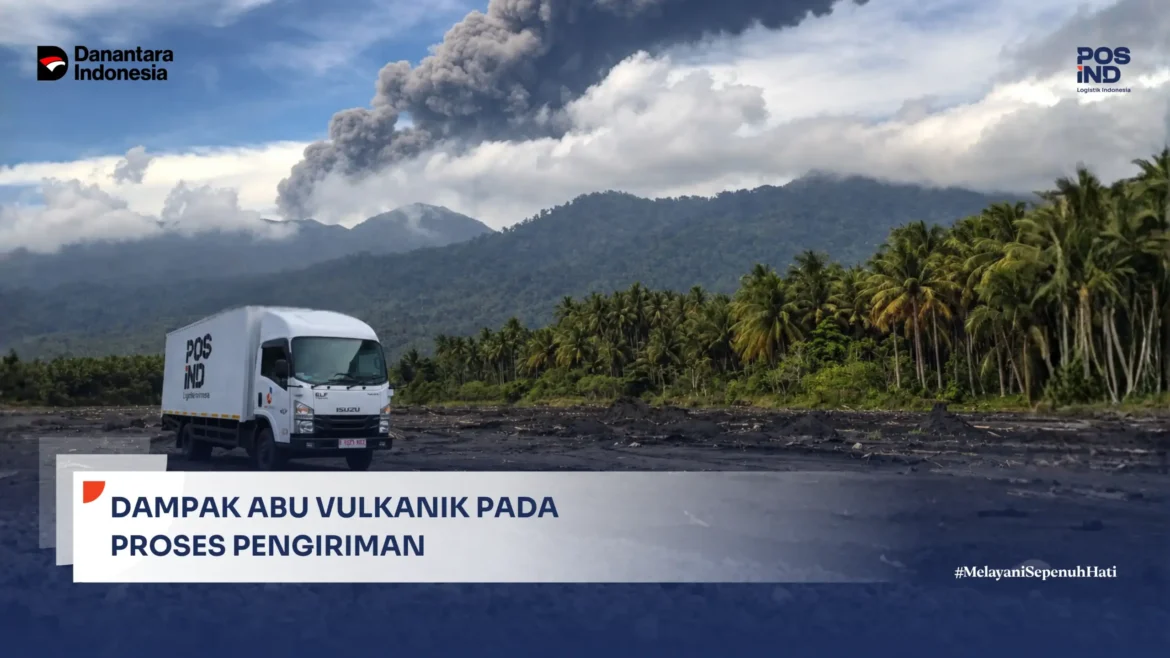
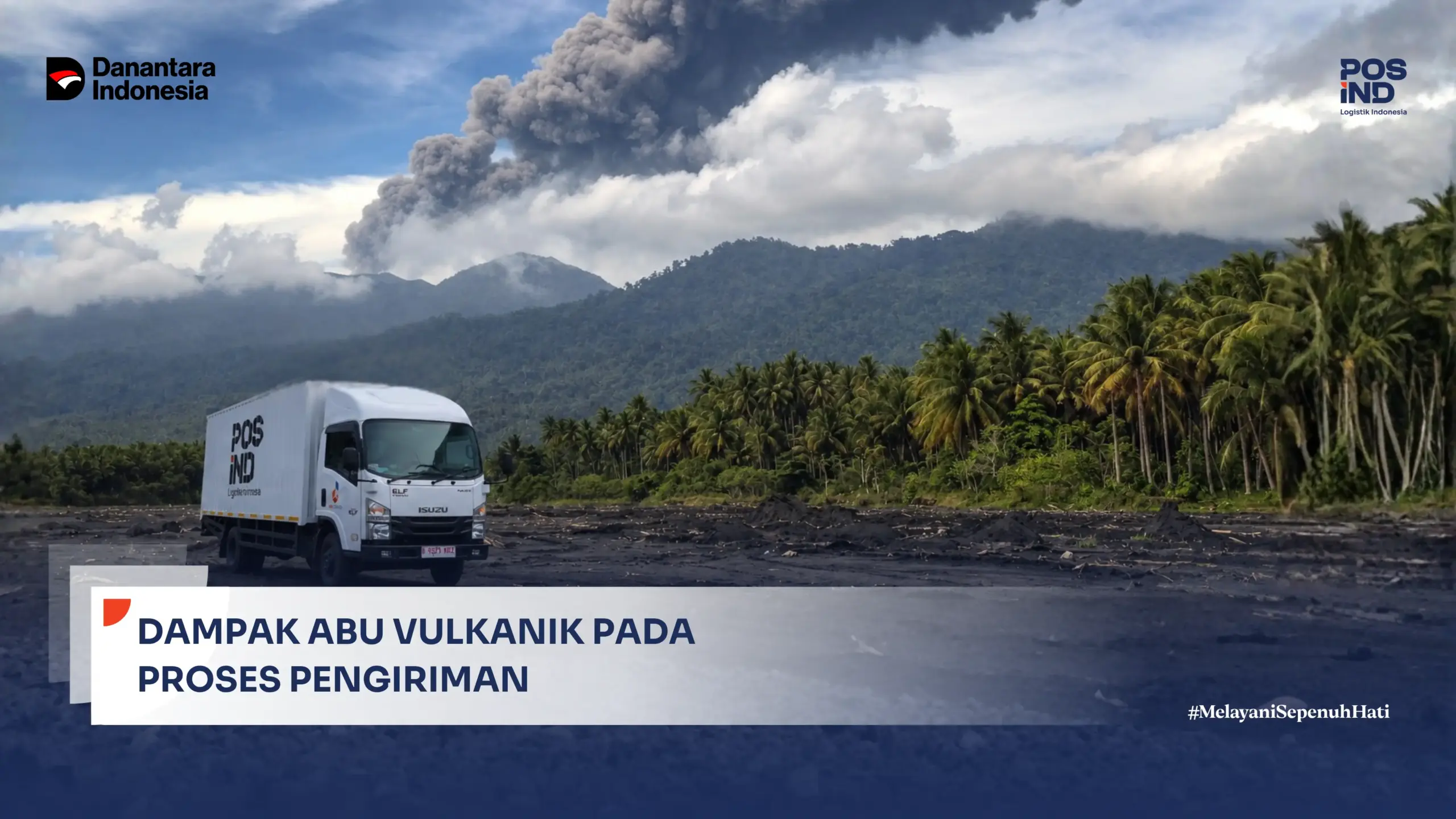
Pos Indonesia, officially operating as PosIND, has issued a formal advisory warning that ongoing volcanic activity in various regions of Indonesia is posing significant threats to the nation’s logistics and supply chain networks. The state-owned enterprise, which handles an average of six million shipments per month, highlighted that the primary concern lies in the vulnerability of air transport corridors. As seismic and volcanic tremors continue to impact air quality and visibility, several regional airports face the risk of temporary closure, which would inevitably lead to flight cancellations, rescheduling, and a reduction in available cargo capacity for both domestic and international postal services.
The potential for disruption is not merely speculative. Given Indonesia’s position on the Pacific Ring of Fire—a major area in the basin of the Pacific Ocean where many earthquakes and volcanic eruptions occur—the country’s logistics infrastructure is frequently tested by natural phenomena. When volcanic ash, which is abrasive and hazardous to jet engines, reaches cruising altitudes or settles on runways, aviation authorities are mandated to ground flights for safety. For a company like Pos Indonesia, which relies heavily on a combination of air, sea, and land transport, these groundings act as a bottleneck, forcing a recalibration of delivery timelines and operational strategies.
The Mechanics of Volcanic Disruption in Logistics
Volcanic ash consists of tiny, jagged particles of rock and natural glass. When ingested by aircraft engines, these particles can melt and coat turbine blades, leading to total engine failure. Consequently, the aviation industry operates under a zero-tolerance policy regarding flight through volcanic plumes. For logistics firms, this presents a domino effect. When a primary hub—such as those serving major metropolitan areas—is closed, the ripple effect extends to sorting centers, last-mile delivery fleets, and international transit connections.
Pos Indonesia operates a diverse range of international services, including EMS (Express Mail Service), ePacket, Pos Registered, and various international air and parcel export services. These services are meticulously timed to meet transit expectations. When the air bridge is severed, the company is forced to activate contingency protocols. Historically, the company has demonstrated resilience during such events. A notable precedent occurred during the 2014 eruption of Mount Kelud, which saw the closure of Juanda International Airport in Surabaya. During that period, Pos Indonesia successfully diverted high-priority shipments from air to ground, utilizing the extensive rail and bus network across Java to maintain service continuity.
Strategic Operational Adjustments
In response to the current escalation in volcanic activity, PosIND has mobilized its 24/7 "War Room," a centralized facility dedicated to real-time operations control. This hub is tasked with monitoring the status of all shipments and the environmental conditions affecting transportation corridors. The integration of advanced logistical technology, which the company has aggressively adopted over the past two years, plays a critical role in managing these crises.
According to the company’s 2024 annual report, the implementation of robotic sorting machines and Radio Frequency Identification (RFID) technology at major processing centers, such as those in East Jakarta and Surabaya, has improved operational efficiency by 133% while reducing costs by 39% compared to legacy manual processes. These technological assets allow the company to reroute packages with higher precision. When a specific air route becomes untenable, the War Room assesses the feasibility of shifting cargo to alternative modes of transport, such as sea freight or long-haul road logistics, provided that such shifts do not compromise the safety of personnel or the integrity of the shipments.
Data-Driven Resilience and Global Reach
While the immediate concern is domestic transit, the international implications are equally significant. Indonesia’s export-import logistics depend heavily on international air cargo lanes. Any interruption at local airports can delay outbound shipments destined for international markets, potentially missing connection windows at global transit hubs. Pos Indonesia’s "Customs Declaration System" is currently being utilized to ensure that all documentation—including HS (Harmonized System) codes, item descriptions, and valuation data—is pre-cleared to avoid further delays once the logistics bottlenecks are resolved.
However, the company has been transparent in its communication to customers, noting that the estimated delivery times provided at the time of booking are subject to change. The company emphasizes that the processing time for international shipments often excludes the variable time required for customs inspections at the destination country. When combined with the unpredictable nature of volcanic flight disruptions, the logistical timeline becomes a dynamic variable rather than a fixed guarantee.
Fact-Based Analysis of Logistical Implications
The current situation highlights the fragility of modern just-in-time supply chains. For a postal service that handles millions of packages, the loss of air transport capacity is not just a scheduling issue; it is a capacity management challenge. A standard Boeing or Airbus cargo hold can carry significant tonnage. Shifting that volume to ground transport is rarely a one-to-one transition, as road and rail networks have their own capacity limits and longer transit times.
Furthermore, the economic impact of these disruptions extends to small and medium-sized enterprises (SMEs). Pos Indonesia has recently pivoted to strengthen its retail business services specifically to support UMKM (Micro, Small, and Medium Enterprises) in Indonesia. For these businesses, which rely on consistent shipping to maintain their customer base, even a 48-hour delay caused by a volcanic eruption can have tangible financial repercussions. The proactive stance of Pos Indonesia in providing regular, transparent updates is therefore not just an administrative requirement, but a vital service to maintain market confidence.
Historical Precedents and Crisis Management
To understand the scale of the current threat, one must look at the historical data of volcanic events in Indonesia. The country is home to over 120 active volcanoes. The 2014 Kelud eruption was a watershed moment for Indonesian logistics, teaching major carriers how to pivot from air to multi-modal transport effectively. During that period, the shift to train and bus freight allowed for a "graceful degradation" of service rather than a total collapse.
In the modern context, the digital infrastructure currently in place at PosIND allows for much faster decision-making. By leveraging real-time data from meteorology agencies and airport authorities, the management team can preemptively move cargo to alternative hubs before an airport is officially closed, thereby minimizing the duration of delays.
Guidance for Customers and Stakeholders
Pos Indonesia has issued clear guidance for its customer base. Clients are urged to:
- Utilize Digital Tracking: Customers should monitor the status of their packages via the official PosIND website and mobile application. These platforms are updated in real-time as transit statuses change.
- Account for Extended Transit: Customers should factor in potential delays when planning time-sensitive shipments.
- Verify Documentation: For international shipments, ensuring that all information in the Customs Declaration System is accurate and complete is crucial to prevent further delays at the customs stage, which could compound any existing volcanic-related transit delays.
The company maintains that it is in constant communication with the Ministry of Transportation and the relevant aviation authorities. Any further operational adjustments—whether they involve the suspension of specific services, the activation of alternative transit routes, or the implementation of emergency capacity-sharing agreements with other logistics partners—will be announced through official channels.
Conclusion
As Indonesia navigates the current period of increased volcanic activity, the role of national infrastructure providers like Pos Indonesia becomes critical. The company’s ability to blend advanced robotic automation with traditional crisis management strategies provides a template for national logistics resilience. While the volcanic threat remains an external variable beyond the control of any single organization, the focus on transparency, technological monitoring, and flexible, multi-modal transport routing serves as the primary defense against systemic supply chain failure.
For now, the situation remains fluid. The safety of personnel remains the absolute priority, followed by the security of the mail and parcels entrusted to the national service. As the situation evolves, stakeholders can expect ongoing updates, with the company’s digital portals serving as the primary source of truth for the status of the national logistics network. The resilience of this network will be tested in the coming weeks, but based on the organizational framework currently in place, the path forward appears focused on maintaining service continuity through strategic, data-driven adaptation.