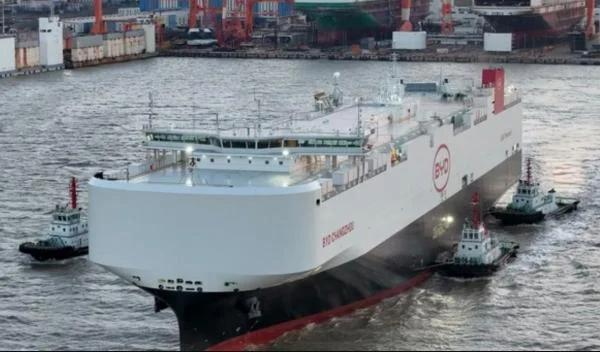
The global automotive landscape is witnessing a seismic shift as Chinese electric vehicle (EV) giant BYD continues its aggressive expansion into maritime logistics. Industry reports from maritime specialized publications, including New Ships and the shipping analytics platform Robin Assasfina, have indicated that BYD has placed a substantial order for ten ultra-large car carrier vessels. Each vessel is designed with a capacity of 9,200 Car Equivalent Units (CEU), a move that signifies the automaker’s commitment to controlling its supply chain and reducing reliance on third-party shipping logistics.
If this order is successfully fulfilled, it will bring BYD’s total maritime fleet to 18 vessels, boasting a combined capacity of over 130,000 CEU. This development underscores the company’s ambition to sustain its rapid export growth, particularly as it faces increasing scrutiny and trade barriers in Western markets. By internalizing its logistics, BYD is insulating itself against the volatility of the global shipping market, which has seen fluctuations in freight rates and vessel availability in recent years.
Strategic Infrastructure Development
The construction of these vessels is reportedly slated for the China Merchants Industry facilities at the Jinling and Haimen shipyards. These locations are renowned for their expertise in building specialized ships, particularly Pure Car and Truck Carriers (PCTC). The delivery timeline for these ten vessels is projected to span from 2027 through 2029, a period that aligns with BYD’s long-term global production roadmap.
The decision to invest in such a large-scale fleet is a calculated maneuver. As BYD pivots from a domestic-focused manufacturer to a dominant global exporter, the traditional reliance on chartered shipping lines—which have historically been dominated by Japanese and European conglomerates—has become a bottleneck. By operating its own fleet, BYD gains greater control over shipping schedules, port calls, and cost efficiency, allowing it to maintain competitive pricing for its vehicles in markets across Europe, Southeast Asia, and Latin America.
Understanding the PCTC Logistics Model
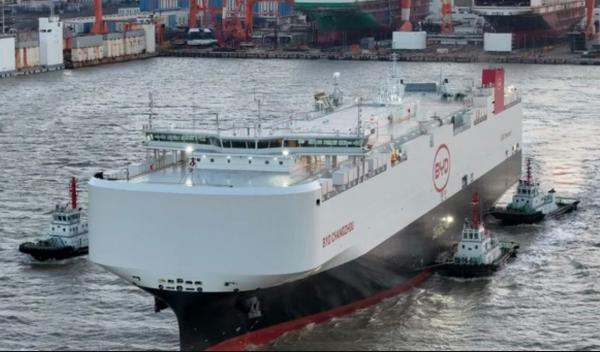
To grasp the magnitude of this investment, it is necessary to understand the PCTC (Pure Car and Truck Carrier) segment. These are not standard cargo ships; they are complex, multi-deck vessels designed specifically to maximize the number of vehicles that can be safely stowed and secured.
The term "Car Equivalent Unit" (CEU) is the industry standard for measuring ship capacity. However, as noted by maritime analysts, the figure of 9,200 CEU is a nominal capacity. The actual number of vehicles a ship carries can vary based on the physical dimensions of the EVs being transported. Modern EVs are generally heavier and sometimes bulkier than traditional internal combustion engine vehicles, which can slightly reduce the total unit capacity of a vessel. Nonetheless, even with a slight margin of adjustment, the scale of BYD’s order represents one of the largest fleet expansions by a single automotive manufacturer in modern history.
The Chronology of BYD’s Maritime Ascent
BYD’s entry into ship ownership is a relatively recent phenomenon, but one that has progressed with remarkable speed.
- 2022-2023: Recognizing the rising costs of shipping and the global shortage of RoRo (Roll-on/Roll-off) vessels, BYD began exploring partnerships with shipbuilders to secure long-term logistics solutions.
- Early 2024: The company took delivery of its first specialized vessel, the BYD Explorer No. 1, which marked its formal entry into independent international maritime operations.
- Mid-2024: As sales figures in international markets soared, reports surfaced regarding the commissioning of additional vessels to support the growing export volume.
- September 2026 (Current Status): The latest reports confirm the procurement of ten additional high-capacity carriers, signaling that the company is preparing for a significant uptick in export volumes toward the end of the decade.
Implications for the Global Automotive Trade
The expansion of BYD’s fleet carries several critical implications for the global automotive industry. First, it directly challenges the established order of the maritime shipping industry. Traditional carriers like Wallenius Wilhelmsen and NYK Line have long held a monopoly on vehicle transport. BYD’s vertical integration forces these incumbents to adapt to a reality where their largest customers are also their competitors in the logistics space.
Second, the move is a defensive hedge against geopolitical instability. With various nations implementing protectionist trade policies, such as the European Union’s recent investigations into Chinese EV subsidies, the ability to control one’s own shipping route is a strategic asset. If geopolitical tensions lead to port congestion or logistical sanctions, a private fleet provides a level of autonomy that independent shippers cannot guarantee.

Furthermore, the scale of this fleet suggests that BYD is anticipating massive demand in regions where it is currently establishing local production hubs. By having a robust shipping network, the company can move not just finished vehicles, but also critical components and battery systems to its international assembly plants with greater ease.
Industry Reactions and Market Sentiment
While there has been no official statement from BYD’s corporate headquarters or the specific shipyards regarding the financial terms of the contract, market analysts have reacted positively to the news. The investment is viewed as a hallmark of "smart manufacturing" where the end-to-end supply chain is treated as a core part of the product.
In the broader context of the Chinese automotive sector, BYD’s move has prompted other manufacturers to reconsider their logistics strategies. As the Chinese EV industry matures, the "China-to-World" model of export is moving toward a more decentralized system. However, for the near future, the reliance on high-capacity vessels to move vehicles from Chinese ports to global hubs remains the primary method of distribution.
Some analysts caution, however, that managing a fleet of 18 large-scale vessels is a complex undertaking. The operational costs—including fuel, crew management, port fees, and maintenance—are significant. BYD will need to ensure that its vehicle production volumes remain high enough to maintain the utilization rates of these ships. A downturn in global EV demand could turn these assets into liabilities, as idle ships incur high daily overhead costs.
Sustainability and Future Tech in Shipping
It is also worth noting that the next generation of car carriers is moving toward greener technology. The maritime industry is under intense pressure to decarbonize, and the vessels being built for BYD are expected to incorporate the latest in energy-efficient design. This may include dual-fuel engines capable of running on Liquefied Natural Gas (LNG) or other cleaner alternatives to traditional bunker fuel.

Aligning its shipping fleet with its "Green Dream" corporate philosophy—which emphasizes sustainability—will be vital for BYD as it navigates the stringent environmental regulations of the European market. If the company can prove that its logistics chain is as green as its products, it will gain a significant competitive advantage in markets where environmental, social, and governance (ESG) criteria are prioritized by consumers and regulators alike.
Looking Ahead: 2027 and Beyond
As the industry looks toward 2027 and the arrival of the first of these ten new ships, all eyes will be on how BYD manages the integration of these assets. The company is effectively transitioning from a car manufacturer into a multifaceted industrial conglomerate that oversees its own energy storage, semiconductor production, and now, international maritime logistics.
This vertical integration model is increasingly being emulated by other tech-heavy automotive firms, but none have approached it with the sheer scale and speed of BYD. The next three years will be a definitive test of whether this massive capital expenditure pays off in increased market share and reduced operational costs.
For the time being, the order remains the latest chapter in the story of China’s rise as a global automotive superpower. Whether this results in a permanent shift in how vehicles are moved across oceans or serves as a cautionary tale of over-expansion remains to be seen. However, one thing is clear: the high seas are becoming a critical theater in the ongoing competition for global automotive dominance, and BYD is ensuring it has the capacity to lead that charge.