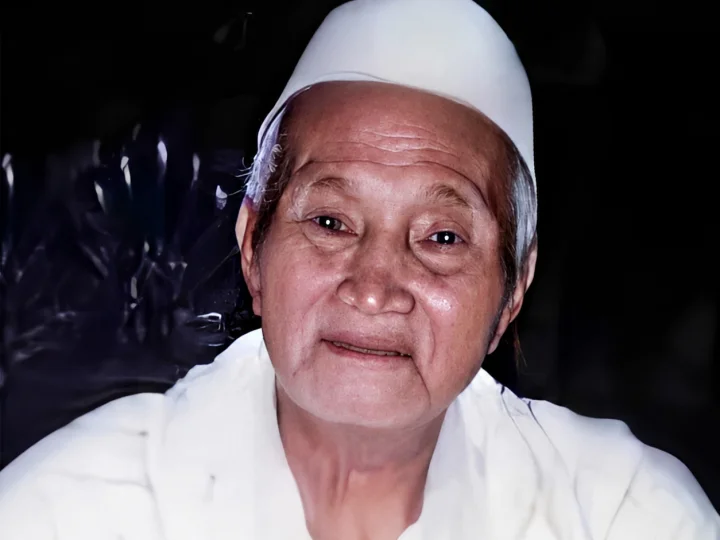
Behind the growth of many Islamic boarding schools (pesantren) in Indonesia stands a generation of scholars whose lives were defined by relentless learning, unwavering sincerity, and lifelong service to society. One of the most revered figures among them was KH. Jauhari Zawawi, a respected Indonesian Muslim scholar whose intellectual journey stretched from the modest villages of Central Java to the hallowed grounds of Makkah before culminating in the establishment of one of East Java’s most influential pesantren. His life reflects the classical Islamic tradition of seeking knowledge across generations of teachers while dedicating every stage of life to education, da’wah, and community leadership, leaving an indelible mark on Indonesia’s religious and educational landscape.
Early Life and Formative Years in Central Java
KH. Jauhari Zawawi was born in 1911, on a Friday Wage according to the intricate Javanese calendar system, in Waru, Sidorejo Village, Sedan District, Central Java, Indonesia. His birth into a family with deep religious and historical roots immediately placed him within a lineage dedicated to Islamic scholarship and community service. The early 20th century in Indonesia was a period of significant socio-political ferment, marked by Dutch colonial rule, the burgeoning of nationalist movements, and the steadfast efforts of religious leaders to preserve and propagate Islamic teachings amidst external pressures. In this environment, pesantren served not only as centers of religious learning but also as bastions of cultural identity and resistance, fostering a strong sense of community and moral integrity.
Growing up in such a context, young Jauhari Zawawi was immersed in traditional Islamic learning from a tender age. His initial education would have been primarily within his family and local religious teachers (kyai), focusing on foundational texts of the Quran, Hadith, Arabic grammar, and basic Islamic jurisprudence (fiqh). The pedagogical methods of the time were largely oral and highly personalized, involving direct instruction from teacher to student, often in informal settings within the kyai’s residence or local mosque. This foundational period instilled in him a profound respect for religious knowledge and a rigorous discipline for study, traits that would define his entire life. The "Friday Wage" birth date, while seemingly a minor detail, often carries cultural significance in Javanese tradition, sometimes associated with particular characteristics or destinies, subtly reinforcing his destined path of spiritual leadership.
The Pursuit of Knowledge Across Nusantara: Pesantren Education
Following the established tradition for aspiring scholars in Indonesia, KH. Jauhari Zawawi embarked on an extensive journey of learning, moving from one pesantren to another to study under various esteemed kyai. This migratory pattern, known as nyantri, was crucial for broadening one’s intellectual horizons, acquiring diverse perspectives on Islamic sciences, and establishing a robust scholarly sanad (chain of transmission) linking him to earlier generations of scholars. While specific names of the pesantren he attended are not widely detailed, it is plausible that his studies would have encompassed renowned institutions across Java, each specializing in different branches of Islamic knowledge.
In these pesantren, Jauhari Zawawi would have delved deeply into classical Islamic texts, mastering disciplines such as Tafsir (Quranic exegesis), Hadith studies, Usul al-Fiqh (principles of Islamic jurisprudence), Tasawwuf (Sufism or Islamic mysticism), and advanced Arabic language and literature. The learning environment was typically austere, emphasizing self-discipline, humility, and unwavering dedication. Students would often live in simple dormitories, dedicating their days to attending bandongan (large group lectures where the kyai reads and explains texts) and sorogan (individual or small group sessions where students read texts directly to the kyai for correction and elucidation). This rigorous academic and spiritual training cultivated not only intellectual prowess but also a strong moral character, preparing him for the immense responsibilities of religious leadership. His relentless pursuit of knowledge during this period laid the groundwork for his future contributions, demonstrating an insatiable thirst for understanding the complexities of Islamic tradition.
The Intellectual Pilgrimage to Makkah: A Global Perspective
A pivotal phase in KH. Jauhari Zawawi’s intellectual development was his journey to Makkah, the holy city, for advanced studies. For Indonesian ulama of his generation, studying in Makkah (and sometimes Medina) was considered the pinnacle of Islamic scholarship. It offered an unparalleled opportunity to engage with leading scholars from across the Islamic world, deepen understanding of foundational texts at their source, and immerse oneself in the vibrant intellectual atmosphere of the Haramayn. This journey, often undertaken after years of rigorous study in Indonesia, was not merely a pilgrimage but an intellectual odyssey that profoundly shaped their worldview and authority.
In Makkah, Jauhari Zawawi would have joined countless other students from diverse backgrounds, attending lessons in the Grand Mosque and other traditional study circles. Here, he would have likely studied under renowned Hijaazi scholars, acquiring deeper insights into Hadith sciences, advanced Fiqh, and perhaps gaining ijazahs (licenses to transmit knowledge) in various Islamic disciplines. The exposure to different schools of thought and the direct engagement with the living traditions of Islamic scholarship in Makkah enriched his understanding and broadened his perspective beyond the regional specificities of Indonesian Islam. This period of study in the heartland of Islam provided him with a global outlook, strengthening his scholarly credentials and preparing him to return as an authoritative voice in his homeland. The experience of living and learning in Makkah imbued him with a spiritual depth and intellectual confidence that would be instrumental in his future endeavors.
Return and the Founding of an Influential Pesantren in East Java
Upon his return to Indonesia, armed with extensive knowledge and a profound spiritual grounding, KH. Jauhari Zawawi faced the common challenge and calling of many returning ulama: to establish a center of learning that would serve his community. He chose East Java as the location for his new institution, a region already renowned for its dense network of influential pesantren. The decision to found a pesantren was a testament to his unwavering commitment to education and da’wah, recognizing the critical role these institutions played in nurturing future generations of Muslims and preserving Islamic values.
The establishment of a new pesantren was a formidable undertaking, requiring not only profound religious knowledge but also immense perseverance, community support, and practical organizational skills. While the specific name of his pesantren is not explicitly mentioned in the provided snippet, its description as "one of East Java’s influential pesantren" indicates its significant impact. Such institutions typically began modestly, perhaps with a small mosque or prayer house (musholla) and a few simple student dormitories (pondok). Under KH. Jauhari Zawawi’s leadership, the pesantren would have steadily grown, attracting students (santri) from various regions eager to learn from a scholar of his caliber.
The curriculum at his pesantren would have likely blended traditional Islamic sciences with a strong emphasis on character building (akhlaq) and community engagement. Students would have been taught classical texts alongside practical skills, instilling in them not only religious knowledge but also a sense of social responsibility. The pesantren would have served as a hub for religious guidance, social activities, and cultural preservation, deeply integrating itself into the fabric of the local community. His vision for the pesantren would have extended beyond academic instruction, aiming to cultivate well-rounded individuals who could contribute positively to society.
Community Leadership and Broader Impact

Beyond the confines of his pesantren, KH. Jauhari Zawawi emerged as a respected community leader and spiritual guide. His wisdom, humility, and deep understanding of both Islamic teachings and local customs made him a trusted arbiter in disputes, a source of counsel for families, and an inspiring orator for public gatherings. Ulama of his stature often played multi-faceted roles, acting as educators, spiritual mentors, social workers, and even informal local administrators.
His period of active leadership coincided with the nascent years of Indonesian independence and the subsequent nation-building efforts. While the article doesn’t detail his specific political involvement, it is highly probable that he, like many other prominent ulama, would have been involved in supporting the young republic, perhaps through moral encouragement, advocating for justice, or guiding his community through times of change. Many ulama of this era were also instrumental in shaping the early direction of major Islamic organizations such as Nahdlatul Ulama (NU), which played a crucial role in advocating for traditionalist Islamic values and contributing to national development. His commitment to lifelong service extended to these broader societal contributions, making him a true pillar of his community and beyond.
Philosophical Underpinnings and Teaching Methodology
The core principles that guided KH. Jauhari Zawawi’s life – "relentless learning, unwavering sincerity, and lifelong service" – were deeply embedded in his teaching methodology and leadership style. His pedagogical approach emphasized not just the memorization of texts but a profound understanding of their meaning and practical application in daily life. He would have stressed the importance of adab (Islamic etiquette and moral conduct) towards teachers, fellow students, and society at large, considering it an integral part of acquiring beneficial knowledge.
His lessons would have transcended mere academic instruction, often incorporating spiritual insights and moral exhortations. He likely employed a Socratic method in some instances, encouraging critical thinking and fostering a deep, personal connection to the religious texts. For his students, he was more than just a teacher; he was a mentor, a spiritual guide, and a living example of the ideals he espoused. This holistic approach to education ensured that his students not only became knowledgeable scholars but also morally upright individuals capable of leading their own communities. His sincerity was evident in his dedication, and his service manifested in the countless lives he touched through education and guidance.
Enduring Legacy and Implications for Indonesian Islam
KH. Jauhari Zawawi’s life and work represent a vital link in the continuous chain of Islamic scholarship in Indonesia. His journey from a village in Central Java to the intellectual hubs of the Muslim world and back to establish a prominent educational institution in East Java exemplifies the dedication and resilience of Indonesian ulama. His legacy is not merely confined to the physical walls of the pesantren he founded but resonates through the generations of students he educated, the communities he served, and the broader influence he exerted on Islamic thought and practice in Indonesia.
The implications of his contributions are profound. He helped ensure the continuity of traditional Islamic learning, adapting it to the contemporary needs of Indonesian society. His pesantren would have played a critical role in preserving indigenous Islamic traditions while integrating universal Islamic values. In an era of rapid change, figures like KH. Jauhari Zawawi provided stability, moral guidance, and intellectual leadership, fostering a resilient and vibrant Muslim community. His life serves as a powerful testament to the enduring power of education, the importance of sincere dedication, and the transformative impact of selfless service in shaping a nation’s spiritual and intellectual landscape. The memory of scholars like KH. Jauhari Zawawi continues to inspire new generations, reminding them of the profound responsibility and privilege of seeking and disseminating knowledge for the betterment of humanity.