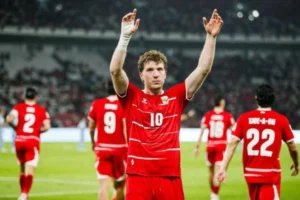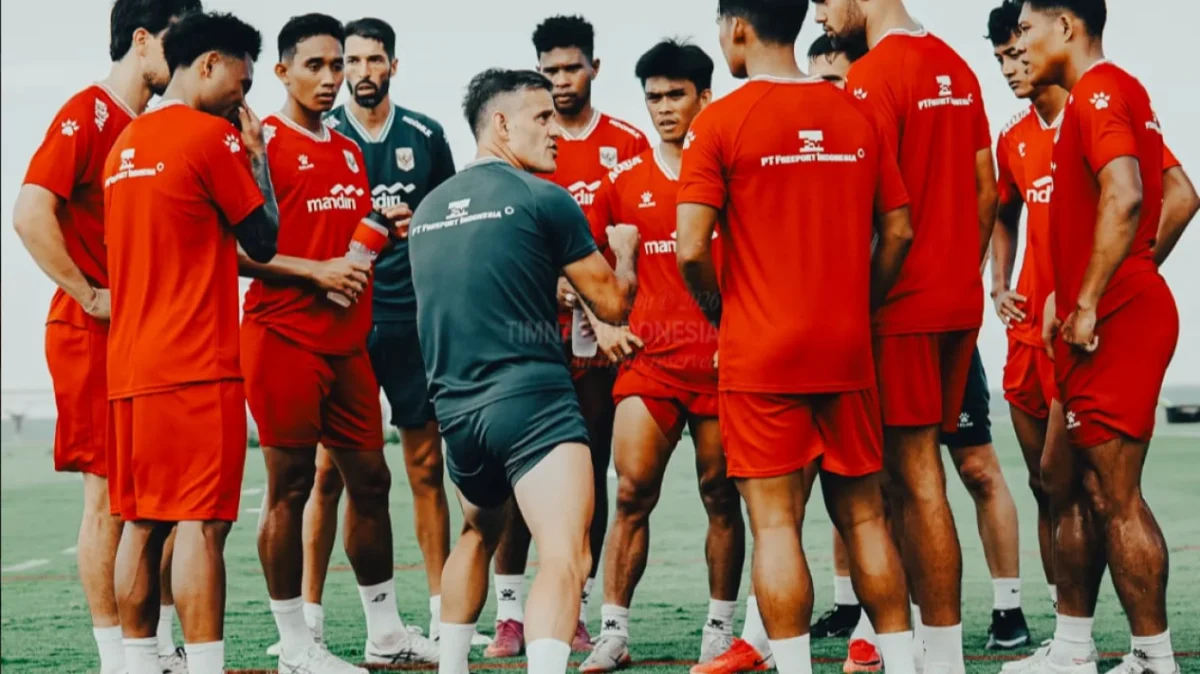
The upcoming ASEAN Hyundai Cup 2026 is already generating significant buzz, and the psychological warfare has commenced with Vietnamese media highlighting their national team’s strengthened lineup. TheThao247, a prominent Vietnamese sports publication, has focused on the perceived new power dynamic within the Golden Star Warriors, suggesting it positions them as formidable contenders for retaining their Southeast Asian crown. This narrative has also captured the attention of Indonesian media, as reported by TheThao247, with a particular emphasis placed on the impact of three Brazil-born naturalized players who are believed to have made the squad under coach Kim Sang Sik exceptionally complete and challenging to overcome.
The three key figures in question are Do Hoang Hen (known as Hendrio), Nguyen Xuan Son (Rafaelson), and Nguyen Tai Loc (Geovane Magno). These players are not newcomers to the Vietnamese football scene, having established themselves with considerable experience in the V.League over several years before their official naturalization and subsequent eligibility to represent the national team. Their integration is seen by TheThao247 as a pivotal factor in Vietnam’s heightened confidence as they approach the ASEAN Hyundai Cup 2026. The publication posits that their presence introduces greater attacking variety and elevates the overall quality of the team’s play.
This surge in confidence was further solidified by a decisive 4-0 victory over Myanmar in a recent preparatory friendly match. Notably, Hendrio, Rafaelson, and Geovane Magno were all included in the starting lineup for this encounter and made a positive impression, immediately demonstrating their potential contribution. The Vietnamese media’s assessment suggests that the debut of these three players indicates a seamless adaptation to the national team’s dynamics and tactical approaches. Beyond offering new attacking avenues, their inclusion is also perceived to make Vietnam’s playing style less predictable for opposing teams.
Head coach Kim Sang Sik has publicly expressed his satisfaction with the contributions of the naturalized players, noting that their addition has significantly enhanced the overall quality of the Vietnamese squad. The South Korean tactician, however, remains focused on continuous improvement, emphasizing that the coaching staff will persist in refining tactical execution and ensuring peak physical conditioning for all players to maximize their performance throughout the tournament.
Beyond the strategic advantage of these naturalized players, Vietnam’s preparation for the ASEAN Hyundai Cup 2026 has been comprehensive. The team recently concluded an intensive training camp in South Korea, a common practice for national teams seeking to elevate their performance through high-level sparring and acclimatization. This meticulous preparation, combined with a blend of experienced veterans, emerging young talents, and the impactful influx of new players, has firmly re-established Vietnam as a leading favorite to win the 2026 edition of the tournament.
The ASEAN Hyundai Cup: A Regional Footballing Epicenter
The ASEAN Hyundai Cup, formerly known as the AFF Championship, is the premier international football competition contested by the men’s national teams of the Confederation of ASEAN Football Associations (CAFA). Established in 1996, the tournament has grown in stature and popularity, becoming a highlight of the regional sporting calendar. The competition is held biennially, with the exception of the 2020 edition, which was postponed to 2021 due to the COVID-19 pandemic. Hyundai Motor Company became the title sponsor in 2022, marking a significant commercial milestone for the event.
The tournament format typically involves a group stage followed by a knockout phase, culminating in a two-legged final. Over the years, several nations have emerged as dominant forces. Singapore, with four titles, is the most successful team, followed closely by Thailand and Vietnam, each with three championships. Malaysia and Indonesia have also enjoyed success, clinching the title once each. The ASEAN Hyundai Cup not only serves as a platform for national pride but also provides crucial experience and exposure for players in the region, contributing to the overall development of football in Southeast Asia. The 2026 edition is highly anticipated, with participating nations eager to etch their names in the tournament’s history.
The Rise of Naturalized Players in International Football
The trend of national teams incorporating naturalized players has become increasingly prevalent in international football, a phenomenon driven by several factors. For nations with a limited pool of domestic talent or those seeking to quickly bolster their competitiveness, naturalization offers a strategic pathway to enhance squad depth and quality. This often involves players of national heritage who have developed their careers abroad or, as in Vietnam’s case, foreign players who have established long-term residency and demonstrated commitment to their adopted country’s footballing system.
The International Football Association Board (IFAB) has established eligibility rules for players representing a national team, which include requirements related to birth, parentage, or residency. The naturalization process for players like Hendrio, Rafaelson, and Geovane Magno typically involves a period of residency and a commitment to the national team. While this practice can undoubtedly strengthen teams and lead to more competitive tournaments, it also sparks debates about national identity and the spirit of international competition. However, from a performance perspective, the integration of skilled players regardless of their origin is often seen as a pragmatic approach to achieving sporting success.
Vietnam’s Tactical Evolution Under Kim Sang Sik
Kim Sang Sik, a former South Korean international and highly regarded coach, took the helm of the Vietnamese national team with the explicit mandate of building upon their previous successes and solidifying their position as a regional powerhouse. His coaching philosophy is often characterized by a blend of discipline, tactical flexibility, and a focus on developing a cohesive team unit. The inclusion of the naturalized trio is likely a strategic decision by Kim to add offensive firepower and tactical options that might have been previously lacking.
The emphasis on a rigorous training camp in South Korea underscores Kim’s commitment to thorough preparation. This approach allows the team to work on specific tactical schemes, improve physical conditioning, and foster chemistry among players, especially those new to the squad. His comments about refining tactics and physical condition indicate a coach who is not resting on his laurels but is actively seeking incremental improvements to ensure his team is optimally prepared for the demands of a tournament like the ASEAN Hyundai Cup.
Data-Driven Insights into Vietnam’s Strengths
While specific statistical data from the friendly against Myanmar is limited in the provided text, a 4-0 victory is a significant indicator of offensive prowess and defensive solidity. In competitive matches, key performance indicators (KPIs) that would be closely monitored include:
- Goals Scored: The ability to consistently find the back of the net is paramount. The integration of Hendrio, Rafaelson, and Geovane Magno, who have proven goal-scoring records in the V.League, is expected to bolster this area.
- Possession and Passing Accuracy: A higher percentage of possession and accurate passing can dictate the tempo of a match and create more scoring opportunities. The new players’ experience in different footballing environments might bring new passing patterns and ball retention strategies.
- Shots on Target: The conversion rate of shots on target into goals is a critical metric. The quality of the attacking players directly influences this statistic.
- Defensive Organization: While the offensive aspect is highlighted, a strong defense is equally crucial. The team’s ability to limit opposition chances and maintain clean sheets is vital for tournament success.
- Adaptability: The capability to adapt to different opponents and game situations is a hallmark of successful teams. The varying skill sets of the naturalized players are expected to enhance this adaptability.
Historical data from previous ASEAN Hyundai Cup tournaments reveals that teams with potent offenses and well-drilled defenses often go deep into the competition. Vietnam’s past performances have shown flashes of brilliance, and the addition of experienced, naturalized talent aims to provide the consistent edge needed for a championship run.
Broader Implications for the ASEAN Hyundai Cup 2026
The narrative surrounding Vietnam’s strengthened squad has implications beyond just their own campaign. It intensifies the competition and raises the stakes for other regional powerhouses like Thailand, Indonesia, and Malaysia. For Indonesia, in particular, the report from TheThao247 suggests a potential psychological advantage for Vietnam, implying that the Garuda squad might need to address their own preparations and strategies to counter this new threat.
The inclusion of highly skilled naturalized players is a strategy that other nations might consider or have already implemented, potentially leading to a more globally competitive standard of play within the ASEAN Hyundai Cup. This could, in turn, elevate the tournament’s profile and attract greater international attention. The development of football in Southeast Asia is a dynamic process, and the strategic incorporation of talent, whether homegrown or naturalized, is a key aspect of this evolution. As the ASEAN Hyundai Cup 2026 approaches, the tactical battles, individual brilliance, and the strategic decisions made by national federations will undoubtedly shape the narrative of this highly anticipated regional footballing spectacle. The question remains whether this new-look Vietnamese side can translate their perceived strengths into tangible silverware and defend their title in the face of fierce regional competition.