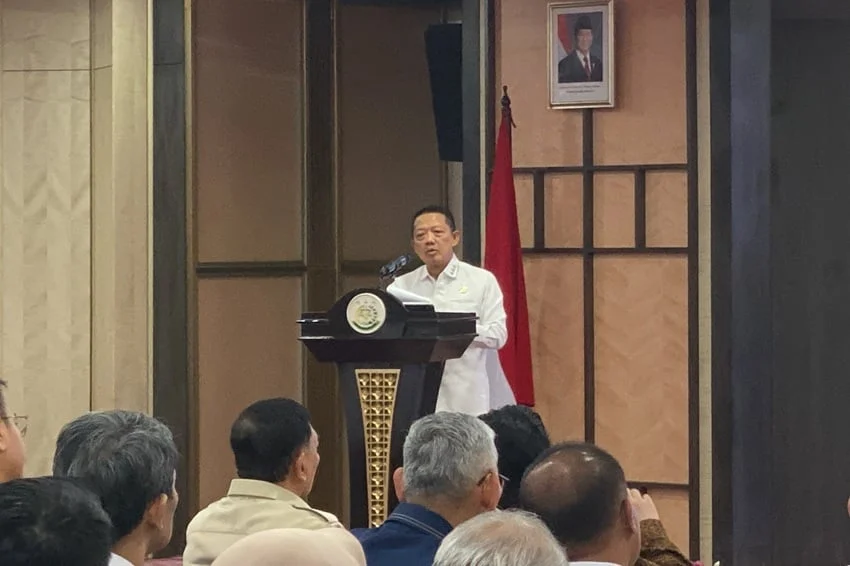
JAKARTA – The legal avenue of money laundering (TPPU) has been posited as a potentially potent instrument for dissecting the case involving former Deputy Attorney General for Special Crimes (Jampidsus), Febrie Adriansyah. This perspective was articulated by Afi Kamilia, a criminologist from the Institute of Criminal Justice Studies, who suggested that the TPPU charge could serve as a crucial entry point for a comprehensive investigation. The recent designation of Adriansyah as a suspect by the Corruption Eradication Commission (KPK) has indeed ushered in a new phase in Indonesia’s law enforcement landscape, with the subsequent transfer of the case handling to the Attorney General’s Office (AGO) presenting a complex institutional dynamic that warrants deep examination.
Afi Kamilia’s analysis highlights the unique characteristics of money laundering offenses within Indonesia’s penal code. "Money laundering can stand alone as a distinct offense, separate from its predicate crime," she explained during an interview on Monday, July 20, 2026. This implies that investigators are not necessarily obligated to fully prove the underlying corruption offense before proceeding with charges of money laundering. This legal principle, if effectively applied, could expedite investigations and potentially uncover a wider network of illicit financial flows associated with the case.
Background and Initial Developments
The case involving Febrie Adriansyah, a prominent figure within the AGO, has sent ripples through Indonesia’s legal and political circles. Adriansyah, who held a pivotal role in prosecuting high-profile corruption cases, became the subject of scrutiny following allegations of misconduct. While the specifics of the predicate crime that led to the TPPU investigation remain under wraps, the development signals a significant turning point, particularly given Adriansyah’s former position of authority.
The initial designation of Adriansyah as a suspect by the KPK marked a significant escalation. However, the subsequent transfer of the case’s handling to the Attorney General’s Office has introduced an element of institutional complexity. This move has sparked debate regarding the potential for internal conflicts of interest and the thoroughness of the investigation moving forward. Critics have raised concerns about whether the AGO can objectively investigate one of its own former high-ranking officials, especially one deeply entrenched in the prosecution of corruption.
The Strategic Advantage of TPPU Charges
Criminologist Afi Kamilia’s assertion that TPPU charges offer an effective investigative pathway stems from the nature of financial crimes. Money laundering is inherently designed to obscure the origins of illegally obtained funds, often involving intricate networks of transactions across multiple accounts and jurisdictions. By focusing on the movement and concealment of these funds, investigators can bypass the often-challenging task of proving the direct commission of the predicate crime in its entirety, at least in the initial stages.
"The predicate crime, such as corruption, bribery, or embezzlement, might be difficult to prove definitively, especially if evidence has been tampered with or is scarce," Kamilia elaborated. "However, the financial trails left by money laundering activities – such as suspicious deposits, rapid asset transfers, or the use of shell companies – can be more tangible and traceable. This makes TPPU a powerful tool for uncovering hidden assets and identifying the beneficiaries of illicit activities."
The implications of this legal strategy are far-reaching. If successful, a TPPU investigation could not only implicate Adriansyah but also potentially expose a broader network of individuals and entities involved in the financial facilitation of corruption. This could include lawyers, accountants, financial institutions, and other intermediaries who play a role in cleaning illicit funds.
Timeline and Key Developments
While a precise, publicly available timeline for the Febrie Adriansyah case is still unfolding, several key stages can be inferred based on the information provided:
- Allegations Emerge: Reports or intelligence gathering likely led to initial suspicions regarding Febrie Adriansyah’s conduct. The exact nature of these allegations remains undisclosed.
- KPK Designation as Suspect: The Corruption Eradication Commission (KPK) formally named Adriansyah as a suspect. This designation signifies that the KPK has gathered sufficient preliminary evidence to believe a criminal offense has been committed. The specific charges at this stage, particularly the predicate crime, would have been crucial.
- Transfer of Case Handling to AGO: Following the KPK’s designation, the authority to investigate and prosecute the case was transferred to the Attorney General’s Office (AGO). This move has been a point of contention and discussion within legal circles.
- Expert Analysis on TPPU: Afi Kamilia’s comments, made on July 20, 2026, offer an expert opinion on the potential effectiveness of TPPU charges in this specific context. Her analysis underscores the strategic advantage of pursuing money laundering offenses.
The date of the news article, July 20, 2026, indicates that these developments have occurred recently, with the legal processes still in their nascent stages.
Broader Implications and Potential Impact
The handling of the Febrie Adriansyah case carries significant implications for Indonesia’s fight against corruption and the public’s trust in its institutions.
Institutional Dynamics and Accountability
The transfer of the case from the KPK to the AGO raises questions about inter-agency cooperation and the perception of impartiality. While legal frameworks often govern such transfers, public scrutiny will undoubtedly be high. The AGO faces the challenging task of demonstrating its commitment to a thorough and unbiased investigation, especially when dealing with a former senior official. A successful prosecution under the TPPU framework could bolster the AGO’s credibility, while any perceived mishandling could further erode public confidence.
Strengthening Anti-Money Laundering Frameworks
This case could serve as a crucial test for Indonesia’s anti-money laundering (AML) laws and their enforcement. The effectiveness of the TPPU charge, as highlighted by Kamilia, could encourage more robust application of AML provisions in future corruption investigations. This could lead to a more holistic approach to tackling financial crimes, moving beyond just punishing the primary offense to dismantling the entire financial ecosystem that supports corruption.
Transparency and Public Trust
High-profile cases involving former senior officials often serve as barometers of a nation’s commitment to transparency and accountability. The public is keenly watching to see if justice will be served and if the legal process can withstand scrutiny. A transparent and decisive investigation, regardless of the outcome, is crucial for maintaining public trust in the judicial and law enforcement systems.
Expert Analysis and Potential Legal Strategies
Afi Kamilia’s emphasis on the independent nature of TPPU offenses is a critical legal insight. In many jurisdictions, including Indonesia, money laundering is treated as a separate criminal act. This separation is vital because it allows for prosecution even when the underlying "predicate offense" is difficult to prove, or when the perpetrator has already been tried or acquitted for that offense.
The elements typically required to prove money laundering under Indonesian law include:
- The existence of assets derived from criminal acts (predicate offenses).
- Acts of concealment, disguising, or transferring of these assets.
- The intention to conceal or disguise the illicit origin of the assets.
By focusing on the financial transactions, investigators can build a case based on documentary evidence, witness testimonies regarding financial flows, and expert analysis of financial patterns. This approach can be particularly effective when dealing with complex financial schemes designed to launder money.
Supporting Data and Precedents
While specific financial figures related to the Febrie Adriansyah case are not yet public, the general trend of corruption cases in Indonesia often involves substantial sums of money. For instance, the Indonesian Corruption Watch (ICW) consistently reports on the scale of corruption losses annually. In 2023, ICW data indicated that corruption cases involved trillions of Rupiah, with significant portions potentially being laundered.
Furthermore, Indonesia has seen previous high-profile cases where TPPU charges were instrumental. The investigation into alleged corruption by former officials often culminates in charges of money laundering, as it allows for the tracing and confiscation of assets. The success of these previous applications of TPPU laws can serve as a precedent and a roadmap for the current investigation.
Official Responses and Future Outlook
As of the reporting date, detailed official responses from the KPK and the AGO regarding the specifics of the investigation into Febrie Adriansyah are likely limited, given the ongoing nature of the inquiry. However, statements from these institutions typically emphasize their commitment to upholding the law and ensuring justice.
The Attorney General’s Office, in particular, will be under immense pressure to conduct a thorough and transparent investigation. The public, as well as legal watchdogs, will be closely monitoring every step. The potential for this case to set a new precedent in the fight against corruption and money laundering in Indonesia is significant. The application of TPPU laws, as advocated by experts like Afi Kamilia, could prove to be a pivotal strategy in uncovering the full extent of financial impropriety and ensuring that ill-gotten gains are recovered. The coming months will be crucial in determining the trajectory of this high-stakes legal battle.