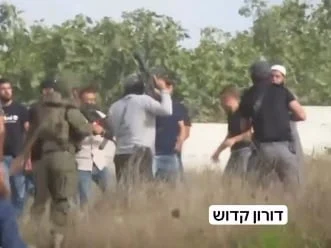
The Palestinian Territories are currently experiencing a significant and alarming surge in violence, with the Fatah movement holding the Israeli government directly responsible for the actions of what it describes as "Jewish extremist gangs." These groups, allegedly operating with the tacit or explicit support of Israeli forces, have launched a series of brutal attacks across numerous Palestinian villages and towns in the occupied West Bank. The intensity and scale of these assaults have resulted in a tragic loss of life and widespread injuries among the Palestinian population, raising grave concerns about the deteriorating security situation and the future of a peaceful resolution.
Widespread Attacks and Devastating Consequences
Recent reports indicate that these extremist attacks have directly led to the deaths of at least ten Palestinians and have left dozens more wounded. The Fatah movement has detailed a pattern of escalating brutality, encompassing a range of heinous acts. These include the deliberate burning of homes and agricultural lands, the indiscriminate use of firearms, the systematic destruction of property, and the uprooting of trees. These actions, according to Fatah, are not random acts of violence but are meticulously orchestrated tactics designed to instill terror and forcibly displace Palestinian communities from their ancestral lands.
The villages of Tal, Beit Furik, Deir Jarir, Al-Mughayyir, and Jit are among the locations that have been specifically cited as targets of these coordinated assaults. The systematic nature of these attacks suggests a broader strategy aimed at undermining Palestinian presence and consolidating Israeli control over the West Bank. The use of fire, destruction of essential resources like farmland, and direct violence against civilians are clear indicators of a campaign intended to create an environment of fear and instability, making daily life untenable for Palestinian residents.
Fatah’s Accusations: A Policy of Expulsion and Settlement Expansion
The Palestinian movement Fatah has unequivocally stated that the escalating violence is a direct reflection of the Israeli government’s "organized policy" of forced expulsion, land seizure, and the relentless expansion of illegal settlements. This assertion places the onus squarely on the shoulders of the Israeli administration, suggesting that the actions of extremist groups are not rogue incidents but are either encouraged, enabled, or at the very least, tolerated by official Israeli policy.
This perspective frames the violence in the West Bank as an integral part of a larger, overarching strategy. Fatah leaders have articulated that this "organized policy" is intrinsically linked to the ongoing Israeli military campaign in Gaza. They contend that both fronts represent a singular "colonial project" aimed at achieving specific territorial and demographic objectives. This linkage highlights a perceived dual-pronged approach by Israel: direct military action in Gaza and indirect, yet equally destructive, actions by extremist elements in the West Bank.
Key Figures Implicated
In its condemnations, Fatah has specifically named Prime Minister Benjamin Netanyahu, along with far-right ministers Itamar Ben-Gvir and Bezalel Smotrich. The movement accuses these individuals of providing the essential "political and military protection" that allows these extremist Jewish crimes to occur with impunity. This direct accusation suggests that Fatah believes these political leaders are not only aware of the violence but are actively facilitating it, either through policy decisions, rhetoric, or by failing to adequately enforce laws against such perpetrators.
The implications of these accusations are profound. If Fatah’s claims are accurate, it would indicate a deliberate strategy at the highest levels of the Israeli government to use extremist elements as a tool to advance its agenda in the West Bank, circumventing international law and norms regarding occupation and human rights. This would represent a significant escalation in the conflict and a deepening of the political crisis.
Background Context: The Occupied West Bank
The occupied West Bank has been under Israeli military occupation since the Six-Day War in 1967. International law, as codified by numerous UN resolutions, considers the West Bank, including East Jerusalem, to be occupied territory. The establishment of Israeli settlements in these territories is considered illegal under international law, yet Israel has continued to expand them significantly over the decades.
The presence of Israeli settlers, often with a strong ideological commitment to annexing the West Bank, has frequently led to friction and violence with the Palestinian population. However, the current surge in attacks, as described by Fatah, appears to represent a marked increase in organization, intensity, and alleged state complicity.
The international community has consistently called for an end to settlement expansion and has expressed concern over the violence against Palestinians in the West Bank. However, enforcement mechanisms and the political will to hold parties accountable have often been limited.
Timeline of Escalation (Inferred from Reports)
While a precise, minute-by-minute timeline of every incident is beyond the scope of this report, the current escalation appears to be a recent and intensifying phenomenon, closely following the outbreak of hostilities in Gaza in October 2023.
- Post-October 7th: Following the Hamas attacks on Israel and Israel’s subsequent declaration of war on Hamas, tensions across the West Bank have been exceptionally high.
- Weeks and Months Following: Reports of increased settler violence, often under the guise of "retaliation" or "security patrols," began to surface more frequently. These initial incidents may have been smaller in scale.
- Recent Weeks/Months: Fatah’s statement points to a recent intensification and broadening of these attacks, suggesting a shift from isolated incidents to a more coordinated and widespread campaign. The specific mention of multiple villages being targeted in recent times indicates this concentrated period of heightened activity. The death toll of ten and dozens injured points to a sustained period of severe violence.
This inferred chronology suggests that the current wave of attacks is not an isolated event but a developing situation that has gained significant momentum in the recent past, coinciding with the broader regional conflict.
Supporting Data and International Law
The United Nations Office for the Coordination of Humanitarian Affairs (OCHA) has documented a significant increase in settler-related violence against Palestinians in the West Bank in recent years, with 2023 seeing a particularly high number of incidents and casualties. For instance, data from OCHA often highlights the number of Palestinians killed or injured by settlers, as well as instances of property destruction, including olive groves and homes.
International law, including the Fourth Geneva Convention, prohibits an occupying power from transferring parts of its own civilian population into the territory it occupies. The expansion of Israeli settlements is a direct violation of this convention. Furthermore, international humanitarian law mandates that an occupying power must protect the civilian population of the occupied territory. Fatah’s accusations, if substantiated, suggest a failure of this obligation by the Israeli government.
Official Responses and International Reactions (Inferred)
While specific official responses from the Israeli government to Fatah’s most recent accusations are not detailed in the provided text, historical patterns suggest a likely denial of direct responsibility. The Israeli government typically attributes such violence to isolated incidents involving "rogue elements" or "price tag" attacks, often stating that it takes action against such perpetrators. However, critics and human rights organizations frequently argue that the Israeli authorities are often slow to investigate or prosecute settlers involved in violence against Palestinians, leading to a perception of impunity.
International reactions to settler violence in the West Bank have generally been critical. Many countries and international bodies, including the European Union and individual member states, have condemned the violence and called on Israel to uphold its obligations under international law to protect Palestinian civilians and to hold perpetrators accountable. The United States, while a close ally of Israel, has also expressed concerns about settler violence and has, at times, imposed sanctions on individuals involved in such acts. However, the scale of the current alleged campaign and the direct accusations against the Israeli government may elicit stronger and more urgent calls for action from the international community.
Broader Impact and Implications
The escalating violence in the West Bank carries significant and far-reaching implications:
- Humanitarian Crisis: The immediate impact is a growing humanitarian crisis for Palestinians in affected villages. Displacement, loss of livelihoods, and fear for personal safety are becoming daily realities for many.
- Erosion of Trust and Peace Prospects: The alleged state-sanctioned nature of this violence, as accused by Fatah, further erodes any remaining trust between Israelis and Palestinians, making future peace negotiations even more challenging, if not impossible.
- Regional Instability: The connection drawn by Fatah between the West Bank and Gaza suggests that the conflict is becoming increasingly interconnected, potentially leading to wider regional instability. The perception of a unified "colonial project" could fuel further radicalization on both sides.
- International Law and Accountability: The ongoing violence and the accusations of government complicity pose a significant challenge to international law and the principles of accountability. If such actions are not effectively addressed, it could undermine the credibility of international legal frameworks.
- Demographic and Territorial Changes: The ultimate goal of such a campaign, as suggested by Fatah, would be to alter the demographic and territorial realities on the ground, making a viable Palestinian state even more difficult to achieve.
The situation in the West Bank demands urgent attention from the international community. A comprehensive and impartial investigation into these alleged attacks, coupled with robust diplomatic efforts to de-escalate tensions and ensure accountability, is crucial to preventing further loss of life and to safeguarding any remaining prospects for a just and lasting peace. The accusations leveled by Fatah against the Israeli government necessitate a serious examination of the role of state actors in perpetuating violence and undermining human rights in the occupied territories.