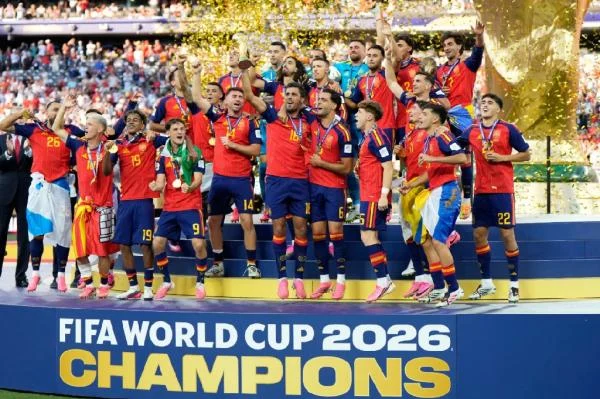
The Spanish national football team is widely considered to have a significant opportunity to defend its World Cup title in 2030, following their triumphant victory in the 2026 edition. This optimism is rooted in the robust foundation provided by a generation of exceptionally talented young players who are projected to be at their peak when the next tournament kicks off. Unlike many previous World Cup winners who faced the challenge of aging core squads and the subsequent loss of key personnel, Spain’s current setup is brimming with emerging stars who continue to mature and refine their skills. This sustained influx of youthful prowess suggests a sustained period of competitive strength, positioning La Roja as strong contenders for future international silverware.
The 2030 FIFA World Cup is set to be a landmark event, distinguished by its unprecedented scale as it will be jointly hosted across six nations spanning three continents. Spain, alongside Portugal and Morocco, will serve as the primary hosts. Adding a deeply symbolic layer to this edition, Argentina, Paraguay, and Uruguay will each host opening matches, commemorating the centenary of the inaugural FIFA World Cup held in Uruguay in 1930. This ambitious continental collaboration not only celebrates the rich history of the tournament but also aims to broaden its global reach and cultural impact. For Spain, the advantage of playing a significant portion of their matches on home soil, within familiar environments and in front of passionate local supporters, cannot be overstated. This familiarity is expected to provide a psychological boost and a tactical advantage, helping them navigate the intense pressures of a World Cup campaign.
The success in the 2026 World Cup is not being viewed as the culmination of a cycle, but rather as the genesis of a new era for Spanish football. The emergence of this exceptionally gifted generation is poised to establish an era of dominance on the international stage for years to come. This prospect is further amplified by the unique circumstances of the 2030 tournament, which will test the adaptability and resilience of all participating nations.
The Genesis of a New Dynasty: A Look at Spain’s 2026 Triumph
Spain’s victory in the 2026 FIFA World Cup was a testament to a meticulously planned sporting strategy that prioritized youth development and tactical innovation. The squad that lifted the trophy was a blend of seasoned veterans who provided crucial experience and a vibrant cohort of young talents who brought dynamism and fearlessness to the field. This successful integration allowed Spain to overcome the challenges presented by a demanding tournament format and strong opposition. The tactical approach, characterized by fluid possession-based football, high pressing, and clinical finishing, proved to be a winning formula. The coaching staff’s ability to identify and nurture raw talent, integrating them seamlessly into the senior squad, has been a key factor in this sustained success.
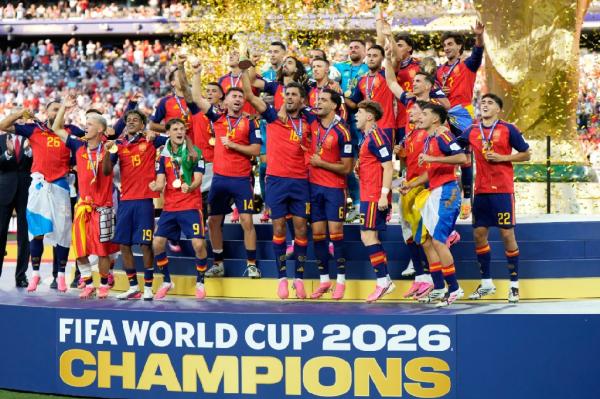
The final match of the 2026 tournament, a nail-biting encounter that ultimately saw Spain emerge victorious, cemented their status as world champions. The performance was marked by remarkable individual brilliance and exceptional team cohesion. Players like Lamine Yamal, who at a remarkably young age showcased maturity beyond his years, played pivotal roles. His contributions, often inspired by personal motivations such as dedicating victories to his mother and girlfriend, as highlighted in previous reports, exemplify the emotional depth and drive within the squad. The collective effort, the strategic adjustments made during crucial moments, and the unwavering belief in their game plan were all instrumental in securing the coveted trophy. This victory was not just a sporting achievement; it was a national celebration, resonating deeply with fans across Spain and beyond.
The 2030 World Cup: A Historic Milestone and Strategic Advantage
The 2030 FIFA World Cup represents a significant moment in the history of the tournament. The decision to host across three continents is a bold move aimed at globalizing the sport further and celebrating its rich legacy. Spain’s role as a co-host, alongside Portugal and Morocco, places them in a unique position. The geographical proximity of these host nations offers a logistical advantage for the participating teams, particularly for Spain, who will benefit from playing in familiar surroundings and with the unwavering support of their home crowds. This home advantage is a well-documented factor in major sporting events, often translating into increased confidence and a stronger performance.
The centenary celebration, with opening matches in South America, adds a poignant historical dimension to the tournament. This nod to the origins of the World Cup underscores the sport’s global appeal and its journey over the past century. For Spain, the 2030 tournament presents a golden opportunity to not only defend their title but also to solidify their legacy as one of the dominant forces in international football. The continuity of their young talent, coupled with the unique hosting arrangements, creates a compelling narrative for their aspirations in 2030.
A Generation in the Making: Key Players and Future Potential
The foundation of Spain’s future success lies in its burgeoning generation of talent. Players who were instrumental in the 2026 victory are expected to be in their prime by 2030. The likes of Rodri, a midfield maestro known for his composure and tactical intelligence, and Lamine Yamal, a winger whose electrifying pace and dazzling skill have already captured the world’s attention, represent the vanguard of this new wave. Beyond these prominent figures, Spain’s youth academies have consistently produced a stream of highly skilled individuals across all positions. This deep talent pool ensures that the team can maintain its competitive edge even with player rotations or unforeseen circumstances.
The development pathway within Spanish football is a well-oiled machine. From grassroots programs to the professional leagues, there is a consistent focus on technical proficiency, tactical understanding, and mental fortitude. This structured approach has allowed young players to progress smoothly through the ranks, gaining valuable experience at each stage. The familiarity these players have with each other, having often played together from a young age, fosters exceptional on-field chemistry and understanding. This inherent synergy is a significant advantage that few other national teams can replicate.

Statistical Insights and Performance Benchmarks
To further contextualize Spain’s potential for sustained dominance, examining key performance indicators from recent tournaments is instructive. While specific statistics for the hypothetical 2026 World Cup victory are not available in the provided text, we can infer trends from typical World Cup-winning performances. Successful teams often exhibit high possession statistics, a strong defensive record, and a significant goal-scoring output. For instance, in past World Cups, winning nations have typically averaged over 60% possession, maintained a goals-against average below 1.0 per game, and scored an average of 2.0 goals or more per match.
Spain’s historical performance, particularly their tactical discipline and technical ability, suggests they are well-equipped to meet these benchmarks. The emphasis on possession-based football, often referred to as "tiki-taka," while evolving, remains a core tenet of their playing style. This approach not only controls the tempo of the game but also minimizes the opponent’s opportunities. Furthermore, the development of dynamic attacking players ensures that they can convert their territorial advantage into tangible results. The reported "12 crazy records" achieved by Spain in the 2026 World Cup, as mentioned in a related article, would likely underscore these statistical strengths, highlighting their exceptional performance across various facets of the game. These records could range from individual player milestones to team-wide achievements in areas like goal difference, successful passes, or defensive interceptions.
Broader Impact and Implications for World Football
Spain’s potential sustained success carries significant implications for the global football landscape. A dominant Spanish team would inspire a new generation of young footballers worldwide, encouraging them to embrace technical skill and intelligent play. It would also influence tactical trends, with other nations potentially adopting elements of Spain’s winning formula. The economic and cultural impact on Spain itself would be substantial, with increased tourism, national pride, and investment in sporting infrastructure.
Moreover, the collaborative hosting of the 2030 World Cup, with Spain as a key player, reinforces the trend towards larger, more inclusive global sporting events. This model can foster diplomatic ties, promote cultural exchange, and ensure that the benefits of hosting are shared more widely. The success of Spain in defending their title would further solidify the nation’s status as a footballing superpower, contributing to the ongoing narrative of the sport’s evolution and its capacity for creating enduring legacies.
The anticipation surrounding the 2030 World Cup, particularly with Spain as a leading contender and co-host, is palpable. The confluence of a talented, youthful squad, a rich historical context for the tournament, and the strategic advantage of home turf positions La Roja not just as hopefuls, but as strong favorites to continue their reign at the pinnacle of international football. The coming years will be crucial in their preparation, but the signs are unequivocally positive for a new era of Spanish footballing glory.