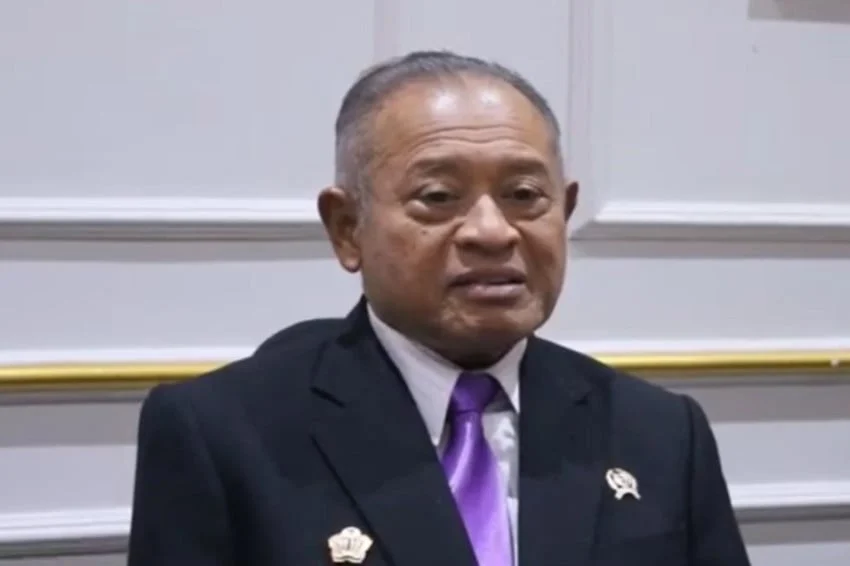
The Alumni Association of the National Resilience Institute of the Republic of Indonesia, known as IKAL Lemhannas, officially inaugurated its first National Working Meeting (Rakernas) for the 2026–2031 term in Bandung, West Java, on Saturday, July 18, 2026. This high-level gathering serves as a critical platform for organizational consolidation and the formulation of strategic initiatives designed to bolster the national agenda, specifically the "Asta Cita" program championed by President Prabowo Subianto’s administration. As the nation moves closer to its centenary in 2045, the Rakernas aims to synchronize the intellectual and professional resources of its vast alumni network with the overarching goal of achieving the "Indonesia Emas" (Golden Indonesia) vision.
The Rakernas was presided over by General (Ret.) Purnomo Yusgiantoro, the Chairman of IKAL Lemhannas, and was attended by the Governor of Lemhannas RI, Ace Hasan Syadzily. The choice of Bandung as the venue for this inaugural meeting carries symbolic weight, as the city has historically been a center for intellectual discourse and national movements. The meeting brought together hundreds of alumni from various sectors, including the military, police, bureaucracy, academia, and the private sector, all of whom have undergone the rigorous leadership training provided by the National Resilience Institute.
A Strategic Roadmap for the 2026–2031 Period
During the proceedings, Purnomo Yusgiantoro outlined three primary pillars that will define the organization’s trajectory over the next five years. The first pillar focuses on internal consolidation. As an organization that spans the entire archipelago, IKAL Lemhannas seeks to strengthen its structural integrity to ensure that its members can effectively contribute to national discourse. The second pillar involves a steadfast commitment to supporting Lemhannas RI as the nation’s premier institution for the education of national-level leaders. By maintaining a symbiotic relationship with the institute, the alumni association ensures that the curriculum and leadership training remain relevant to contemporary global and domestic challenges.
The third and perhaps most vital pillar is the active support of the government’s strategic programs. Specifically, IKAL Lemhannas has pledged to utilize its collective expertise to ensure the success of "Asta Cita," the eight core missions of the Prabowo administration. These missions include strengthening the state ideology, enhancing national defense and security, promoting human capital development, and advancing economic independence through downstreaming and industrialization. By aligning with these goals, IKAL Lemhannas positions itself as a strategic partner to the executive branch, providing evidence-based policy recommendations and grassroots implementation support.
Expanding the Reach: The Strategic Importance of Papua
A significant highlight of the Rakernas was the announcement of the organization’s expansion into the easternmost regions of Indonesia. Purnomo Yusgiantoro revealed that while IKAL Lemhannas currently operates 32 Regional Representative Councils (DPD) across the country, the organization is in the process of establishing two additional DPDs in Papua. This expansion is not merely administrative; it is a strategic move to enhance national integration and resilience in a region that is central to Indonesia’s future stability and economic potential.
The establishment of the new DPDs in Papua reflects the government’s focus on equitable development and the "Indonesia-centric" approach to governance. By having a formalized presence of Lemhannas alumni in Papua, the organization can better facilitate dialogues on local security, social welfare, and the implementation of special autonomy. The alumni in these regions are expected to serve as bridge-builders between the central government and local communities, ensuring that the aspirations of the Papuan people are integrated into the broader national resilience framework.
Synergy with Lemhannas RI and the Vision of Ace Hasan Syadzily
The presence of Governor Ace Hasan Syadzily at the Rakernas underscored the unified front between the institute and its alumni. Governor Syadzily, who has been vocal about modernizing the institute’s approach to national resilience, emphasized that the challenges of the 21st century—ranging from cyber warfare and climate change to economic shifts—require a dynamic and proactive alumni network. He noted that the "Asta Cita" program requires a high degree of technical competence and patriotic commitment, qualities that Lemhannas graduates are uniquely equipped to provide.
The collaboration between the institute and IKAL Lemhannas is expected to manifest in several key areas. These include joint research projects on national security, the development of "Wawasan Nusantara" (Archipelagic Outlook) socialization programs, and the enhancement of "Bela Negara" (State Defense) initiatives. In partnership with the Ministry of Home Affairs, IKAL Lemhannas plans to intensify its efforts to instill a sense of national identity and civic responsibility among the younger generation, which is seen as a prerequisite for achieving the Indonesia Emas 2045 goals.
Contextualizing Asta Cita and Indonesia Emas 2045
To understand the significance of this Rakernas, one must look at the broader socio-political context of Indonesia in 2026. The Prabowo administration’s "Asta Cita" is a comprehensive roadmap designed to transition Indonesia from a middle-income country to a high-income global power. The eight points of Asta Cita cover:
- Strengthening the Pancasila ideology, democracy, and human rights.
- Enhancing national defense, security, and food, energy, and water sovereignty.
- Increasing high-quality employment, entrepreneurship, and infrastructure development.
- Strengthening human capital through education, health, and gender equality.
- Continuing downstreaming and industrialization to increase domestic value-added.
- Building from the grassroots and villages for economic equity and poverty eradication.
- Reforming the legal system and intensifying the fight against corruption.
- Strengthening the harmony of life with the environment, culture, and digital transformation.
IKAL Lemhannas, with its diverse membership, acts as a "think tank" that can dissect these eight points and offer practical solutions. For instance, in the realm of energy sovereignty, the expertise of alumni like Purnomo Yusgiantoro—a former Minister of Energy and Mineral Resources—is invaluable. In the area of legal reform, alumni within the police and judiciary provide the necessary insights to streamline bureaucracy and uphold the rule of law.
Historical Background and the Evolution of National Resilience
The National Resilience Institute (Lemhannas) was founded on May 20, 1965, by Indonesia’s first president, Sukarno. Its original mandate was to create a cadre of leaders who understood the complexities of the Cold War and the unique geopolitical position of Indonesia. Over the decades, the concept of "Ketahanan Nasional" (National Resilience) has evolved from a purely military-centric view to a multi-dimensional approach encompassing ideology, politics, economy, socio-culture, and defense-security (IPOLEKSOSBUDHANKAM).
IKAL Lemhannas was formed to ensure that the education received at the institute did not end upon graduation. It was designed to create a lifelong network of patriots who could provide "second opinions" to the government and act as a stabilizing force during times of political transition. The 2026 Rakernas represents a new chapter in this history, where the focus has shifted from internal stability to global competitiveness.
Chronology of the Rakernas and Future Actions
The Rakernas in Bandung followed a series of preparatory meetings held in Jakarta earlier in the year. Following the opening ceremony, the meeting broke into several commissions to discuss specific sectors: the Commission on Organizational Strengthening, the Commission on Strategic Policy, and the Commission on Social Welfare and Public Engagement.
By the end of the weekend, the Rakernas is expected to produce the "Bandung Declaration," a document outlining the specific commitments of IKAL Lemhannas to the 2026–2031 period. This includes a timeline for the socialization of Wawasan Nusantara in all 38 provinces, a schedule for social service activities (Bakti Sosial) in underdeveloped regions, and a framework for regular policy briefs to be submitted to the Presidential Office.
Analysis of Implications
The proactive stance taken by IKAL Lemhannas has significant implications for Indonesian governance. First, it signals a high degree of "elite cohesion." When alumni from the military and civilian sectors align on a singular national vision, it reduces the risk of policy fragmentation and political friction. Second, the emphasis on Papua suggests that the government is intensifying its "soft power" approach in the region, using alumni networks to foster development rather than relying solely on security measures.
Furthermore, the focus on Indonesia Emas 2045 indicates that the organization is looking beyond the current political cycle. By preparing the groundwork for the next two decades, IKAL Lemhannas is helping to ensure that the transition of power in future elections does not derail the long-term developmental goals of the nation. The organization’s role as a bridge between the government’s high-level vision and the practical realities of the provinces will be a determining factor in whether Indonesia can indeed reach its "Golden" milestone.
In conclusion, the first Rakernas of the 2026–2031 period in Bandung is more than a routine organizational meeting. It is a strategic mobilization of Indonesia’s intellectual elite. Under the leadership of Purnomo Yusgiantoro and in close cooperation with Governor Ace Hasan Syadzily, IKAL Lemhannas is positioning itself as the vanguard of national resilience, dedicated to the successful realization of Asta Cita and the enduring prosperity of the Indonesian people as they march toward 2045.