
The evolution of telecommunications infrastructure continues to pivot toward true next-generation connectivity, moving past transitional phases into fully independent digital ecosystems. At the core of this transformation is 5G Standalone (5G SA), an advanced network architecture that diverges fundamentally from its predecessor, 5G Non-Standalone (5G NSA). While early iterations of fifth-generation mobile networks relied heavily on legacy 4G Long-Term Evolution (LTE) anchor infrastructure, 5G SA operates entirely on an independent 5G New Radio (NR) air interface combined with a dedicated 5G Core.
This technological leap is not merely an incremental upgrade or a generational shift represented by monikers like 5.1G or 5.5G; rather, it is a structural redesign of how telecommunications operators process data, manage device connectivity, and deliver low-latency services. As global digitalization accelerates, understanding the mechanics, capabilities, and real-world deployment of 5G SA provides essential insight into the future of consumer mobile experiences and industrial automation.

Defining 5G Standalone: Core Architecture and Operational Mechanics
To comprehend 5G SA, one must first examine the foundational distinction between core and radio access network components. In traditional 5G NSA deployments, mobile operators implemented 5G radio frequencies to boost download and upload speeds, but routed the signaling and control data through existing 4G packet core networks. This approach allowed operators to roll out 5G services quickly and cost-effectively by leveraging sunk investments in 4G infrastructure. However, it also created performance bottlenecks, restricting the full realization of 5G’s theoretical capabilities, particularly regarding latency and connection density.
In contrast, 5G SA eliminates reliance on the 4G core entirely. A compatible smartphone or connected device communicates via the 5G New Radio interface, while all connection management, user authentication, mobility tracking, and data routing are handled directly by the 5G Core. This end-to-end 5G environment enables operators to unlock advanced software-driven network capabilities that are structurally impossible within hybrid 4G-5G frameworks.
From the consumer perspective, transitioning between network architectures typically occurs seamlessly without manual intervention. Network configurations dynamically route devices based on availability, operator parameters, and hardware capabilities. However, possessing a 5G-enabled smartphone does not automatically guarantee access to 5G SA. Devices require specific hardware modem compatibility, support for the precise frequency bands deployed by local telecom providers, and updated firmware configurations. Consequently, regional availability depends heavily on both telecommunications operators upgrading their core infrastructure and device manufacturers pushing out necessary software optimization patches.

Advanced Capabilities: Unlocking the True Potential of Cellular Connectivity
The deployment of a dedicated 5G Core introduces several transformative technological capabilities that extend far beyond simple speed improvements. Among the most significant architectural features is Network Slicing. This technology allows a single physical network infrastructure to be partitioned into multiple virtual networks, each customized to meet specific performance criteria. For instance, an operator can carve out a ultra-reliable, low-latency slice for autonomous vehicle communication, a high-bandwidth slice for 4K video broadcasting, and a massive machine-type communication slice for low-power Internet of Things (IoT) sensors.
Furthermore, 5G SA integrates seamlessly with Multi-access Edge Computing (MEC). By decentralizing data processing and pushing computing power closer to the network edge—near the physical location of the user or enterprise asset—latency is slashed to single-digit milliseconds. This capability is indispensable for mission-critical applications such as remote robotic surgery, smart factory automation, and real-time logistics tracking.
Another vital enhancement enabled by 5G SA is Voice over New Radio (VoNR). Similar to how Voice over LTE (VoLTE) migrated voice calls from legacy 2G and 3G circuits to data packets, VoNR routes high-definition voice and video calls entirely through the 5G data core. This results in faster call setup times, superior audio clarity, and the ability to maintain high-speed data sessions concurrently without dropping down to older network layers.

Real-World Deployment and Chronology: The Case of Indonesia
While global telecommunications giants have steadily migrated toward standalone architectures, emerging markets are also establishing foundational footprints. A prominent example of regional 5G SA implementation occurred in Southeast Asia, spearheaded by Indonesian telecommunications leader Telkomsel.
The chronology of large-scale 5G SA deployment in Indonesia gained major momentum in August 2024, coinciding with the nation’s 79th Independence Day commemorations. Telkomsel rolled out commercial and pilot 5G SA infrastructure across three strategic locations: the developing capital city of Nusantara (IKN) in East Kalimantan, the tourism hub of Bali, and the industrial zone of Maluku Utara. This ambitious rollout was executed in strategic collaboration with leading global telecommunications equipment vendors, including Ericsson, Huawei, and ZTE.
In the newly developing administrative capital of Nusantara, 5G SA served as the digital backbone for high-profile use cases, including 5G Live Broadcasts of national ceremonies, ultra-responsive feeds for the IKN Smart City Command Center, and advanced spatial computing trials utilizing Smart Glasses. These implementations demonstrated how next-generation connectivity could streamline municipal governance and public infrastructure monitoring in real time.
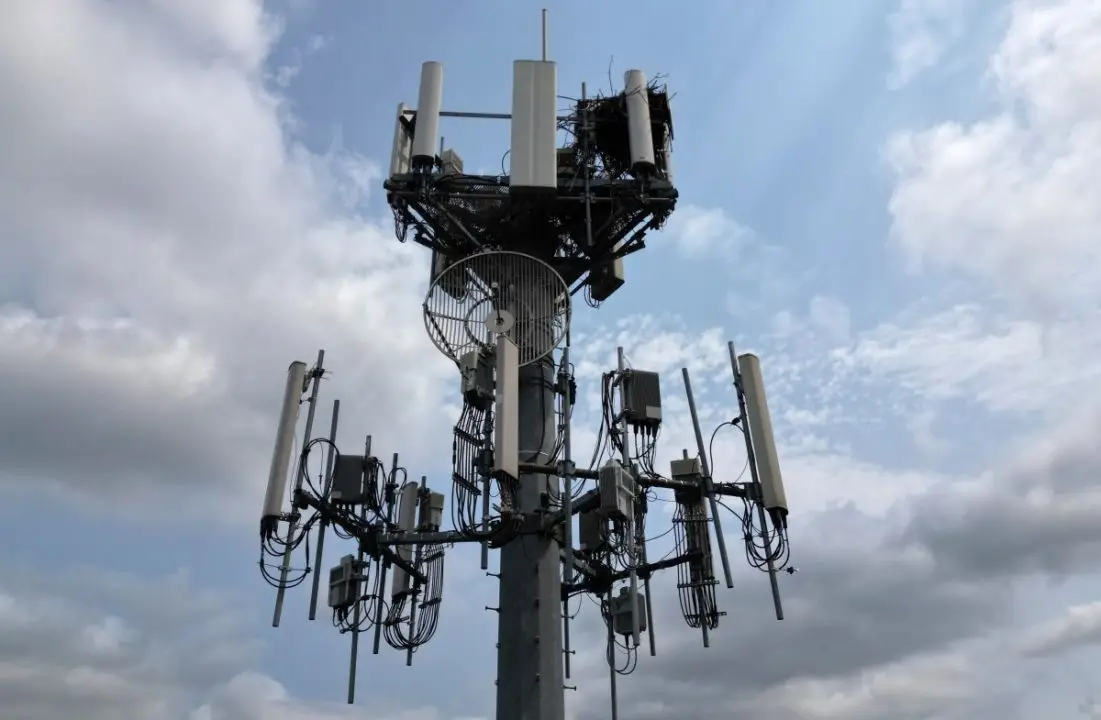
Meanwhile, in Bali, the technology was harnessed to revolutionize maritime logistics at the Port of Benoa. Telkomsel deployed 5G SA to support smart port solutions, integrating artificial intelligence (AI) computer vision to monitor vessel traffic, container movement, and port security in real time. By shifting video streams and sensor data processing to the edge, port authorities achieved unprecedented operational visibility.
In the eastern region of Maluku Utara, the focus shifted toward industrial worker safety. Industrial facilities utilized 5G SA to power 5G Smart Helmets worn by personnel operating in high-risk environments, such as mining sites in Halmahera. These connected helmets allowed workers to maintain continuous, high-definition video communication with remote command centers, stream live telemetry, and receive instantaneous automated safety alerts when entering hazardous zones.
Implications and Future Outlook
The transition from 5G NSA to 5G SA represents a critical turning point for the telecommunications industry. While initial consumer adoption of 5G was largely marketed around download speed increments for streaming and gaming, 5G SA establishes the industrial and enterprise framework necessary for the Fourth Industrial Revolution (Industry 4.0).
Analysts and industry observers note that the commercial viability of 5G SA relies heavily on B2B (business-to-business) monetization models rather than purely consumer-driven revenue. Because network slicing, ultra-low latency, and edge computing primarily address the complex demands of smart manufacturing, autonomous transportation, healthcare, and logistics, telecommunications operators are increasingly positioning themselves as digital transformation partners for enterprise clients.
Despite these promising advancements, widespread consumer availability of 5G SA remains an ongoing process. Operators must balance capital expenditures required for standalone core upgrades with the phased shutdown of legacy 2G and 3G networks—a process commonly known as network reframing. As spectrum is reallocated and device ecosystems mature to support universal SA compatibility, 5G Standalone will transition from specialized enterprise deployments to becoming the invisible, ubiquitous fabric supporting modern global connectivity.