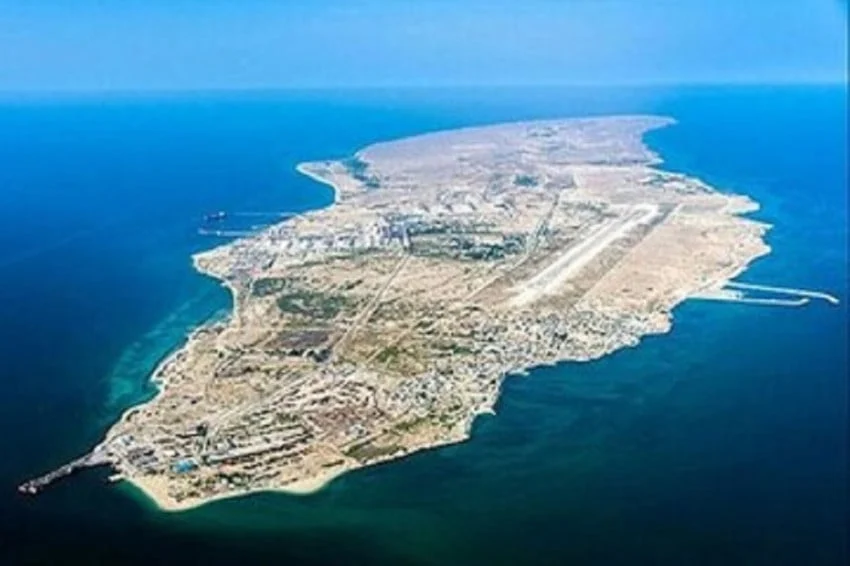
TEHRAN — The geopolitical fault lines in the Middle East experienced a sharp and immediate tremor on Wednesday as reports emerged of explosions shaking Qeshm Island, a strategic Iranian landmass situated in the vital shipping lanes of the Strait of Hormuz. According to initial dispatches from regional media outlets, including the semi-official Tasnim News Agency and the state-run Islamic Republic News Agency (IRNA), residents across the island reported hearing at least two distinct blasts. The incidents quickly drew global attention, triggering a flurry of diplomatic inquiries, military evaluations, and heightened security postures across international defense networks.
The developing situation underscores the persistent volatility in the Persian Gulf, a critical artery for global energy supplies and maritime trade. While local populations panicked upon hearing the explosions, official channels in Tehran and Washington moved cautiously, attempting to verify facts on the ground before escalating diplomatic rhetoric. The lack of immediate, comprehensive clarification from senior military officials in both nations has left international observers parsing fragmented reports, assessing potential threats to regional stability, and monitoring the precarious safety of commercial vessels navigating the narrow strait.
Main Facts of the Incident
The core of the unfolding crisis centers on conflicting accounts originating from Iranian state media and regional correspondents. According to IRNA, local residents in Qeshm Island—which guards the southern entrance to the Persian Gulf—witnessed and reported two projectile impacts striking the Susa area of the island. The Tasnim News Agency quickly corroborated the reports of the two impacts, though it emphasized that verified official statements detailing the origin and nature of the projectiles remained scarce in the immediate aftermath.
Simultaneously, state broadcaster IRIB introduced a new military dimension to the narrative. Citing military sources, IRIB reported that Iran’s integrated air defense network successfully intercepted and destroyed an American-made MQ-9 Reaper drone operating in the airspace above Qeshm Island. This claim of a downed unmanned aerial vehicle (UAV) significantly elevated the stakes, transforming what might have been categorized as an unexplained explosion into a direct military confrontation between Iranian air defense units and sophisticated United States military assets.
Despite the rapid dissemination of these claims, the United States military pushed back with a calming assessment. The United States Central Command (CENTCOM), which oversees military operations in the Middle East, issued a brief statement describing the situation in and around the Strait of Hormuz as "relatively tenang" (relatively calm) when queried about the explosions reported on Qeshm Island. CENTCOM’s measured response deliberately avoided confirming any offensive missile strikes or the loss of American aircraft, creating a stark narrative divide between Tehran’s regional reporting and Washington’s official operational posture.
Chronology and Timeline of Events
To understand the trajectory of the incident, analysts have constructed a preliminary timeline based on media reports and official dispatches as they unfolded in real-time.
The sequence of events began early in the local morning hours when residents in the Susa district of Qeshm Island reported hearing loud detonations that shook buildings and prompted immediate local concern. Shortly thereafter, word of the explosions reached mainland media centers in Tehran.
By midday, IRNA published the first official confirmation that local inhabitants had reported two projectiles striking the island. This report was quickly mirrored by Tasnim, which added that the specific origin of the projectiles had not yet been formally identified by provincial authorities or the Islamic Revolutionary Guard Corps (IRGC).
As speculation mounted regarding a potential kinetic strike, the state-linked broadcaster IRIB released a counter-narrative or supplementary development. IRIB claimed that Iran’s air defense forces had locked onto, engaged, and destroyed a US-operated MQ-9 Reaper drone hovering near or over the island’s airspace. This announcement was framed by state media as a successful defensive action against foreign encroachment.
Later in the afternoon, international journalists sought clarification from the Pentagon and CENTCOM. CENTCOM responded by dampening sensationalist claims, asserting that operational conditions in the region remained normal and relative calm prevailed, explicitly declining to validate reports of downed drones or incoming missile attacks on Iranian territory.
Geographic and Strategic Significance of Qeshm Island
The focal point of this incident, Qeshm Island, is far from an arbitrary location; it is a strategically vital territory that commands the southern approaches to the Strait of Hormuz. As the largest island in the Persian Gulf, Qeshm spans an area of approximately 1,491 square kilometers and lies just a few kilometers off the southern coast of mainland Iran. Its geographic positioning makes it a cornerstone of Iran’s coastal defense strategy and naval architecture.
The Strait of Hormuz itself is arguably the most critical maritime chokepoint in the world. Approximately one-fifth of the world’s petroleum consumption passes through this narrow passage, which connects the crude oil producers of the Middle East to major markets in Asia, Europe, and North America. Any military friction, kinetic activity, or perceived threat in the vicinity of Qeshm Island immediately threatens international shipping lanes, driving up maritime insurance rates and triggering anxieties across global energy markets.
Because of its proximity to these vital trade routes, Qeshm Island hosts significant military infrastructure, including radar installations, fast-attack craft bases, and air defense batteries operated by the Islamic Revolutionary Guard Corps Navy (IRGCN) and the regular Iranian military. Consequently, any reports of explosions or drone activities over the island are treated by foreign intelligence agencies as indicators of high-level tactical maneuvering or potential escalation.
Contextualizing US-Iran Tensions in the Region
The reported incident on Qeshm Island does not occur in a vacuum; it is the latest chapter in a decades-long history of maritime and aerial friction between the United States and the Islamic Republic of Iran. Relations between Washington and Tehran have remained deeply strained, characterized by a persistent cycle of economic sanctions, cyber warfare, regional proxy conflicts, and close-quarters military encounters in the Persian Gulf and the Gulf of Oman.
Historically, the airspace and waters surrounding the Strait of Hormuz have witnessed numerous high-stakes encounters. In June 2019, Iran shot down a US Navy Northrop Grumman RQ-4A Global Hawk surveillance drone over the Strait of Hormuz, an event that brought the two nations to the brink of open military conflict before former President Donald Trump called off retaliatory strikes at the last minute. The Islamic Republic argued then, as it has in previous instances, that foreign drones crossed into sovereign Iranian airspace, while Washington maintained that the aircraft were operating in international airspace.
The deployment of MQ-9 Reaper drones by the United States military in the Middle East is well-documented. These advanced, heavily armed, and high-altitude surveillance UAVs are routinely utilized for intelligence, surveillance, and reconnaissance (ISR) missions, as well as targeted counter-terrorism and force-protection operations. The alleged downing of an MQ-9 over Qeshm—if verified—would represent a significant tactical escalation, signaling either an aggressive expansion of Iranian air defense engagement envelopes or a high-risk operational profile flown by coalition forces near contested borders.
Official Responses and Information Vacuum
As of late Wednesday, a notable information vacuum persists, characterized by a lack of detailed, transparent commentary from both Iranian provincial authorities and United States defense officials.
While IRNA and Tasnim have served as the primary conduits for domestic reporting, they noted that local governors and provincial security councils in Hormozgan province had yet to release comprehensive forensic findings regarding the nature of the projectiles that allegedly struck the Susa area. This hesitation often stems from internal security protocols within Iran, where military-related incidents require clearance from the Supreme National Security Council before detailed public disclosure.
On the American side, CENTCOM’s minimalist response reflects standard military communication policy during ambiguous tactical situations. By characterizing the regional environment as "relatively calm," the US military command sought to de-escalate potential panic, prevent premature market reactions, and avoid getting drawn into a war of words based on unverified state-media claims. Defense analysts suggest that Washington’s deliberate caution is designed to prevent a localized or fabricated event from spiraling into a broader diplomatic crisis.
Fact-Based Analysis of Broader Implications
Evaluating the implications of the Qeshm Island reports requires a careful separation of verified facts from state-sponsored rhetoric. Should independent verification eventually confirm that kinetic strikes occurred on Iranian soil or that an American drone was shot down, the strategic implications for the Middle East would be profound.
First, an escalation in direct kinetic exchanges between US and Iranian forces would severely jeopardize ongoing, albeit fragile, back-channel diplomatic efforts aimed at reviving regional stability agreements or managing nuclear escalations. Both nations have historically favored a threshold of controlled tension—often referred to as the "shadow war"—designed to project strength without triggering all-out war. An acknowledged strike on Iranian territory or the confirmed destruction of a major US surveillance asset threatens to breach that threshold, forcing both governments into politically unviable positions where inaction could be perceived as weakness.
Second, global markets are exceptionally sensitive to disruptions in the Strait of Hormuz. Even minor rumors of military conflict in this corridor trigger immediate spikes in Brent crude oil futures. International shipping companies, tanker operators, and marine insurers monitor these developments continuously. An escalation in kinetic activity forces commercial vessels to alter routes, increase security precautions, or delay transits, ultimately driving up consumer prices worldwide and straining global supply chains that are still recovering from various post-pandemic economic shocks.
Finally, the incident highlights the ongoing danger of miscalculation in a congested operational theater. With numerous military assets belonging to the United States, its regional allies, and Iran operating in close proximity within a confined geographic space, the risk of an unintended collision, accidental engagement, or misread radar signal remains extraordinarily high. Military experts have long warned that a single tactical misunderstanding in the Persian Gulf could inadvertently ignite a catastrophic regional conflagration.
Conclusion and Outlook
As international monitors, intelligence analysts, and global newsrooms continue to scrutinize the unfolding events on Qeshm Island, the immediate priority remains the verification of the fundamental facts. The conflicting narratives presented by Iranian state media—ranging from projectile impacts to the interception of an MQ-9 drone—stand in contrast to the steady, downplayed posture maintained by United States Central Command.
Until comprehensive, independent investigations or authoritative, transparent disclosures from both governments shed light on what transpired over the Strait of Hormuz, the situation will remain tense. The events on Qeshm Island serve as a stark reminder of the fragile peace holding the Persian Gulf together, where the margin for error is razor-thin, and the consequences of miscalculation reverberate far beyond the shores of Iran.