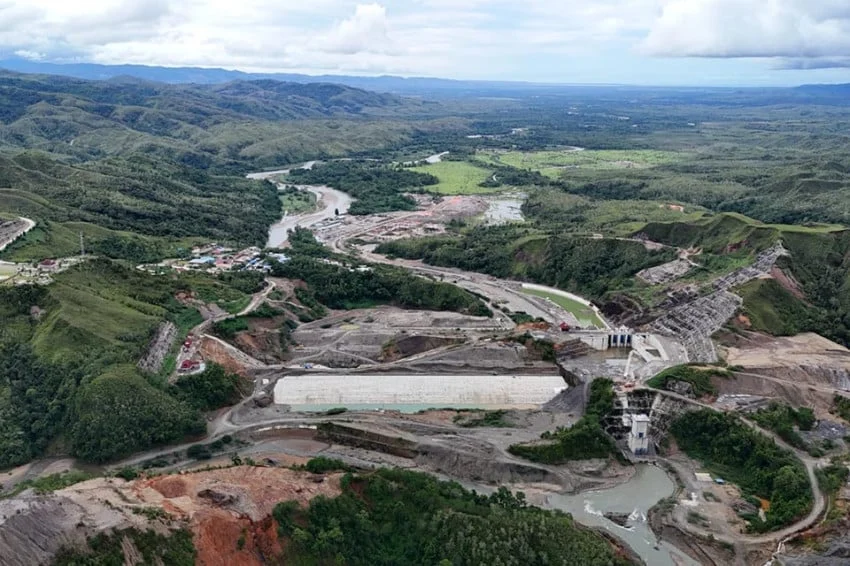
The Indonesian government has accelerated the development of comprehensive water infrastructure across the eastern provinces, including Papua, Maluku, and the Nusa Tenggara regions, to address chronic water scarcity and advance the national goal of water self-sufficiency. As the country grapples with the lingering effects of a prolonged dry season in 2026, the Ministry of Public Works (PU) is deploying a multi-faceted approach that ranges from large-scale dam construction and System of Drinking Water Supply (SPAM) installations to advanced brackish water treatment technologies and deep-well drilling. This initiative is part of a broader national strategy to ensure long-term water security, particularly in regions where geographical challenges have historically limited access to clean water.
The Urgency of the 2026 Drought Crisis
The current push for infrastructure development comes at a critical juncture. According to the Meteorology, Climatology, and Geophysics Agency (BMKG), the period between October 13 and October 19, 2026, continued to see dry conditions across significant portions of the archipelago. While sporadic, localized rainfall has been observed in some parts of Papua, the overall hydrological deficit remains a concern for agricultural and domestic consumption.
The severity of the situation is most acute in remote communities. In Mimika, Papua, and parts of West Papua, the scarcity of water has forced residents to rely on emergency distributions. By early October 2026, the National Zakat Amil Agency (BAZNAS) of Mimika was actively engaged in distributing clean water to residents in the SP 5 area, many of whom have historically depended on rainwater harvesting—a source that has failed due to the lack of precipitation. Similarly, in Kampung Weri, East Fakfak, natural springs and private wells have depleted, necessitating intervention from the Ministry of Transmigration’s Patriot Expedition team and local law enforcement to facilitate water access and repair vital infrastructure.
Strategic Infrastructure Deployment in Papua
Papua has become the focal point of these efforts, with the government integrating water infrastructure into the National Food, Energy, and Water Self-Sufficiency Area (KSPEAN) project, particularly in Wanam, Merauke. This strategic initiative aims to stabilize regional food security by ensuring that agricultural zones have a consistent water supply.
As of July 2026, the Ministry of Public Works has completed approximately 44 kilometers of primary irrigation canals out of a total target of 135.4 kilometers for the Merauke Food Production Center. However, beyond large-scale agricultural irrigation, the government is placing equal weight on municipal water needs. Apolo Safanpo, the Governor of South Papua, emphasized on October 5, 2026, that the drying of rivers and swamps—which are not subject to tidal influence—has reached an alarming level. In response, local governments have shifted focus toward the construction of deep-well infrastructure across various districts and villages to provide immediate relief.
Technological Shifts and Long-Term Planning
One of the most significant shifts in the government’s approach is the move away from total dependence on groundwater. The over-extraction of groundwater in many parts of Indonesia has led to land subsidence and the depletion of aquifers. Governor Safanpo noted that moving forward, the focus will shift toward the utilization of surface water combined with advanced water treatment plants (WTP). This transition requires substantial investment in technical capacity and operational infrastructure, which the provincial and regency governments are now prioritizing as a core administrative responsibility.
In Central Papua, the Mimika Regency government is actively expanding its SPAM network across 13 locations, specifically targeting the districts of Kwamki Narama, Kuala Kencana, Wania, and Mimika Baru. A critical component of this expansion has been the public-private partnership model; the project received a donation of 1,724 pipes from PT Freeport Indonesia, illustrating the necessity of corporate-government synergy in executing large-scale public utility projects in challenging terrains.
Chronology of Recent Water Security Initiatives
The efforts of 2026 are part of a multi-year trajectory aimed at achieving systemic water resilience:
- Early 2025: The Ministry of Public Works formalizes the collaborative framework for the "Indonesia Water Self-Sufficiency 2025" program, aiming to integrate irrigation, dam management, and household water access.
- Mid-2026: The Ministry reports the completion of significant segments of the Merauke irrigation network, signaling progress in the KSPEAN project.
- October 2026: A series of government-led interventions are triggered by the peak of the dry season, including the distribution of clean water to drought-stricken communities in Papua and West Papua.
- Late 2026: President-led inaugurations of multiple new dams across the country are held, with high-level officials, including Coordinating Minister for Infrastructure and Regional Development Agus Harimurti Yudhoyono (AHY), reinforcing the link between dams, energy, and food security.
Socio-Economic Implications
The investment in water infrastructure is not merely a public service; it is a prerequisite for economic stability. In regions like Papua, where the logistics of transporting basic goods are difficult, the ability to produce food locally is essential. Water scarcity poses a direct threat to the success of the KSPEAN projects, which are designed to turn the region into a national granary.
Furthermore, the health implications of water scarcity are profound. Reliance on unsafe water sources during drought periods increases the risk of water-borne diseases, which places an additional burden on local healthcare facilities. By modernizing water infrastructure—such as installing brackish water reverse osmosis units in coastal areas and deep-well drilling in mountainous zones—the government is effectively lowering the public health cost and improving the quality of life for residents in underdeveloped areas.
Analytical Perspective on Regional Challenges
The implementation of these projects faces significant geographic hurdles. Indonesia’s eastern region is characterized by diverse topographies, including dense forests, steep mountain ranges, remote islands, and complex wetland ecosystems. A "one-size-fits-all" solution is ineffective. Consequently, the Ministry of Public Works has adopted a localized engineering approach:
- Mountainous Regions: Focus on gravity-fed pipe networks from highland springs to lowland settlements.
- Coastal and Island Regions: Deployment of desalination and brackish water treatment technologies to mitigate the lack of fresh groundwater.
- Wetland/Swamp Regions: Development of controlled irrigation and reservoir systems that manage water levels during both the dry and rainy seasons.
The challenge remains in the maintenance of these assets. Historically, infrastructure projects in remote Indonesia have suffered from a lack of post-construction maintenance. The government’s current strategy appears to address this by involving local regency governments more closely in the operational management of these systems, ensuring that there is local ownership and accountability for the sustainability of the water supply.
Conclusion
As Indonesia navigates the climatic volatility of 2026, the commitment to water self-sufficiency serves as a cornerstone of the national development agenda. The integration of irrigation for food security and SPAM for domestic consumption reflects a maturation in policy, moving from reactive emergency aid to proactive infrastructure investment. While the road ahead involves overcoming significant logistical and environmental obstacles, the mobilization of resources—from the Ministry of Public Works to local regencies and private sector partners—indicates a determined effort to ensure that clean water is treated as a fundamental right rather than a seasonal luxury for the people of Indonesia’s eastern provinces. Future assessments will likely focus on the efficiency of these new systems and their ability to withstand the increasingly unpredictable rainfall patterns caused by global climate change.