The Ministry of Home Affairs, through its Agency for Regional Policy Strategy (BSKDN), has officially unveiled a series of high-impact regional innovations originating from the Sumatra region as part of the prestigious Innovative Government Award (IGA) 2026. This year’s assessment highlights a strategic shift in how local governments leverage indigenous resources to drive economic resilience, curb inflation, and foster productivity. Among the standout initiatives presented during the virtual evaluation held on November 3, 2026, were the "Kampung Patin" (Patin Village) project from South Sumatra and the "Lameh Kesah" initiative from West Sumatra, both of which serve as models for sustainable regional development.
The Landscape of IGA 2026: Recognizing Regional Ingenuity
The Innovative Government Award serves as a barometer for administrative efficacy within Indonesia’s decentralized framework. By encouraging regional governments to adopt creative problem-solving, the BSKDN aims to incentivize bureaucratic efficiency and local economic development. For the 2026 cycle, the competition has been particularly rigorous, with the Sumatra region contributing ten finalists that demonstrate both scalability and localized impact.
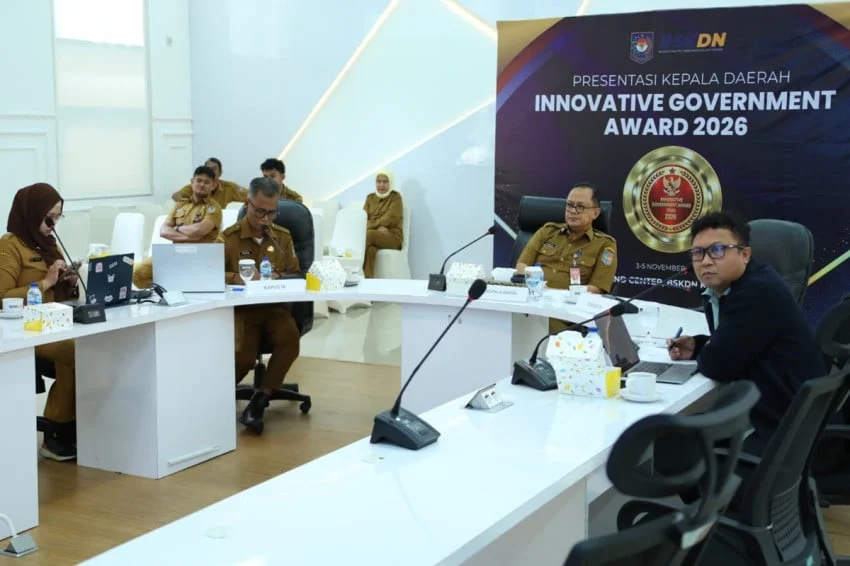
The regional finalists include three provinces: South Sumatra, West Sumatra, and North Sumatra; four regencies: Aceh Jaya, Bangka, Central Bangka, and Ogan Ilir; and three cities: Padang Panjang, Palembang, and Pariaman. The evaluation process, conducted via the BSKDN Command Center, required regional leaders to defend their innovations before a panel of experts, focusing on tangible outcomes, sustainability, and their alignment with national economic goals.
South Sumatra’s Kampung Patin: A Blueprint for Food Security
South Sumatra’s submission, "Kampung Patin," represents a cornerstone of the provincial government’s "Sumsel Mandiri Pangan" (South Sumatra Independent Food) movement. During the presentation, Governor Herman Deru emphasized that the innovation is more than an agricultural project; it is a fundamental shift in the local economic psyche—moving the population from a consumption-oriented mindset to a production-oriented one.
The Patin (catfish) industry was chosen specifically due to its status as an endemic commodity with massive market potential. Statistical data provided during the IGA proceedings indicates that the Ogan Komering Ulu (OKU) Timur regency serves as the primary production hub, contributing over 50% of the total provincial output. With a total production volume reaching approximately 47,000 tons, the industry has become a significant driver of rural income.
Governor Deru noted that the initiative has been instrumental in controlling inflation. By streamlining the supply chain and providing technical support to farmers, the provincial government has successfully stabilized the prices of fish, which is a staple protein source in the region. This systemic change, he argued, proves that localized food security initiatives are the most effective hedge against the volatility of national and global commodity markets.
West Sumatra’s Lameh Kesah: Valorizing Agricultural Waste
While South Sumatra focused on aquaculture, West Sumatra introduced "Lameh Kesah," a circular economy innovation that transforms waste into value. Governor Mahyeldi Ansharullah explained that the project addresses the perennial issue of palm oil plantation waste. Traditionally, when oil palm trees reach the end of their productive life cycle (typically after 25 years), the trunks are cleared and often burned, contributing to environmental degradation and carbon emissions.
"Lameh Kesah" utilizes advanced processing methods to convert the sap and fiber of these discarded palm trunks into palm sugar. This innovation addresses two critical issues simultaneously: it provides an additional revenue stream for farmers who are clearing their land for replanting, and it mitigates the environmental impact of biomass burning. The project represents a sophisticated approach to agricultural sustainability, turning a cost-heavy disposal process into a profitable value-added enterprise.
Chronology and Evaluation Process
The IGA 2026 cycle followed a structured timeline designed to ensure objective assessment:
- Registration and Submission (Q1 2026): Local governments submitted their innovation proposals through the national digital platform.
- Administrative Screening (Q2 2026): BSKDN experts reviewed the technical viability and legal compliance of the submissions.
- Field Verification and Virtual Presentations (November 2026): Finalists presented their work through the BSKDN Command Center, allowing for real-time questioning from the assessment panel.
- Final Ranking and Awarding (Upcoming): The final results, including the announcement of the top-performing provinces, regencies, and cities, are scheduled for later in the year.
The virtual nature of the presentation process, facilitated by the BSKDN’s high-tech Command Center, ensured that the assessment was transparent and accessible to a wide audience of policymakers, academics, and stakeholders.
Broader Economic Implications and Policy Impact
The innovations showcased by the Sumatra regional finalists reflect a broader national trend: the move toward "decentralized innovation." In the past, regional development often relied on top-down instructions from the central government. However, the success of programs like "Kampung Patin" and "Lameh Kesah" suggests that local governments are now taking the initiative to diagnose their own economic bottlenecks and develop tailored solutions.
Analysts note that the success of these programs in mitigating inflation is particularly significant. As Indonesia faces various macroeconomic pressures, including fuel price fluctuations and global food supply chain disruptions, the ability of provinces to secure their own food supply and create secondary markets for agricultural waste provides a necessary buffer.
Furthermore, the integration of these programs into the IGA framework serves as a knowledge-sharing mechanism. When a regency like Ogan Ilir or a city like Padang Panjang develops a successful administrative or economic model, the BSKDN ensures that this information is codified and accessible to other regions across the archipelago. This peer-to-peer learning is vital for reducing the development gap between regions.
Expert Analysis: The Role of the BSKDN
The BSKDN plays a pivotal role as the facilitator and quality controller of these innovations. By vetting these projects, the agency ensures that they are not merely "one-off" experiments but are sustainable initiatives that can be integrated into the regional budget (APBD) and long-term development plans.
One of the primary metrics for the IGA 2026 is "durability." An innovation that works for one harvest cycle but collapses in the second is not considered successful. The BSKDN’s focus on the "Lameh Kesah" and "Kampung Patin" projects suggests that the government is prioritizing projects that demonstrate:
- Economic Viability: A clear path to profit or cost-saving for the community.
- Scalability: The ability for other regencies to replicate the model with minimal modification.
- Environmental Sustainability: Adherence to green development principles.
Conclusion: A Future of Regional Resilience
The participation of these ten Sumatra-based finalists in the IGA 2026 underscores the vibrancy of local government administration in Indonesia. Whether through the massive scaling of aquaculture or the innovative transformation of agricultural waste, these regions are demonstrating that the future of the Indonesian economy is being built from the ground up.
As the BSKDN prepares to finalize the assessment, the focus remains on how these individual successes can be synthesized into a national policy framework. The Innovative Government Award continues to be more than just a trophy; it is a vital engine for administrative reform, ensuring that regional governments remain accountable, creative, and—most importantly—productive in the service of their citizens. As the country moves toward 2027 and beyond, the lessons learned from the Sumatra region in 2026 will undoubtedly serve as a foundational element of Indonesia’s long-term economic stability and development strategy.