Behind the growth of many Islamic boarding schools (pesantren) in Indonesia stands a generation of scholars whose lives were defined by relentless learning, unwavering sincerity, and lifelong service to society. One of them was KH. Jauhari Zawawi, a respected Indonesian Muslim scholar whose intellectual journey stretched from the villages of Central Java to the holy city of Makkah before culminating in the establishment of one of East Java’s influential pesantren. His life reflects the classical Islamic tradition of seeking knowledge across generations of teachers while dedicating every stage of life to education, da’wah, and community leadership. Born into a devout family with deep historical roots, KH. Jauhari Zawawi’s trajectory exemplifies the profound dedication characteristic of ulama who shaped Indonesia’s religious and educational landscape, laying foundations for future generations through their tireless efforts in propagating Islamic knowledge and fostering community well-being. His contributions resonate even today, underscoring the vital role of traditional Islamic institutions in national development and spiritual guidance.
Early Life and Formative Years in Central Java
KH. Jauhari Zawawi was born in 1911, on Friday Wage according to the Javanese calendar, in Waru, Sidorejo Village, Sedan District, Central Java, Indonesia. His birth into a family deeply embedded in religious and historical traditions provided a fertile ground for his spiritual and intellectual development. The early 20th century in rural Java was a period marked by significant socio-political changes under Dutch colonial rule, yet traditional Islamic education, primarily through pesantren, remained a steadfast beacon of cultural and religious identity. Children like Jauhari Zawawi were often introduced to basic Qur’anic recitation, Arabic alphabet, and fundamental Islamic tenets from a very young age within their family circles or local surau (small prayer houses). His family’s religious lineage likely meant that he was exposed to Islamic texts and scholarly discussions from childhood, instilling in him a profound respect for knowledge and piety.
The Sedan District, situated in Central Java, historically served as a nexus for Islamic learning, influenced by nearby coastal towns that had long been centers of trade and religious dissemination. This geographical context meant that access to scholarly figures and rudimentary religious education was more prevalent than in some other remote areas. Young Jauhari’s initial studies would have typically involved learning basic fiqh (Islamic jurisprudence), tauhid (theology), and akhlaq (ethics) from local kyai (religious teachers). This foundational education, though perhaps informal by modern standards, was rigorous in its emphasis on memorization, understanding, and the practical application of Islamic principles in daily life. It prepared him for the more intensive pursuit of knowledge that would define his adolescence and early adulthood. The spiritual environment of his birthplace, coupled with his family’s commitment to religious values, undoubtedly shaped his character, fostering the unwavering sincerity and dedication that would become hallmarks of his illustrious career.
The Quest for Knowledge: Traversing the Archipelago’s Pesantren
Following his initial education in his hometown, KH. Jauhari Zawawi embarked on a journey common to aspiring ulama of his era: traveling from one pesantren to another across the Indonesian archipelago. This traditional method of learning, known as nyantri or rihlah ilmiyah (journey for knowledge), was a cornerstone of Islamic scholarship in Indonesia. Each pesantren specialized in different branches of Islamic sciences or was renowned for a particular kyai’s expertise. Through this itinerant learning, students gained a comprehensive understanding of various disciplines and encountered diverse pedagogical approaches.
While specific names of the pesantren he attended are not detailed, it can be inferred that his studies would have encompassed a wide range of classical Islamic subjects. These typically included:
- Nahwu and Shorof (Arabic Grammar and Morphology): Essential for understanding classical Arabic texts, especially the Qur’an and Hadith.
- Fiqh (Islamic Jurisprudence): Detailed study of the rulings and principles of Islamic law, often focusing on the Syafi’i school, dominant in Indonesia.
- Usul Fiqh (Principles of Jurisprudence): The methodology used to derive Islamic legal rulings.
- Tafsir (Qur’anic Exegesis): Interpretation and understanding of the Holy Qur’an.
- Hadith (Prophetic Traditions): Study of the sayings and actions of Prophet Muhammad, including their chains of narration (sanad) and authenticity (matan).
- Tauhid (Theology): The study of God’s oneness and attributes.
- Tasawwuf (Sufism/Mysticism): The spiritual dimension of Islam, focusing on inner purification and closeness to God.
- Mantiq (Logic): Used as a tool for critical thinking and understanding complex theological and jurisprudential arguments.
The rigorous daily routine in a pesantren involved communal living, early morning prayers, intense study sessions often extending late into the night, and direct mentorship from the resident kyai. This environment fostered not only intellectual growth but also spiritual discipline, humility, and a strong sense of community. The kyai-santri relationship was paramount, built on respect, obedience, and a deep spiritual bond, where knowledge was transmitted not just through books but through the exemplary character and guidance of the teacher. This period of intense learning across multiple institutions would have honed KH. Jauhari Zawawi’s critical thinking, broadened his perspective, and deepened his commitment to serving the Muslim community.
The Zenith of Scholarship: Studying in the Holy City of Makkah
The culmination of KH. Jauhari Zawawi’s intellectual journey was his sojourn to Makkah, the holy city, a revered center of Islamic learning for centuries. For Indonesian scholars of his generation, studying in Makkah was considered the ultimate achievement, a pilgrimage of knowledge that complemented the spiritual Hajj. It was during this period that Indonesian and Malay scholars formed a vibrant intellectual community in the Hijaz, often referred to as the ‘Jawi Corridor,’ where they studied under renowned international ulama and contributed to the global Islamic discourse.
In Makkah, KH. Jauhari Zawawi would have immersed himself in advanced studies, accessing rare manuscripts, engaging in debates with scholars from diverse backgrounds, and receiving ijaza (licenses to transmit knowledge) from highly respected teachers. The intellectual atmosphere in Makkah during the early to mid-20th century was rich, with scholars from across the Islamic world converging to teach and learn. While specific names of his Makkah teachers are not provided, it is highly probable that he studied under prominent figures known for their mastery in various Islamic sciences, particularly Hadith, Tafsir, and advanced Fiqh. Studying in Makkah not only deepened his understanding of classical Islamic texts but also exposed him to different interpretations and methodologies, enriching his intellectual arsenal. This global exposure was crucial for an Indonesian scholar, as it allowed them to contextualize local issues within a broader Islamic framework and to bring back fresh perspectives to their homeland. The experience solidified his mastery of Arabic and equipped him with a profound erudition that would later define his teaching and leadership in Indonesia.
Return to the Homeland and the Genesis of a Pesantren
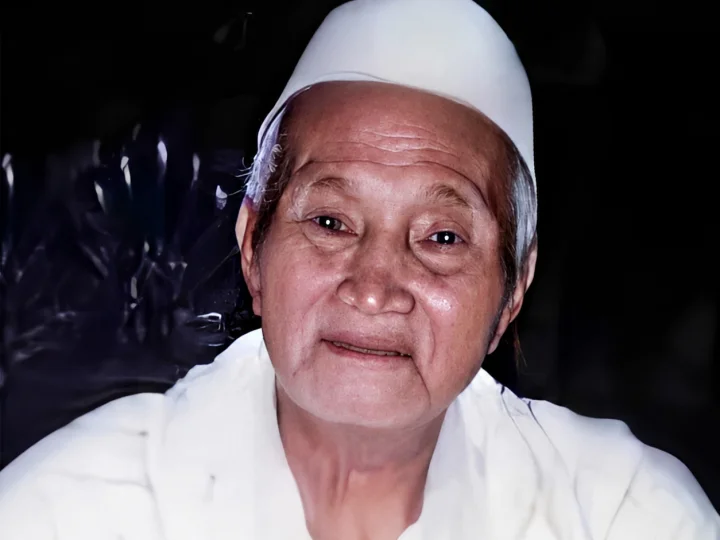
Upon his return to Indonesia from Makkah, armed with extensive knowledge and spiritual insight, KH. Jauhari Zawawi was faced with the calling to establish his own center of learning. This decision was not merely a personal ambition but a common responsibility felt by many returning Hajj-scholars, who saw it as their duty to propagate the knowledge they had acquired for the benefit of their communities. The exact year of his return and the founding of his pesantren in East Java are not specified, but such endeavors typically commenced soon after a scholar’s return, often in their home region or a community in need of strong religious leadership.
The establishment of a new pesantren was a monumental task, often starting with humble beginnings. It would have involved securing land, constructing simple buildings (initially a mosque or prayer hall and dormitories), and attracting students. The choice of East Java as the location for his pesantren was significant. East Java is renowned as a stronghold of traditional Islamic education in Indonesia, boasting hundreds of well-established pesantren. Founding a new institution in such a competitive yet fertile ground required exceptional scholarly credibility and community trust. KH. Jauhari Zawawi’s reputation as a Makkah-trained scholar would have undoubtedly drawn students and support from local communities eager for authentic Islamic education.
The early curriculum of his pesantren would have likely mirrored the traditional Javanese pesantren model, emphasizing classical texts (kitab kuning) across various disciplines, combined with strong moral and spiritual development. The pesantren would have served not only as an educational institution but also as a hub for community activities, including daily prayers, religious sermons (pengajian), and social welfare initiatives. The challenges would have included resource scarcity, maintaining a consistent flow of students, and navigating the socio-political landscape of post-colonial Indonesia, which was then grappling with nation-building and diverse ideological currents. Despite these, his unwavering sincerity and dedication, mentioned in the initial text, would have been instrumental in overcoming obstacles and gradually building the pesantren into an influential center of learning.
Educational Philosophy and Curriculum Development
The pesantren founded by KH. Jauhari Zawawi in East Java would have embodied a holistic educational philosophy, typical of traditional Islamic institutions in Indonesia. This philosophy transcends mere academic instruction, aiming to cultivate well-rounded individuals (insan kamil) who are not only knowledgeable in religious sciences but also possess strong moral character, spiritual depth, and a commitment to community service.
The curriculum would have been deeply rooted in the kitab kuning tradition, a collection of classical Islamic texts written by medieval scholars, primarily in Arabic. These texts cover:
- Aqeeda (Creed): To solidify students’ faith and understanding of Islamic monotheism.
- Akhlaq and Tasawwuf (Ethics and Mysticism): To foster spiritual purity, humility, and good manners, seen as essential for both individual conduct and community harmony.
- Mantiq and Balaghah (Logic and Rhetoric): To develop critical thinking and effective communication skills, crucial for da’wah and scholarly discourse.
- Tarikh (History): To provide context for Islamic civilization and inspire students through the lives of prophets and righteous predecessors.
Beyond formal classes, the educational experience in his pesantren would have involved:
- Sorogan: One-on-one sessions where students read texts directly to the kyai, receiving personalized corrections and explanations.
- Bandongan/Wetonan: Group sessions where the kyai reads and explains a text, with students taking notes.
- Halaqah: Informal discussion circles for deeper engagement with topics.
- Practical Application: Emphasis on daily prayers, communal living, mutual assistance, and participation in community events.
KH. Jauhari Zawawi’s unique contribution would have been in adapting this classical curriculum to the local Indonesian context, perhaps incorporating elements of local wisdom (kearifan lokal) or addressing contemporary challenges faced by the community. His exposure to diverse scholarship in Makkah would have enabled him to enrich the traditional teachings with broader perspectives, ensuring that his students received an education that was both deeply traditional and relevant to their lives. His emphasis on unwavering sincerity and lifelong service would not have been just theoretical concepts but practical values embedded in the daily life and learning environment of his pesantren.
Community Leadership and Da’wah Efforts
KH. Jauhari Zawawi’s influence extended far beyond the walls of his pesantren. As a respected kyai and Makkah-trained scholar, he naturally assumed a significant role as a community leader and da’i (preacher). His da’wah efforts would have encompassed various forms, reflecting his commitment to guiding and serving the wider society. These activities would typically include:
- Weekly Pengajian (Religious Study Circles): Delivering sermons and lessons to local villagers, covering topics ranging from practical fiqh for daily life to moral guidance and spiritual reflection. These sessions were crucial for disseminating Islamic knowledge to the general public.
- Advisory Role: Providing religious counsel and fatwas (legal opinions) on various matters, from personal family issues to communal disputes, acting as a trusted arbiter and source of wisdom.
- Social Initiatives: Engaging in or leading efforts for community development, such as promoting hygiene, establishing orphanages, or organizing aid for the poor. Pesantren often served as centers for social welfare in rural areas.
- Interfaith Harmony: In a diverse nation like Indonesia, influential ulama often played a role in fostering understanding and peaceful coexistence among different religious communities, upholding the national philosophy of Pancasila.
- Political Engagement (Indirectly): While primarily focused on religious education, scholars of his stature often held moral authority that influenced local politics and community decisions, especially during the tumultuous periods of national awakening and independence.
His leadership would have been characterized by humility, compassion, and a deep sense of responsibility towards the welfare of his congregants. The trust he garnered from the community was built on his exemplary character, consistent moral guidance, and practical contributions to their lives. Through his da’wah, he not only propagated Islamic teachings but also inspired countless individuals to live more righteous and purposeful lives, contributing to the spiritual and social fabric of East Java.

The Broader Context: Pesantren in Indonesian History
To fully appreciate KH. Jauhari Zawawi’s contributions, it is essential to understand the historical role of pesantren in Indonesia. These traditional Islamic boarding schools are the oldest indigenous educational institutions in the archipelago, predating formal Western education by centuries. They have been instrumental in preserving and transmitting Islamic knowledge, fostering national identity, and serving as centers of resistance against colonial rule.
During the Dutch colonial era, pesantren often operated independently, maintaining their autonomy and serving as bastions of indigenous culture and religion. They were crucial in developing a cadre of local leaders and intellectuals who would later play significant roles in the Indonesian independence movement and nation-building. Post-independence, pesantren continued to evolve, adapting to modern educational demands while striving to maintain their traditional values. Many, like the one founded by KH. Jauhari Zawawi, became models for integrating classical Islamic sciences with contemporary subjects, producing graduates who could navigate both religious and secular spheres.
Today, pesantren remain vital to Indonesia’s educational landscape, contributing significantly to human resource development and moral education. They are diverse in their approaches, ranging from highly traditional to modern integrated models, yet they all share a common commitment to Islamic values and community service. KH. Jauhari Zawawi’s life and work represent a crucial link in this unbroken chain of scholarship and service, illustrating how individual dedication can profoundly shape the collective spiritual and intellectual heritage of a nation. His efforts helped solidify the role of pesantren as not just places of learning, but as dynamic community hubs and moral compasses for society.
Enduring Legacy and Impact
KH. Jauhari Zawawi’s life, though not extensively documented in the provided snippet, clearly outlines the profound impact of a dedicated scholar on his community and beyond. His legacy is multifaceted, touching upon education, spiritual guidance, and social development.
Firstly, the pesantren he established in East Java stands as a living testament to his vision and perseverance. It would have produced generations of students who, in turn, became kyai, teachers, community leaders, and professionals, carrying forward his teachings and values. This ripple effect of knowledge dissemination is perhaps the most significant aspect of any scholar’s legacy. The institution would have continued to evolve, adapting to new challenges while retaining the core principles instilled by its founder, serving as a beacon of Islamic learning for decades.
Secondly, his emphasis on relentless learning and unwavering sincerity left an indelible mark on his disciples. These qualities are not merely academic but deeply spiritual, fostering a lifelong pursuit of knowledge for the sake of Allah and a commitment to serving humanity without expectation of worldly gain. Such values are crucial for leadership and moral integrity in any society.
Thirdly, his role in da’wah and community leadership meant that his influence extended beyond the immediate pesantren community. He would have been revered as a source of wisdom, guidance, and spiritual solace, contributing to the social cohesion and moral uprightness of the broader region. His counsel would have been sought on matters ranging from personal ethics to communal affairs, reflecting the deep trust placed in ulama of his caliber.
While the exact date of his passing is not mentioned, his contributions would have cemented his place among the revered scholars of Indonesia. His life story serves as an inspiring example of how profound dedication to knowledge, coupled with selfless service, can build lasting institutions and shape the spiritual and intellectual trajectory of a nation. KH. Jauhari Zawawi exemplifies the archetypal Indonesian ulama: a humble servant of God, a tireless seeker of knowledge, and a compassionate leader dedicated to the betterment of his community, leaving behind a legacy that continues to enrich the lives of many.