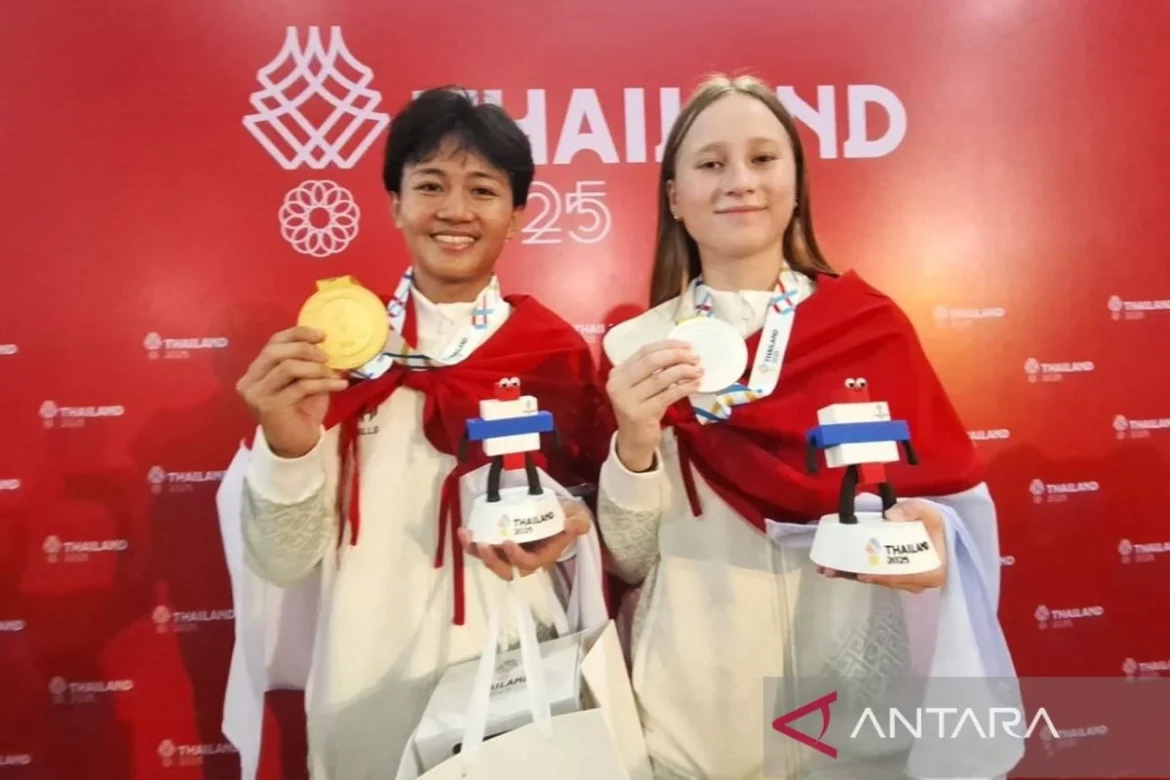
The name Basral Graito Hutomo has become synonymous with Indonesian sporting excellence following his commanding performance and gold medal victory at the SEA Games 2025 in Bangkok, Thailand. The prodigious skateboarder, a rising star for the Tanah Air, demonstrated unwavering consistency and profound self-belief from the preliminary rounds all the way to the nail-biting final. His strategic approach, characterized by a "no-pressure" mindset, allowed him to unleash his full potential, culminating in a spectacular winning score of 166.67 points. The decisive moment, a breathtaking combination of a 360 flip seamlessly transitioning into a boardslide on his final attempt, captivated spectators and unequivocally secured his championship title. This profile delves into the journey of Basral Graito Hutomo, the young Indonesian skateboarder whose dedication has propelled him to the pinnacle of Southeast Asian competition.
The Genesis of a Skateboarding Prodigy: From Tangerang to the Streets of Karanganyar
Basral Graito Hutomo’s remarkable ascent in the skateboarding world began with his birth in Tangerang on January 22, 2007. While his birthplace is noted, it was in Karanganyar, Central Java, that his formative years were spent, and where his innate talent for extreme sports began to flourish. Emerging as a standout competitor in the men’s street discipline, Basral has consistently pushed the boundaries of his technical abilities and skateboarding prowess.
His initial fascination with skateboarding ignited between 2017 and 2018. During this period, he frequently observed the vibrant BMX community at Stadion Manahan, an experience that sparked a profound desire to try skateboarding himself. This observation not only fueled his curiosity but also planted the seed of an ambition to become a professional athlete in the sport.
His early days of practice were marked by resourcefulness. Basral initially honed his skills on a second-hand skateboard, acquired for a mere Rp5,000 from a friend. Recognizing his son’s burgeoning passion and dedication, his father provided him with a more suitable skateboard, enabling him to train with greater efficacy. His practice sessions became a regular fixture, taking place in various locations, from the comfort of his home’s yard to the dedicated skatepark facilities within the campus of Universitas Muhammadiyah Surakarta (UMS). These early experiences, steeped in perseverance and familial support, laid the foundational stones for his future success.
The Crossroads of Education and Athletic Ambition
As Basral transitioned from the fifth to the sixth grade of elementary school, he faced a pivotal juncture that would shape the trajectory of his young life. He was confronted with the challenging decision of prioritizing his formal education or dedicating his full attention to the increasingly demanding and time-consuming pursuit of skateboarding.
The gravity of this decision became acutely apparent in 2019 when Basral was selected to participate in the National Training Camp (Pelatnas) in Bandung. This intensive nine-month program was designed as crucial preparation for the Philippines SEA Games. However, his participation in the Pelatnas was met with significant hurdles regarding school leave, and he even faced the threat of failing to progress to the next academic year if he proceeded.
With unwavering support from his father, Basral ultimately made the courageous choice to embrace a non-formal educational path through the Paket C program. This decision allowed him to fully immerse himself in developing his skateboarding career without the constraints of a traditional academic schedule, demonstrating a profound commitment to his athletic aspirations. This move underscored a growing trend among young athletes in various disciplines who opt for flexible educational frameworks to accommodate rigorous training regimes.
A Chronicle of Triumphs Leading to SEA Games 2025 Glory
The sacrifices made and the relentless hard work invested by Basral Graito Hutomo have culminated in a truly spectacular achievement. Fueled by the unwavering support of his family, particularly his father, Basral proudly delivered a gold medal for Indonesia at the SEA Games 2025, held at the prestigious Extreme Sport Park Rajamangala in Bangkok.
From the initial qualifying rounds to the final showdown, Basral exhibited remarkable stability and an unshakeable self-confidence. The defining moment of his competition arrived during the single trick session. Performing with a palpable sense of freedom and devoid of pressure, he executed a flawless combination – a 360 flip transitioning into a boardslide – that served as the ultimate winning maneuver.
This extraordinary feat earned him a total score of 166.67 points, surpassing the performances of two formidable local athletes from Thailand. This victory not only crowns him a SEA Games champion but also solidifies Basral Graito Hutomo’s status as one of the premier skateboarders in the Southeast Asian region.
Context of the SEA Games 2025 Skateboarding Competition
The SEA Games, officially known as the Southeast Asian Games, is a biennial multi-sport event involving athletes from eleven countries in Southeast Asia. Established in 1959, the Games have grown significantly in scale and prestige, serving as a crucial platform for regional athletic talent to showcase their skills and compete for national pride. Skateboarding, a relatively newer addition to the SEA Games program, has rapidly gained popularity and recognition, reflecting the sport’s growing global appeal and its emergence as a competitive discipline.
The inclusion of skateboarding in the SEA Games underscores the event’s commitment to embracing contemporary and youth-oriented sports. The 2025 edition, hosted in Bangkok, Thailand, featured skateboarding events at the state-of-the-art Extreme Sport Park Rajamangala, a venue renowned for its world-class facilities, providing an ideal stage for athletes like Basral to perform at their peak.
The skateboarding competition at SEA Games 2025, particularly the men’s street event, was fiercely contested. Skaters from various participating nations showcased a diverse range of technical skills, innovative tricks, and raw talent. The men’s street discipline requires athletes to perform a series of tricks on obstacles such as stairs, rails, and ledges, demanding a unique blend of athleticism, creativity, and nerve. Competitors are judged on factors including difficulty, execution, style, and creativity. The high caliber of competition at this year’s Games highlighted the increasing level of skateboarding talent across Southeast Asia.
Basral’s victory is particularly significant given the strong presence of skateboarding powerhouses within the region. Thailand, as the host nation, typically fields strong teams, and their athletes are accustomed to the local conditions and competitive environment. Therefore, Basral’s ability to outperform them on their home turf speaks volumes about his exceptional skill set and mental fortitude.
Supporting Data and Performance Analysis
Basral Graito Hutomo’s winning score of 166.67 points at the SEA Games 2025 final is a testament to his high-level performance. While specific breakdowns of scores for individual tricks are often proprietary to event organizers, a score in this range typically indicates a near-flawless execution of multiple challenging maneuvers, demonstrating both technical proficiency and strategic risk-taking. The "single trick" session, where his winning combination was performed, often carries significant weight in the final scoring, emphasizing the importance of precision and impact.
The "360 flip to boardslide" is a complex trick that requires substantial skill. A 360 flip involves the skateboard rotating 360 degrees along its longitudinal axis while simultaneously flipping. A boardslide, on the other hand, involves sliding the board along a rail or ledge on its underside. Combining these two demanding elements in succession, especially under the pressure of a final competition, showcases an advanced level of mastery over the skateboard.
To achieve such a high score, Basral would have likely executed a series of other impressive tricks throughout the competition, demonstrating consistency and variety. This could include various flip tricks (e.g., kickflips, heelflips, varial flips), grinds (e.g., 50-50, nosegrind), and manuals, all performed with clean landings and a confident style. The judges’ assessment would have taken into account the difficulty of each trick, the fluidity of its execution, the rider’s control over the board, and their overall presentation.
Comparing his performance to that of his competitors, particularly the Thai athletes he narrowly defeated, would likely reveal subtle differences in trick selection, execution precision, or overall consistency. The fact that Basral secured the highest score indicates that his chosen tricks, their execution, and his overall routine were deemed superior by the judging panel.
Repercussions and Future Implications
Basral Graito Hutomo’s SEA Games gold medal is more than just a personal triumph; it represents a significant moment for Indonesian skateboarding and youth sports development. His victory is expected to have several positive repercussions:
- Increased Popularity and Participation: The high-profile nature of a SEA Games gold medal can significantly boost the popularity of skateboarding in Indonesia. This could lead to more young people taking up the sport, increasing the talent pool for future competitions.
- Enhanced Funding and Support: Success on the international stage often attracts greater investment from both government sports bodies and private sponsors. This could translate into improved training facilities, better equipment, and more comprehensive support programs for Indonesian skateboarders.
- Inspiration for Aspiring Athletes: Basral’s journey, marked by overcoming educational challenges and achieving athletic excellence, serves as a powerful inspiration for young Indonesians facing similar dilemmas. His story can encourage them to pursue their passions with dedication and resilience.
- Elevated National Standing: The gold medal contributes to Indonesia’s overall medal count and national pride at the SEA Games, showcasing the country’s prowess in a dynamic and globally recognized sport.
- Development of Non-Formal Education Models: Basral’s success in balancing athletic pursuits with a non-formal education pathway, like Paket C, could serve as a model for other young athletes, highlighting the viability of alternative educational routes for those committed to high-performance sports.
Furthermore, his win could prompt a deeper discussion about the infrastructure and support systems available for niche sports in Indonesia. It may encourage a more holistic approach to athlete development, acknowledging that success requires not only talent but also strategic planning, dedicated coaching, and robust educational flexibility.
The SEA Games 2025 skateboarding competition has undeniably cemented Basral Graito Hutomo’s name in the annals of Indonesian sports history. His journey from humble beginnings to SEA Games champion is a compelling narrative of passion, perseverance, and the pursuit of excellence against all odds. As he continues his career, the spotlight on Basral will undoubtedly shine brighter, potentially illuminating the path for a new generation of Indonesian skateboarders to emerge and conquer the global stage.
Related News and Previous Coverage:
Previous reports from ANTARA have touched upon various aspects of Basral’s career and the skateboarding community:
- A report titled "Basral!" likely highlighted his initial rise or significant achievements prior to the SEA Games.
- "Penjelasan pelatih skateboard Malaysia selebrasi kemenangan Basral" suggests a previous interaction or observation regarding Basral’s victories and the reactions from international counterparts, indicating a history of competitive engagement.
- "Pelajari jatuh, kiat andal bermain skateboard Basral Graito" points to insights into his training methodology and resilience, emphasizing his ability to learn from setbacks and refine his skills, a crucial aspect of any athlete’s development.
These prior articles collectively paint a picture of a dedicated athlete whose journey has been marked by consistent effort, strategic learning, and a strong presence in the competitive skateboarding scene. His SEA Games 2025 triumph is the culmination of this sustained dedication.
Pewarta: Sean Anggiatheda Sitorus
Editor: Alviansyah Pasaribu
Copyright © ANTARA 2025
Dilarang keras mengambil konten, melakukan crawling atau pengindeksan otomatis untuk AI di situs web ini tanpa izin tertulis dari Kantor Berita ANTARA.