
The political landscape in Indonesia continues to experience dynamic shifts regarding election regulations as political parties prepare for upcoming democratic contests. Recently, the People’s Conscience Party (Partai Hanura) officially expressed strong opposition to a circulating legislative proposal that would require any presidential and vice-presidential ticket to secure backing from a minimum of two parliamentary factions in the House of Representatives (DPR) under the planned revision of Law Number 7 of 2017 concerning General Elections.
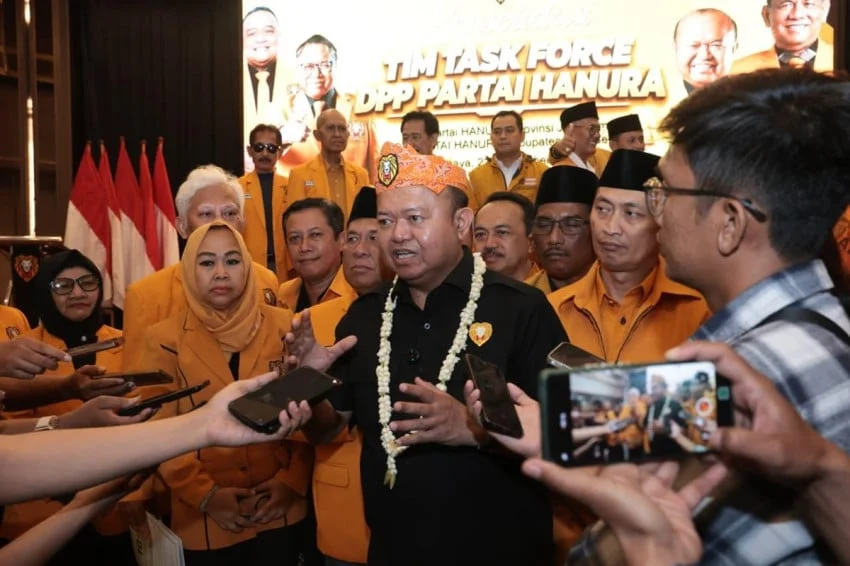
The rejection was publicly voiced by Hanura’s Deputy Chairperson, Patrice Rio Capella, during a consolidation meeting in Surabaya, East Java. According to the party leadership, introducing such a requirement lacks proper legal grounding and directly contradicts landmark constitutional rulings that have fundamentally reshaped the nation’s presidential nomination process. As political observers and lawmakers debate the future of Indonesia’s electoral framework, this developing disagreement highlights ongoing tensions between constitutional mandates and parliamentary maneuvers aimed at regulating political competition.
Background Context on the Presidential Threshold Debate
To understand the weight of Hanura’s recent stance, one must examine the historical evolution of the presidential threshold (presidential threshold or PT) in Indonesia. Since the direct election of presidents and vice-presidents began, political parties or coalitions of parties have had to meet specific electoral criteria to nominate candidates. Historically, these requirements were tied to the previous legislative election results, compelling smaller parties to form coalitions to meet the necessary percentage thresholds of seats in the DPR or popular votes nationwide.
For years, these thresholds sparked considerable legal and political controversy. Critics argued that high thresholds marginalized smaller political entities, limited the range of choices available to voters, and entrenched the dominance of major political parties. Conversely, proponents maintained that thresholds were necessary to ensure government stability, prevent excessive fragmentation in the legislature, and foster effective coalition-building that could support a president’s agenda in parliament.
A watershed moment arrived when the Constitutional Court (Mahkamah Konstitusi or MK) issued a definitive ruling dismantling the traditional presidential threshold framework, lowering the requirement to zero percent for eligible participating political parties. This decision fundamentally altered the legal architecture of Indonesian elections, granting every registered political party contesting the election the constitutional right to put forward their own presidential and vice-presidential candidates without needing to pool parliamentary seats with other factions.
Chronology of the Recent Controversy
The latest debate surfaced as lawmakers in the House of Representatives began discussions surrounding potential amendments to Law Number 7 of 2017 concerning General Elections. While various factions floated multiple ideas to refine the electoral system, a specific proposal emerged suggesting that while the numerical presidential threshold might technically stand at zero percent due to the Constitutional Court’s ruling, a new operational requirement could be introduced: any nominated ticket must secure formal backing from at least two parliamentary factions in the DPR to appear on the ballot.
This proposal immediately triggered mixed reactions across the political spectrum. On Tuesday, September 22, 2026, Patrice Rio Capella addressed the matter directly while leading a consolidation meeting and task force briefing for Hanura cadres from across East Java at the Platinum Tunjungan Hotel in Surabaya. During this event, Rio Capella unequivocally dismissed the proposal, labeling it as legally flawed and politically confusing.
"I do not understand who provided that unintelligent input. The Constitutional Court has already decided that the presidential threshold is zero percent," Rio Capella stated to journalists following the session. He emphasized that the distinction between political parties participating in elections and factions sitting within the parliamentary chamber must be clearly maintained, as mixing the two concepts undermines established constitutional protections.
Legal Arguments and Hanura’s Stance

Partai Hanura’s primary objection rests on the supremacy of Constitutional Court rulings and the distinct nature of political entities in Indonesia’s constitutional system. Rio Capella reiterated that the highest legal authorities in the country have already established that political parties certified as election participants possess the inherent right to nominate executive leaders.
By attempting to insert a requirement that mandates support from two DPR factions, lawmakers who support the idea are, in Hanura’s view, attempting to reintroduce a backdoor threshold. Because political factions are formed inside the parliament after an election takes place, requiring pre-existing support from these factions would create an insurmountable structural barrier for newly established or non-parliamentary parties, effectively neutralizing the liberalization achieved through the Constitutional Court’s zero-percent ruling.
Furthermore, Hanura argues that such a requirement would create widespread public confusion. Voters and party members who rely on clear, stable electoral laws would find themselves navigating contradictory regulations where the judiciary expands political participation while the legislature simultaneously contracts it through administrative hurdles.
Broader Implications and Political Analysis
The friction surrounding the proposed two-faction support rule points to a broader, ongoing institutional struggle between the judiciary and the legislative branch in Indonesia. When the Constitutional Court strikes down restrictive electoral thresholds, it often sets off legislative discussions where parliamentarians seek alternative mechanisms to preserve their collective gatekeeping power over executive nominations.
Political analysts note that rules governing executive nominations serve as the primary mechanism through which established parliamentary parties protect their collective influence. If every party is legally empowered to nominate a candidate without needing coalition partners, the bargaining power of major factions diminishes significantly during pre-election coalition talks. Consequently, proposals like the two-faction support requirement are often viewed by critics as attempts to recreate exclusivity in presidential races.
However, implementing rules that run counter to the spirit—or direct letter—of Constitutional Court decisions risks triggering further legal challenges. Civil society organizations and smaller political parties are likely to file formal judicial reviews if parliament attempts to codify provisions that effectively restore barriers to presidential nominations. Such legal battles could prolong uncertainty surrounding the electoral framework, complicating preparations for election organizers and political parties alike.
Reactions from Other Parliamentary Factions and Stakeholders
While Hanura has taken a vocal and uncompromising stance against the proposal, discussions within the DPR remain fluid. Other political parties are still weighing the pros and cons of various electoral reform options as part of the broader evaluation of Law Number 7 of 2017. Major parties with significant parliamentary presence have historically favored mechanisms that encourage broad-based coalitions to ensure governing stability, though they must navigate public expectations for a more open and inclusive democratic process.
Public policy experts have urged lawmakers to focus on transparency and constitutional alignment rather than introducing complex procedural filters that could disenfranchise political participants or reduce voter choice. As the legislative agenda progresses, stakeholders across the political spectrum will continue to monitor how committee discussions handle the sensitive balance between parliamentary management and constitutional rights.
Conclusion and Outlook
The rejection by Partai Hanura of the proposed two-faction support requirement for presidential nominations underscores the fierce debate defining Indonesia’s electoral reform process. As the political year unfolds, the tension between legislative initiatives and judicial mandates will remain a critical focal point. With party leaders like Patrice Rio Capella pressing for strict adherence to the Constitutional Court’s zero-percent threshold ruling, any legislative attempts to reintroduce backdoor barriers will face intense scrutiny, debate, and potential legal challenges from those committed to expanding democratic participation in the archipelago.
