The modern military is often described as a sophisticated machine, a complex assembly of moving parts that must operate with absolute precision to ensure national security and global stability. While technological advancements in weaponry and surveillance often dominate headlines, the most critical component of any armed force remains its leadership. Military officers are the strategic architects who direct personnel, manage resources, and make life-or-death decisions under extreme pressure. This caliber of leadership is rarely accidental; it is forged within the hallowed halls of the world’s elite military academies. These institutions are designed to do more than teach tactics; they are intended to instill a philosophy of service, a rigorous ethical framework, and the intellectual agility required to navigate the complexities of 21st-century warfare. Among the most distinguished of these institutions are the United States Military Academy at West Point, the Royal Air Force College Cranwell in the United Kingdom, and the École Spéciale Militaire de Saint-Cyr in France.
The Evolution of Military Education: A Historical Context
The concept of a formalized military academy is a relatively modern development in the scope of human history. For centuries, military leadership was often a matter of aristocratic birthright or battlefield promotion. However, the dawn of the 19th century brought about a shift toward professionalization. The Napoleonic Wars and the American Revolution demonstrated that bravery alone was insufficient; success in modern conflict required a deep understanding of engineering, logistics, and mathematics.
In 1802, two of the world’s most influential academies were established: West Point in the United States and Saint-Cyr in France. These institutions marked a transition toward meritocracy and scientific warfare. Following World War I, the realization that air power would redefine the battlefield led to the creation of specialized flight academies, most notably the RAF College Cranwell in 1919. Today, these schools have evolved into multi-disciplinary universities that balance traditional combat training with advanced degrees in international relations, cyber security, and aerospace engineering.
West Point: The Vanguard of American Leadership
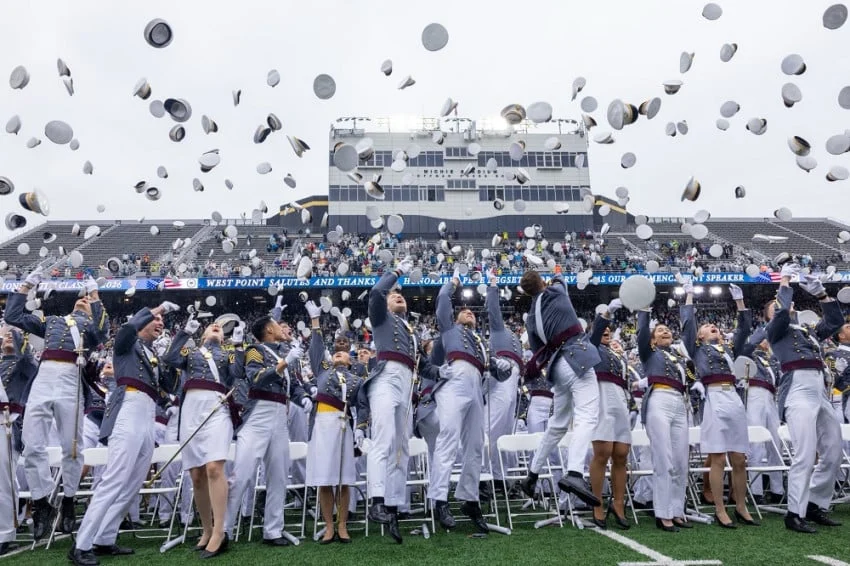
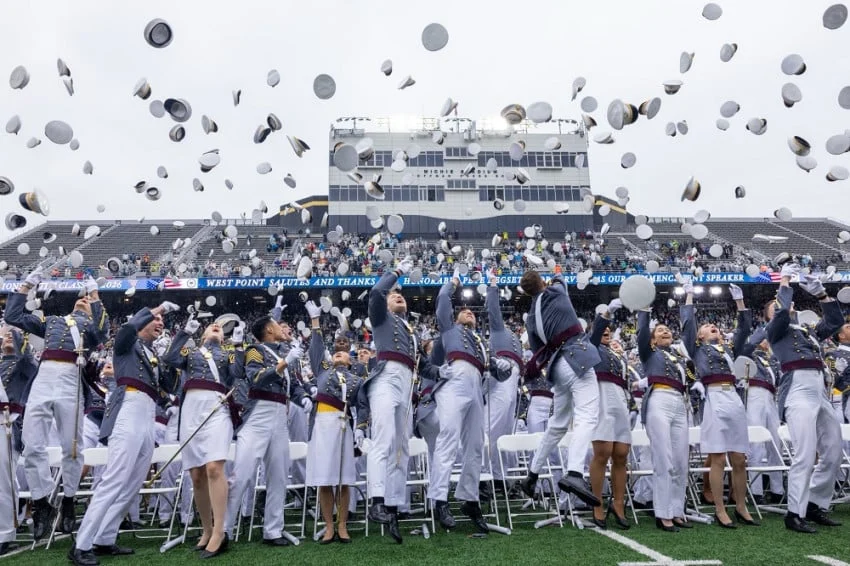
The United States Military Academy (USMA) at West Point stands as perhaps the most recognized military institution globally. Located on the scenic high ground overlooking the Hudson River in New York, West Point was established by President Thomas Jefferson in 1802. Its primary mission is to educate, train, and inspire the Corps of Cadets so that each graduate is a commissioned leader of character committed to the values of "Duty, Honor, Country."
West Point’s influence on American history is unparalleled. It has produced some of the most significant figures in global military and political history. Two U.S. Presidents, Ulysses S. Grant and Dwight D. Eisenhower, were graduates who successfully transitioned from supreme military command to the highest office in the land. Other notable alumni include Douglas MacArthur, George S. Patton, and more recently, various CEOs of Fortune 500 companies and high-ranking government officials.
The curriculum at West Point is notoriously grueling. Cadets must maintain high academic standards while undergoing intense physical training and adhering to a strict Honor Code which states, "A cadet will not lie, cheat, steal, or tolerate those who do." Data suggests that West Point is one of the most selective colleges in the United States, with an acceptance rate typically hovering around 10%. The institution’s "Long Gray Line" refers to the continuous succession of graduates who have served the nation, creating a sense of historical continuity and responsibility that few other schools can match.
RAF College Cranwell: Pioneering the Skies
While West Point and Saint-Cyr focused on land forces, the United Kingdom recognized the burgeoning importance of the third dimension of warfare: the air. The Royal Air Force (RAF) College Cranwell was established in 1919, shortly after the conclusion of World War I. As the world’s first air academy, Cranwell was a revolutionary concept. It was the brainchild of Lord Trenchard, the "Father of the Royal Air Force," who believed that the air force must have its own distinct culture and training ground to remain independent from the Army and Navy.
Cranwell serves as the entry point for all RAF officers. The selection process is rigorous, focusing on cognitive ability, psychological resilience, and leadership potential. Unlike traditional universities, Cranwell emphasizes rapid decision-making and technical proficiency. The academy has played a vital role in every major conflict involving the United Kingdom since its inception, from the Battle of Britain to modern peacekeeping missions in the Middle East. The institution not only trains pilots but also engineers, logistics officers, and intelligence specialists, reflecting the multifaceted nature of modern aerial warfare.
École Spéciale Militaire de Saint-Cyr: The Napoleonic Legacy
Founded by Napoleon Bonaparte in 1802, the École Spéciale Militaire de Saint-Cyr remains the premier officer school for the French Army. Napoleon’s vision was to create an elite corps of officers who were "educated to conquer." The academy’s motto, "Ils s’instruisent pour vaincre" (They study to overcome/conquer), encapsulates the French approach to military leadership—a blend of intellectual depth and tactical aggression.
Saint-Cyr has a storied and often nomadic history. Originally located near Versailles, it moved several times, particularly following the destruction of its original facilities during World War II. It is currently situated in Coëtquidan, Brittany. The training at Saint-Cyr is characterized by its emphasis on "the art of command." Graduates are expected to be not only soldiers but also scholars of history and philosophy, capable of understanding the cultural and political nuances of the regions where they are deployed. The academy maintains strong ties with other European and African military institutions, often hosting international cadets to foster diplomatic and military cooperation.
Comparative Chronology of Elite Military Institutions
To understand the development of global military leadership, it is helpful to examine the timeline of when these and other key institutions were established:
- 1741: Royal Military Academy, Woolwich (UK) – Precursor to Sandhurst, focused on artillery and engineering.
- 1802: United States Military Academy (West Point) and École Spéciale Militaire de Saint-Cyr (France) are founded.
- 1812: Royal Military College, Sandhurst (UK) – Established to train infantry and cavalry officers.
- 1919: RAF College Cranwell (UK) – The world’s first dedicated air force academy.
- 1949: National Defence Academy (India) – Notable for being the first tri-service academy in the world, training cadets for the Army, Navy, and Air Force together.
- 1954: United States Air Force Academy (USAFA) – Established following the separation of the Air Force from the Army.
Statistical Insights and Academic Rigor
The prestige of these academies is backed by significant data. For instance, West Point graduates consistently rank among the highest recipients of Rhodes and Marshall Scholarships, highlighting that military education is as much about intellectual prowess as it is about physical endurance. In the United Kingdom, Sandhurst and Cranwell are regarded as some of the best leadership development centers in the world, with many foreign nations—including those in the Middle East and Southeast Asia—sending their future leaders to train there.
Research into military education suggests that the "whole person" concept—balancing academics, military training, and athletics—creates a unique psychological profile. A study on military graduates indicates they often possess higher levels of "grit" and emotional intelligence compared to their civilian counterparts. This makes them highly sought after in the private sector; data from various recruitment agencies shows that former military officers are disproportionately represented in senior management roles in logistics, engineering, and telecommunications.
Implications for Global Security and Soft Power
The role of these academies extends far beyond national borders. They are significant tools of "soft power" and international diplomacy. Through international cadet exchange programs, West Point, Sandhurst, and Saint-Cyr foster lifelong relationships between future military leaders of different nations. When a French officer and an American officer have trained together in their youth, the level of interoperability and trust during a NATO mission or a UN peacekeeping operation is significantly enhanced.
Furthermore, the curricula of these institutions are shifting to address modern threats. There is an increasing focus on:
- Cyber Warfare: Training officers to defend digital infrastructure.
- Asymmetric Warfare: Understanding insurgencies and non-state actors.
- Ethics and International Law: Ensuring that leaders operate within the bounds of the Geneva Convention in increasingly "gray zone" conflicts.
Defense analysts argue that the quality of an academy is a leading indicator of a nation’s future military effectiveness. While a country can buy advanced fighter jets or tanks, it cannot "buy" a century of institutional tradition and leadership doctrine. The investment in these academies is, therefore, an investment in the long-term stability of the state.
Conclusion and Future Outlook
As the global security landscape becomes increasingly volatile, the importance of elite military academies continues to grow. These institutions remain the primary incubators for the men and women who will navigate the challenges of nuclear deterrence, climate-driven conflict, and the integration of artificial intelligence into the battlefield.
West Point, RAF Cranwell, and Saint-Cyr are not merely schools; they are the custodians of national values and the architects of future peace. By blending rigorous academic inquiry with the discipline of military life, they ensure that the next generation of leaders is prepared for the weight of command. As they evolve to meet 21st-century demands, their core mission remains unchanged: to produce leaders of character who can think critically, act decisively, and lead with integrity in an uncertain world.