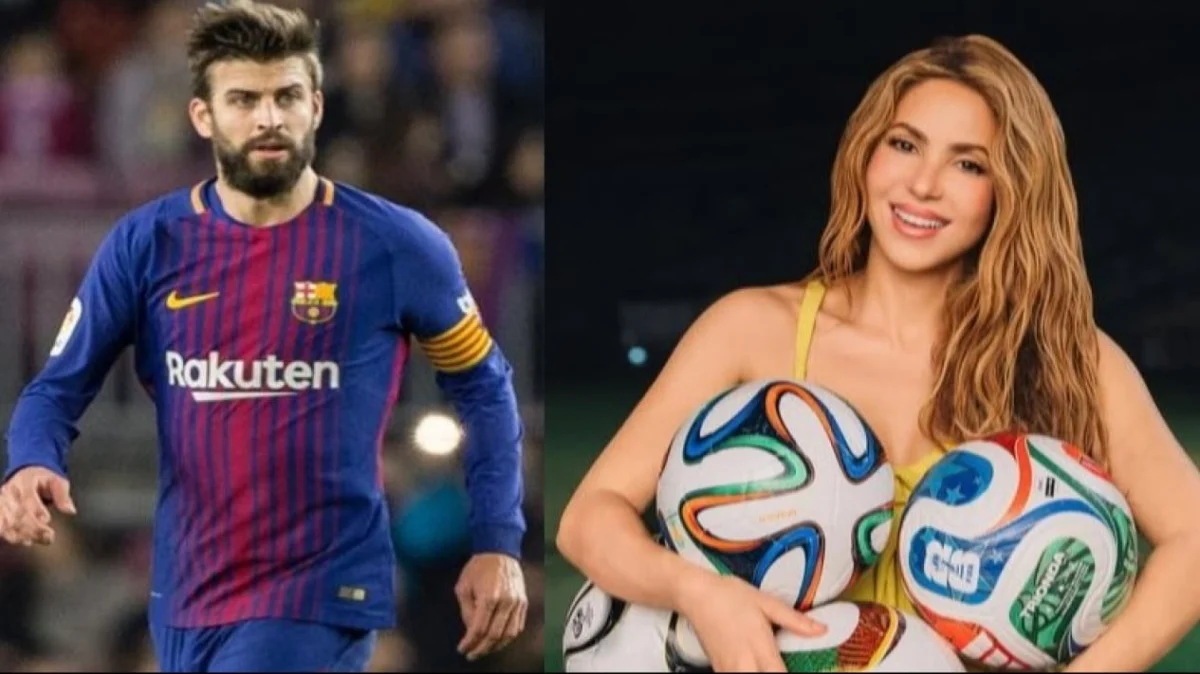
The electrifying opening and halftime show performances by global music icon Shakira at the FIFA World Cup 2026 Final on Friday, July 24, 2026, not only solidified her status as a resurgent force in the entertainment industry but also inadvertently reignited a fervent public debate surrounding her past relationship with former Spanish footballer Gerard Piqué. As the Colombian superstar garnered widespread acclaim for her energetic and visually stunning spectacle, her former partner’s Instagram account became the unexpected target of a relentless barrage of comments from social media users, many of whom resurrected the contentious details of their high-profile separation and the allegations of infidelity that shadowed its conclusion.
The digital onslaught on Piqué’s social media channels saw an overwhelming number of users revisiting the dramatic unraveling of his decade-long relationship with Shakira, which captivated global headlines just a few years prior. Accusations of his alleged affair with Clara Chía Martí, the woman with whom he is now publicly linked, resurfaced with unprecedented vigor, inundating the comment sections of the former Barcelona defender’s most recent posts. This viral digital phenomenon unfolded concurrently with Piqué’s physical presence at the very same stadium, where he attended the FIFA World Cup 2026 Final alongside the two children he shares with Shakira, Sasha and Milan. His attendance at such a globally televised event, juxtaposed with Shakira’s triumphant return to the world stage, amplified the public scrutiny and thrust Piqué back into the international spotlight under less than favorable circumstances.
The World Stage and a Resurgent Icon
The FIFA World Cup 2026, co-hosted across North America by the United States, Canada, and Mexico, marked a historic milestone as the first tournament to feature 48 national teams, making it the largest and most geographically expansive World Cup to date. The final match, held in a state-of-the-art stadium that epitomized the grandeur of the event, was preceded and punctuated by a star-studded entertainment program designed to captivate a global audience estimated in the billions. Shakira’s selection as a key performer for both the opening ceremony and the coveted halftime show was a testament to her enduring appeal and her significant historical association with the World Cup, having delivered iconic anthems like "Waka Waka (This Time for Africa)" for the 2010 tournament and "La La La (Brazil 2014)" for the subsequent edition. Her performances were universally lauded for their high energy, intricate choreography, and the singer’s seemingly ageless vitality, further cementing her reputation as a formidable live performer. Critics and fans alike praised her command of the stage, her vocal prowess, and her ability to unite diverse cultures through her music, creating an undeniable moment of global celebration and artistic triumph.
A Personal Drama Unfolds Publicly
The relationship between Shakira Isabel Mebarak Ripoll and Gerard Piqué Bernabeu began in late 2010, shortly after they met during the filming of the music video for "Waka Waka." Their romance quickly blossomed, becoming one of the most prominent celebrity pairings across the worlds of music and sport. Despite a ten-year age gap, with Shakira being older, their partnership was widely admired, leading to the birth of their two sons, Milan in 2013 and Sasha in 2015. For over a decade, they presented a united front, navigating their respective high-profile careers while raising their family primarily in Barcelona, Spain.
However, their seemingly idyllic union began to show cracks in early 2022, culminating in a joint statement released on June 4, 2022, confirming their separation. The announcement sent shockwaves through their global fanbase. While the initial statement was brief and diplomatic, rumors of infidelity on Piqué’s part swiftly began to circulate in the Spanish and international press. These rumors intensified following reports that Piqué had moved out of their family home and was seen publicly with a younger woman, later identified as Clara Chía Martí, an employee of his sports and media investment group, Kosmos Holding. The ensuing media frenzy painted a narrative of betrayal and heartbreak, with Shakira’s subsequent musical releases often interpreted as poignant and powerful artistic expressions of her emotional journey through the separation.
The Timeline of a Tumultuous Split
The chronological unfolding of events post-separation played a critical role in shaping public perception and ultimately fueled the recent social media phenomenon:
- June 2022: Shakira and Piqué officially announce their separation after 11 years together. Reports of Piqué’s alleged infidelity immediately surface in the Spanish media.
- October 2022: Shakira releases "Monotonía" with Ozuna, a poignant ballad that many interpret as a direct reference to the emotional toll of her breakup. The music video features a visible "hole" in her chest, symbolizing a broken heart.
- November 2022: Piqué officially retires from professional football, playing his last game for FC Barcelona. Around the same time, Shakira and Piqué reach a custody agreement for their children, allowing Shakira to relocate to Miami with Milan and Sasha.
- January 2023: Shakira releases "BZRP Music Session #53" with Argentine producer Bizarrap. The track becomes an instant global sensation, breaking multiple streaming records. Its lyrics contain unambiguous references to Piqué and Clara Chía Martí, including the now-iconic lines, "You traded a Ferrari for a Twingo. You traded a Rolex for a Casio." The song is widely celebrated as an anthem of female empowerment and a direct artistic response to her personal ordeal.
- February 2023 onwards: Piqué makes his relationship with Clara Chía Martí increasingly public, posting photos together on social media and attending events. These public appearances often draw comparisons and renewed scrutiny from fans of Shakira.
- April 2023: Shakira moves to Miami with her children, marking a new chapter in her life and career.
- July 24, 2026: Shakira performs at the FIFA World Cup 2026 Final. Piqué is present in the stadium with their children. The juxtaposition of these events triggers the massive social media reaction.
The Digital Barrage: Piqué’s Instagram Under Siege
In the immediate aftermath of Shakira’s captivating World Cup performance, a noticeable and rapid surge of activity was observed across Gerard Piqué’s social media platforms, most notably his Instagram account. The comments section of his latest posts, which typically feature updates on his business ventures, sports analyses, or personal life with Clara Chía Martí, quickly transformed into a public forum for condemnation and vindication. Thousands of new comments, many of them highly critical, flooded in within hours.
The dominant themes of these comments revolved around the perceived contrast in the former couple’s current life trajectories. Many netizens highlighted Shakira’s global resurgence, praising her resilience and professional success post-breakup, often framing her World Cup performance as a triumphant comeback. Conversely, Piqué faced renewed criticism, with users dredging up the infidelity allegations from 2022 and holding him accountable for the pain Shakira publicly expressed in her music. The sentiment was overwhelmingly one of solidarity with Shakira and a strong condemnation of Piqué’s past actions.
A significant portion of the comments employed the term "karma," suggesting that Piqué was now experiencing the natural consequences of his alleged betrayal. Phrases like "Karma is real," "She’s shining, and you’re just watching," and "You lost a queen" became ubiquitous. The digital crowd-sourcing of moral judgment demonstrated the powerful role of social media in public accountability, where the court of public opinion can convene instantly and globally. This digital vigilantism underscored how celebrity narratives, once shaped by traditional media, are now heavily influenced by direct public engagement and collective sentiment expressed across platforms.
Physical Appearances and Public Perception
Beyond the narrative of infidelity and career trajectories, a more superficial yet equally prevalent discussion emerged regarding the physical appearances of Shakira and Piqué. Despite approaching her 50th birthday, Shakira’s performance was widely praised for her youthful vigor, toned physique, and boundless energy. Fans expressed admiration for her ability to maintain such a high level of fitness and stage presence, often attributing it to her newfound freedom and focus on self-care post-separation.
In stark contrast, many social media users pointed out that Gerard Piqué, who is nearly ten years Shakira’s junior, appeared to have aged considerably since their split. Comments frequently noted a perceived lack of the youthful exuberance he once displayed as an athlete. This comparison, though superficial, became another facet of the broader "karma" narrative, with some netizens suggesting that the emotional toll of his choices had manifested physically. While such observations are inherently subjective and often unkind, their widespread nature highlights the public’s tendency to scrutinize every aspect of a celebrity’s life, especially in the context of a high-profile breakup.
Broader Implications: Celebrity, Social Media, and Accountability
The incident at the FIFA World Cup 2026 Final transcends a mere celebrity scandal; it offers a compelling case study into the evolving dynamics of celebrity culture, social media’s power, and the public’s demand for accountability. In an era where personal lives of public figures are meticulously documented and scrutinized, the lines between private and public have blurred irrevocably. Shakira’s artistic expression of her pain through music resonated deeply with millions globally, transforming a personal heartbreak into a universal narrative of resilience and empowerment. Her performance at the World Cup, therefore, was not just an entertainment spectacle but also a symbolic moment for many who followed her journey.
The instantaneous and overwhelming reaction on Piqué’s Instagram demonstrates the collective power of social media to mobilize public sentiment. It serves as a stark reminder that even after years, public opinion, once formed, can be rekindled with astonishing speed and intensity, especially when triggered by a highly visible event. For public figures, this means that past actions, particularly those perceived as morally questionable, can have long-lasting repercussions on their public image and brand, regardless of their current professional endeavors or personal happiness. The "karma" narrative, while simplistic, reflects a societal yearning for justice and consequences, played out in the digital arena.
The Unspoken Narratives
While the public reaction was loud and clear, the direct responses from Shakira and Piqué remained notably absent. Shakira, through her performance, offered her most eloquent statement, showcasing her professional peak and personal strength. Her focus remained on her artistry and her connection with the global audience. Piqué, on the other hand, maintained his characteristic silence regarding the social media uproar. Historically, Piqué has opted for a strategy of non-response to personal controversies, letting his actions or lack thereof speak for themselves. This silence, however, can be interpreted in multiple ways: as indifference, as a strategy to avoid further fueling the narrative, or as an acknowledgment of the public’s sentiment without engaging directly. The absence of official statements from either party only further amplifies the public’s speculative engagement, allowing the narratives to thrive in the vacuum of direct communication.
Looking Ahead
The FIFA World Cup 2026 Final proved to be a pivotal moment, not just for the world of football but also for the ongoing public narrative surrounding Shakira and Gerard Piqué. For Shakira, it unequivocally marked a triumphant return to the pinnacle of global entertainment, cementing her legacy as an enduring icon. Her performance reinforced her status as a symbol of strength and resilience, inspiring millions worldwide. For Gerard Piqué, the event served as an uncomfortable, yet perhaps unavoidable, reminder of the lasting impact of personal choices on public perception. Despite his successful transition into the business world post-football, the shadow of his past relationship with Shakira continues to influence his public image. The incident underscores the enduring fascination with celebrity personal lives and the potent, often unforgiving, role of social media in shaping public opinion in the 21st century. As both figures continue to navigate their respective paths, the intersection of their personal histories and their public personas will undoubtedly remain a subject of keen interest for years to come.