The North Atlantic Treaty Organization (NATO) and various Western intelligence agencies are currently grappling with alarming reports suggesting that the Russian Federation is accelerating plans to deploy a satellite equipped with nuclear weaponry into orbit before the end of the current year. This development, if confirmed, would represent a significant shift in the militarization of space and a potential breach of long-standing international arms control treaties that have governed extraterrestrial activities since the height of the Cold War.
The Intelligence Assessment
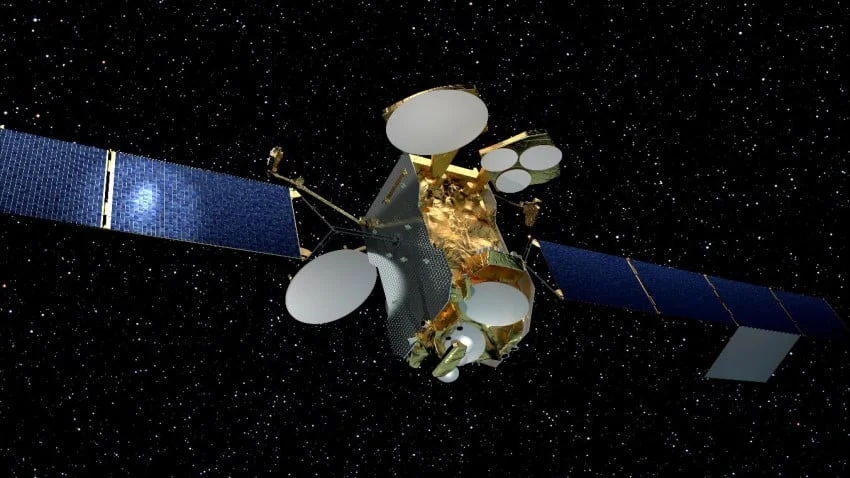
According to a comprehensive investigation published by German media outlets, including NDR, WDR, and the newspaper Sueddeutsche Zeitung, Western intelligence services—most notably the German Federal Intelligence Service (BND) and elements of the German armed forces—have been cross-referencing data regarding a mysterious satellite project known as "Sputnik-S." Intelligence dossiers suggest that this satellite, which is purportedly designed to carry a nuclear payload capable of disrupting or destroying orbital infrastructure, was assembled several years ago and is currently being held at a secure facility within the Moscow region.
The assessment from Western intelligence agencies points to a sophisticated level of technological integration. Unlike conventional kinetic anti-satellite (ASAT) missiles, which are launched from Earth to intercept targets, a nuclear-armed satellite stationed in low Earth orbit (LEO) or medium Earth orbit (MEO) could theoretically execute a devastating electromagnetic pulse (EMP) strike. Such a detonation would not necessarily target a single satellite but could instead blanket a specific orbital shell with radiation, rendering a vast array of commercial, scientific, and military satellites non-functional.
Chronology of Escalating Tensions
The discourse surrounding Russian space-based nuclear capabilities is not entirely new, though it has reached a critical inflection point in 2024. The timeline of this escalating concern can be traced back through several key developments:
- Early 2024: High-ranking United States officials, including members of the House Intelligence Committee, publicly alluded to a "serious national security threat" posed by Russian space-based capabilities. At the time, the Biden administration was cautious about declassifying specific details, but the discourse centered on an "anti-satellite" weapon.
- February 2024: The Kremlin officially rejected the U.S. assertions. Russian officials, including President Vladimir Putin, characterized the allegations as a "malicious fabrication" intended to pressure the U.S. Congress into passing additional funding for Ukraine or to justify Western space-based military projects.
- Mid-2024: Intelligence gathering intensified among NATO allies. The German BND reportedly began sharing more granular signals intelligence and satellite imagery analysis with its partners, confirming that the hardware associated with the alleged Sputnik-S project had reached a state of operational readiness.
- Late 2024: Current reports indicate that the deployment window is narrowing, with Western analysts suggesting that Russia may seek to launch the payload before the year concludes to test the operational viability of its space-based nuclear deterrent.
The Kremlin’s Official Stance
In response to the latest wave of reports emanating from Germany, the Kremlin has adopted a posture of dismissive skepticism. During a press briefing on Monday, presidential spokesperson Dmitry Peskov addressed the allegations directly when questioned by the media.
"We have not reviewed these specific reports," Peskov stated. "However, these documents are characterized by a preponderance of ‘allegations’ and ‘possibilities’—the origins of which remain obscure—rendering them unworthy of serious engagement from the Russian state."
The Kremlin continues to emphasize that its space program is strictly scientific and commercial in nature. Russian officials often point to the Outer Space Treaty of 1967, which prohibits the placement of nuclear weapons or any other weapons of mass destruction (WMDs) in Earth orbit, as evidence that they remain in compliance with international law. However, Western experts argue that the development of a "dual-use" platform—a satellite that could be converted into a weapon on short notice—circumvents the spirit, if not the technical letter, of the treaty.
Technical Implications and Global Security
The potential deployment of a nuclear-armed satellite creates a paradigm shift in global security architecture. For decades, the global economy has become inextricably linked to space-based assets. GPS, banking systems, agricultural monitoring, and military command-and-control networks all rely on satellites that are inherently vulnerable to a nuclear detonation in space.
A nuclear explosion in orbit would generate a cloud of charged particles that would interact with the Earth’s magnetic field, creating an artificial radiation belt. This would result in the rapid degradation of solar panels and sensitive electronics on thousands of satellites. The result would not be a localized conflict but a global technological blackout that could set back space exploration and telecommunications by decades.
Military analysts at NATO headquarters in Brussels have suggested that such a capability is intended as a "strategic equalizer." As Russia faces conventional military setbacks and economic pressure, the ability to threaten the West’s "space-based backbone" serves as a potent deterrent. By holding the global communications infrastructure hostage, Moscow may believe it can gain leverage in ongoing geopolitical negotiations.
International Legal Framework and Challenges
The 1967 Outer Space Treaty, signed by the United States, the Soviet Union, and the United Kingdom, remains the cornerstone of space law. Article IV specifically states: "States Parties to the Treaty undertake not to place in orbit around the Earth any objects carrying nuclear weapons or any other kinds of weapons of mass destruction."
However, enforcing this treaty in the 21st century has proven difficult. The lack of an independent international inspection body for orbital payloads means that nations can effectively hide the true nature of their satellite missions. When a rocket is launched, it is nearly impossible for third-party observers to determine the precise nature of the payload without direct access to the manufacturing and integration process.
Furthermore, the rapid emergence of private space companies and the shift toward "small-sat" technology—where hundreds of satellites are launched on a single rocket—has made tracking and verifying payloads significantly more complex than during the era of large, singular state-run space stations.
Strategic Analysis: What Happens Next?
The current impasse places NATO in a difficult position. If the alliance ignores the reports and a launch occurs, the strategic surprise could be catastrophic. Conversely, if NATO responds with aggressive counter-measures, it risks sparking an arms race in space that could lead to accidental escalations.
Security experts suggest three likely avenues for the international community:
- Diplomatic Pressure: Increased coordination between the U.S., the EU, and neutral space-faring nations to create a new international framework for "orbital transparency." This would involve mandatory pre-launch inspections or increased satellite tracking protocols.
- Technological Hardening: Significant investment in "radiation-hardened" satellite technology and the development of redundant, decentralized satellite constellations that can survive the loss of primary nodes.
- Deterrence: Publicizing intelligence findings to create a global consensus against the weaponization of space, thereby raising the "reputational cost" for Russia should they proceed with the launch.
Conclusion
As the end of the year approaches, the focus of global intelligence agencies remains firmly on the Russian space program. Whether the reports of the Sputnik-S satellite represent a genuine existential threat or a sophisticated campaign of psychological warfare remains a matter of intense debate. What is clear, however, is that the era of "peaceful space" is being challenged by the realities of a shifting global power structure. The international community now faces the urgent task of ensuring that the vacuum of space does not become the next theater for nuclear conflict, a development that would have irreversible consequences for the future of human civilization on Earth.