The Indonesian National Police (Polri) has officially disclosed a series of critical findings regarding alleged corruption within a financing facility provided by the state-owned asset management firm, PT Perusahaan Pengelola Aset (Persero), also known as PT PPA. The investigation centers on the disbursement of invoice financing to PT Bintang Abadi Sampurna (BAS) intended for coal procurement projects for PT PLN Batubara during the 2019–2020 period. According to the Corruption Eradication Task Force (Kortas Tipikor) of the National Police, the case is characterized by a "conscious and structured" effort to bypass standard operating procedures, leading to significant potential losses for the state.
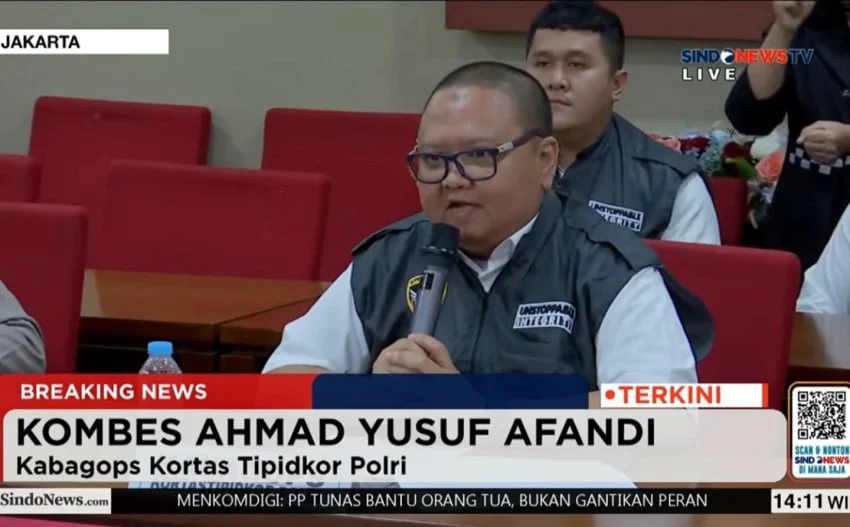
Kombes Ahmad Yusuf Afandi, the Head of Operations for the Polri Corruption Eradication Task Force, detailed the results of the investigation during a comprehensive press briefing on Monday, July 20, 2026. The findings suggest that the irregularities were not merely the result of administrative negligence or human error, but rather a coordinated series of actions designed to facilitate the illicit release of state funds. The police have identified four primary deviations that serve as the foundation for the ongoing criminal investigation.
The Four Pillars of Irregularity in the PT PPA-PT BAS Case
The first major finding highlighted by the investigation is the fundamental failure of the due diligence and risk analysis processes. In any financial institution, particularly a state-owned enterprise (BUMN) like PT PPA, due diligence is the mandatory first line of defense against fraud and credit risk. However, in the case of PT BAS, the authorities found that these essential safeguards were systematically ignored.
Kombes Yusuf explained that internal recommendations within PT PPA specifically called for direct verification with PT PLN Batubara to confirm the validity of the coal procurement contracts. "The recommendation to perform direct verification with PT PLN Batubara was not executed, despite the fact that this is a mandatory procedure under PT PPA’s internal Standard Operating Procedures (SOP)," Yusuf stated. By failing to communicate with the end-user of the coal, the decision-makers at PT PPA effectively operated in a vacuum, allowing the financing to proceed without confirming if the underlying business transaction actually existed or was of the stated value.
The second deviation involves the lack of verification for invoices and supporting documentation. Invoice financing, by its nature, relies on the authenticity of the billing documents provided by the borrower. In this instance, PT BAS submitted various invoices to justify the disbursement of funds. The investigation revealed that these documents were never properly vetted for authenticity. Despite the lack of verification, the documents were officially declared to have met all requirements, serving as the legal basis for the transfer of funds. This suggests a breakdown in the "four-eyes principle," where multiple levels of management are supposed to check and balance each other’s work.
The third finding concerns the total disregard for cash collateral mechanisms. In high-risk financing, such as coal procurement, lenders often require cash collateral or other liquid guarantees to protect the investment in case of default. According to Yusuf, the supervision of these mechanisms was completely abandoned. "Oversight of the cash collateral mechanism was ignored, meaning disbursements continued even though the guarantee requirements were not met," he added. This meant that the state’s money was being handed out without any secured fallback, placing the entire financial burden on the public purse if the project failed.
The fourth and perhaps most damning discovery involves the final stage of fund disbursement. Investigators found evidence of manipulated bank statements (rekening koran). These documents were allegedly falsified to create the illusion that the guarantee accounts still held sufficient balances to justify further funding. By re-engineering these financial records, the parties involved were able to trick the system into releasing a final wave of capital. "This was not an administrative slip-up," Yusuf emphasized. "It was a series of actions carried out consciously, structurally, and in an interconnected manner, resulting in state funds being disbursed without a valid legal basis."
Background: PT PPA and the Strategic Importance of Coal Financing
To understand the gravity of these findings, it is necessary to examine the role of the entities involved. PT Perusahaan Pengelola Aset (PPA) is a strategic arm of the Indonesian Ministry of State-Owned Enterprises. Originally established to manage the distressed assets of the Indonesian Bank Restructuring Agency (IBRA/BPPN) following the 1998 financial crisis, PT PPA evolved into a firm focused on corporate restructuring, revitalization, and investment.
The decision to provide invoice financing for coal procurement in 2019–2020 occurred during a period of high demand for energy resources to fuel Indonesia’s growing power grid, managed by the state electricity giant PT PLN. PT PLN Batubara, a subsidiary of PLN, was responsible for ensuring the steady supply of coal to power plants across the archipelago. Because coal procurement requires massive upfront capital, private contractors like PT BAS often seek "invoice financing" to maintain liquidity while waiting for the long payment cycles typical of state utility contracts.
In a legitimate invoice financing arrangement, a company (the borrower) sells its accounts receivable (invoices) to a financier (like PT PPA) at a discount. This provides the borrower with immediate cash flow. The financier then collects the full amount of the invoice from the end-customer (in this case, PT PLN Batubara). However, if the invoices are fraudulent or if the end-customer was never involved, the financier is left with no way to recoup the funds, leading to a direct financial loss for the state.
Chronology of the Investigation
The investigation into the PT PPA-PT BAS coal financing scheme began after internal audits and external reports flagged inconsistencies in the 2019 and 2020 fiscal years. By early 2024, the National Police’s Corruption Eradication Task Force took over the lead on the case, utilizing forensic accountants and digital investigators to trace the flow of funds.
- 2019–2020: PT PPA approves and begins disbursing financing to PT BAS for coal procurement intended for PT PLN Batubara.
- 2021–2022: Internal reviews within the Ministry of SOEs begin to identify non-performing loans and "stalled" financing projects within PT PPA’s portfolio.
- 2023: Preliminary investigations by the police reveal that the coal procurement projects claimed by PT BAS lacked the necessary verification from the purported buyer, PT PLN Batubara.
- 2024–2025: Investigators dive deep into the digital and physical paper trail, discovering the forged bank statements and the deliberate bypassing of SOPs.
- July 20, 2026: The National Police hold a press conference to announce the specific findings of systemic irregularities and the "conscious" nature of the alleged crime.
Institutional Responses and Broader Implications
The announcement by Kombes Yusuf Afandi has sent ripples through the Indonesian corporate and political landscape. While PT PPA has yet to release a detailed rebuttal to the latest police findings, the Ministry of State-Owned Enterprises has historically maintained a "zero tolerance" policy for corruption under the "Bersih-Bersih BUMN" (Cleaning Up SOEs) initiative.
Legal experts suggest that the "structured and conscious" nature of the findings significantly increases the likelihood of high-level prosecutions. Under Indonesian Law No. 31 of 1999 (amended by Law No. 20 of 2001) on the Eradication of Criminal Acts of Corruption, the key elements of a crime include an illegal act, the enrichment of oneself or others/corporations, and a resulting loss to the state’s finances. The police’s focus on the forgery of bank statements and the deliberate bypassing of SOPs directly addresses the "illegal act" and "intent" requirements of the law.
The case also highlights a recurring vulnerability in Indonesia’s energy sector: the procurement of raw materials. Coal remains a primary source of energy for Indonesia, and the sheer volume of money involved in its supply chain makes it a high-risk area for rent-seeking behavior and financial fraud. When state-owned financiers like PT PPA fail to implement their own risk protocols, it not only risks public funds but also threatens the stability of the energy supply chain.
Technical Analysis of Financial Fraud in the Case
From a financial auditing perspective, the use of "rekayasa rekening koran" or bank statement engineering is a sophisticated form of white-collar crime. In a standard audit, bank statements are verified through a process called "external confirmation," where the auditor or financier contacts the bank directly to confirm the balances. The fact that PT PPA accepted potentially forged documents without independent verification suggests either a massive failure of the internal audit department or active collusion between individuals within PT PPA and PT BAS.
Furthermore, the failure to verify with PT PLN Batubara is considered a "red flag" in the industry. In invoice financing, the financier must ensure that the "debtor" (PLN Batubara) acknowledges the debt and agrees to pay the financier directly (a process known as "Notice of Assignment"). Skipping this step is equivalent to lending money on a handshake in a multi-billion rupiah environment.
Impact on State Finances and Public Trust
While the exact figure of the state loss is still being finalized by the Audit Board of Indonesia (BPK) or the Finance and Development Supervisory Agency (BPKP), the scale of coal procurement financing usually involves hundreds of billions of rupiah. Every rupiah lost to corruption in this sector is a rupiah that could have been used to subsidize electricity for low-income households or to invest in the country’s transition to renewable energy.
The case also impacts investor confidence. PT PPA often partners with private investors and international financial institutions to manage assets. Revelations of systemic corruption and the failure of basic due diligence can make these partners wary, potentially increasing the cost of capital for the Indonesian government and its various agencies.
Conclusion and Future Steps
The National Police have indicated that the investigation is ongoing and that more individuals could be named as suspects in the coming months. The focus is now shifting toward identifying the "intellectual actors" who orchestrated the scheme and determining if any of the diverted funds were laundered through other businesses or offshore accounts.
"We are committed to following the money wherever it leads," Yusuf concluded. "The public deserves to know that state-owned enterprises are managed with integrity, and those who treat the state’s treasury as their personal source of income will be held accountable under the full weight of the law."
As the legal process moves forward, the PT PPA-PT BAS case serves as a stark reminder of the necessity for transparency and digital transformation in state financing. Moving toward automated, blockchain-based, or third-party verified invoice systems could prevent the manual forgery of documents that played such a central role in this multi-year corruption scandal. For now, the spotlight remains on the judiciary to ensure that justice is served and that the "structured" corruption described by the police is dismantled at its roots.