When prospective vehicle buyers explore the automotive market, the allure of a low monthly installment often overshadows the total financial commitment required over the life of a loan. Selecting a financing tenor—especially extended terms such as six years or 72 months—demands a comprehensive evaluation of interest rates, depreciation, and long-term economic stability. While a longer repayment window significantly reduces the immediate monthly burden, allowing buyers to align their vehicle acquisition with current cash flow, it concurrently increases the cumulative cost of ownership. Industry experts consistently advise consumers to look beyond the initial monthly sticker price and carefully compute the aggregate sum of down payments, recurring installments, administrative fees, insurance premiums, and compounding interest rates.
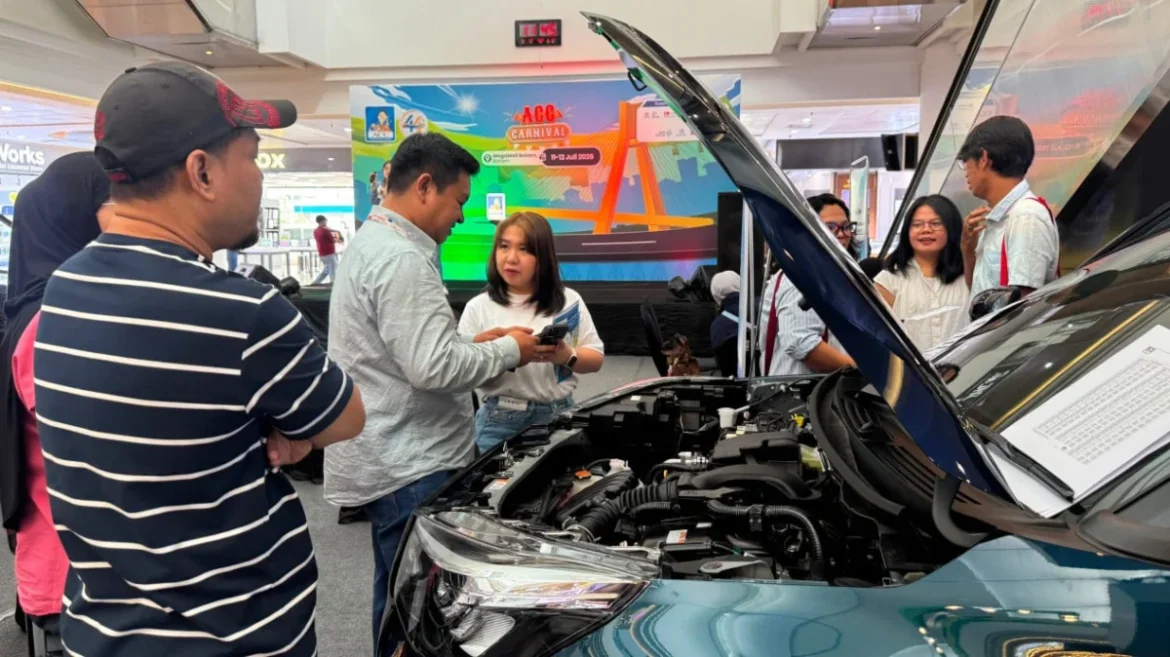
To address these evolving financial dynamics and provide accessible pathways to vehicle ownership, major automotive financing exhibitions have increasingly stepped into the spotlight. A prominent example of this trend is the ACC Carnival Medan, scheduled to run from September 19 to September 20, 2026, at the Ringroad City Walks shopping center. This automotive showcase brings together a diverse array of prominent vehicle manufacturers alongside certified pre-owned dealerships, offering structured financing schemes with tenors extending up to six years. As economic conditions fluctuate and consumer preferences shift toward manageable monthly budgeting, understanding the intricate mathematics of long-term automotive credit has never been more critical for modern car buyers.
The Mathematics of Long-Term Automotive Financing
The fundamental appeal of a 72-month financing structure lies in its mathematical impact on monthly cash flow. For instance, when purchasing a vehicle priced at Rp 200 million, dividing the principal balance alongside prevailing interest rates across six years yields a substantially lower monthly obligation compared to a traditional three- or four-year loan. This reduction can make the acquisition of a new or pre-owned car appear deceptively affordable, fitting neatly into the monthly budgets of middle-income households.
However, financial advisors emphasize that a comprehensive cost analysis must encompass every component of the loan agreement. The total cost of acquisition is not merely the list price of the vehicle, but rather the sum of the initial down payment plus every single monthly installment paid over the 72-month period. When factoring in cumulative interest, administration fees, comprehensive insurance policies, and potential provisioning charges, the actual expenditure can exceed the vehicle’s initial on-the-road price by a significant margin.
Furthermore, prospective buyers must evaluate how long-term financing interacts with vehicle depreciation. Automobiles begin losing market value the moment they are driven off the showroom floor. Over a six-year period, the rate of depreciation often outpaces the rate of principal reduction on the loan, particularly during the initial years of ownership. This creates a financial gap where the remaining loan balance exceeds the actual market value of the car—a common scenario known as being "upside down" on a loan.
Managing Depreciation and Early Trade-In Risks
For consumers who prefer to upgrade their vehicles frequently or anticipate lifestyle changes that necessitate a different type of automobile, taking on a long-term loan introduces distinct liquidity risks. Planning for a trade-in or selling the vehicle before the expiration of a 72-month tenure requires meticulous calculation of the remaining loan principal against the prevailing resale value.
If a car owner decides to sell the vehicle in its fourth or fifth year of a six-year loan, the proceeds from the sale might fall short of the remaining debt owed to the financing institution. In such cases, the owner must clear the deficit out-of-pocket before transferring ownership or securing a new loan for a replacement vehicle. Consequently, financial analysts recommend that consumers who opt for extended tenors commit to retaining the vehicle well beyond the payoff date, thereby mitigating the financial friction associated with early termination or depreciation mismatches.
Another critical dimension is income stability over an extended period. Economic environments are subject to unforeseen shifts, ranging from industry-specific downturns to personal career transitions. Committing to a fixed financial obligation spanning six years requires robust emergency savings and a conservative assessment of future earning potential, ensuring that temporary economic disruptions do not jeopardize the borrower’s credit standing or lead to vehicle repossession.
The ACC Carnival Medan 2026: Bridging Access and Financing
Against the backdrop of these financial considerations, automotive financing exhibitions serve as vital hubs connecting consumers with comprehensive purchasing solutions. The ACC Carnival Medan, operating from September 19 to September 20, 2026, at Ringroad City Walks, exemplifies this integrated approach. The event is designed to streamline the car-buying journey by housing multiple automotive brands and financing options under a single roof.
The exhibition features an extensive lineup of new vehicles from leading manufacturers, including Toyota, Daihatsu, Isuzu, Mitsubishi, and Honda. In addition to brand-new models, the event caters to budget-conscious buyers and first-time vehicle owners by incorporating certified pre-owned options through trusted networks such as Toyota Trust by Deltamas and Setir Kanan. By presenting both new and used inventories alongside tailored credit simulations, the carnival allows attendees to compare vehicle classes, price points, and financing tenors transparently.
Adhi Ariya Tuahta Sebayang, Regional Retail Business Head for ACC Sumbagut, underscored the strategic intent behind the event during its opening phase. He noted that the financing institution’s primary objective is to facilitate vehicle ownership for the residents of Medan and the surrounding North Sumatra region by providing accessible, structured credit options tailored to diverse financial capacities.
Industry Perspectives and Official Responses
The implementation of extended tenors up to six years reflects a broader adaptation within Southeast Asia’s automotive financing sector. As vehicle prices rise in response to global supply chain adjustments, regulatory changes, and the gradual integration of electrification technologies, financial institutions have had to innovate their credit portfolios. Extending loan tenors is one of the primary mechanisms used by leasing and financing companies to maintain sales momentum and support dealership networks.
Industry observers point out that while these extended structures successfully stimulate consumer demand, responsible lending practices require institutions to implement rigorous credit-scoring models. These models ensure that applicants are not overextending their debt-to-income ratios. Financing providers increasingly emphasize financial literacy initiatives during the sales process, encouraging buyers to weigh the total cost of ownership rather than focusing exclusively on monthly installment thresholds.
Moreover, the inclusion of certified pre-owned vehicle partners at events like the ACC Carnival Medan highlights a structural shift in consumer behavior. With inflationary pressures influencing purchasing power, a growing segment of the market gravitates toward high-quality used cars backed by multi-point inspections and institutional warranties. This segment benefits significantly from structured financing, as lower base vehicle prices combined with flexible tenors create highly manageable monthly commitments.
Broader Economic Implications and Future Outlook
The intersection of long-term automotive credit and consumer purchasing behavior carries significant implications for the broader retail economy. The automotive sector acts as a key economic multiplier, driving activity across manufacturing, logistics, insurance, and aftermarket services. When financing options facilitate smoother transactions, consumer confidence remains stable, bolstering domestic commerce.
However, economists maintain that the long-term sustainability of extended-tenor financing depends heavily on macroeconomic stability, inflation control, and steady employment growth. As interest rate environments fluctuate in response to central bank policies, the cost of funds for financing institutions inevitably influences the final rates offered to retail consumers. Buyers navigating the market in late 2026 are therefore encouraged to monitor not only promotional offerings like those presented at the ACC Carnival Medan, but also the broader interest rate trajectory that governs their monthly installments.
Ultimately, acquiring a vehicle through a multi-year financing agreement remains a balancing act between lifestyle aspirations and fiscal prudence. By conducting comprehensive cost analyses—accounting for down payments, total interest, depreciation curves, and future income stability—consumers can harness the benefits of flexible credit tenors while safeguarding their long-term financial health.