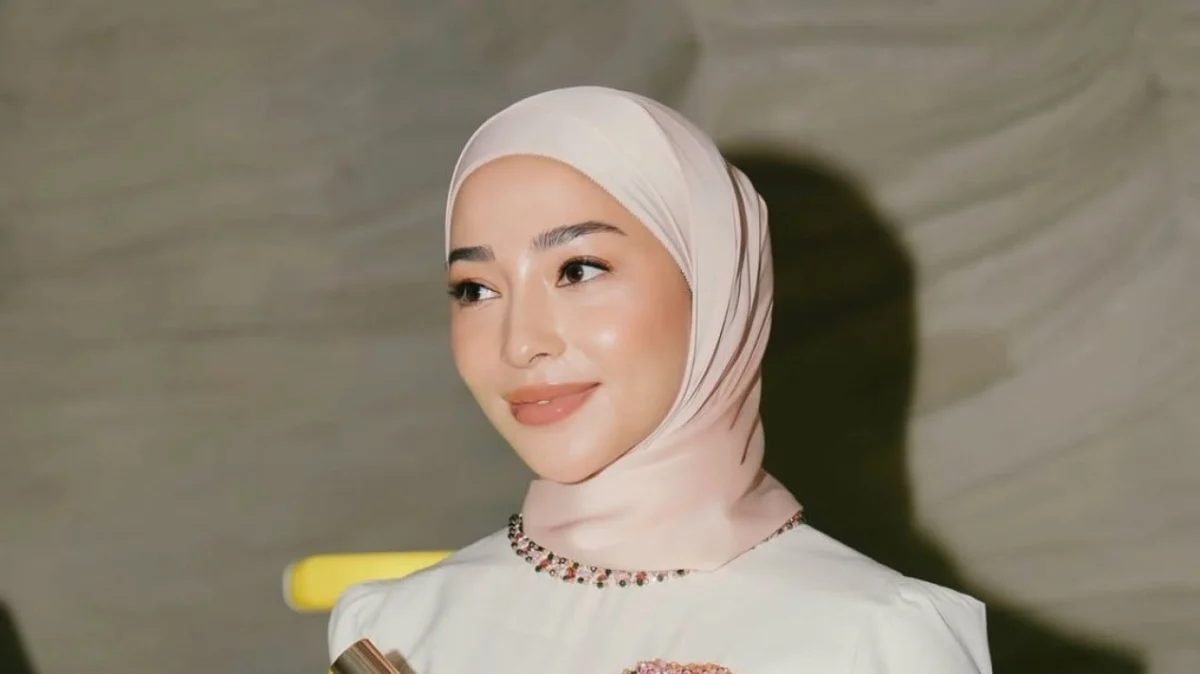
The spiritual evolution of Indonesian actress and mother of two, Nikita Willy, has recently come to the forefront of public discourse, highlighting a transformative journey toward a more conscious and profound understanding of Islam. While often recognized for her prolific career in the entertainment industry and her modern lifestyle, Nikita Willy has increasingly turned her focus toward religious introspection. This shift in perspective was catalyzed by a pivotal moment in late 2025, which led her to question the foundational origins of her faith and move beyond inherited religious identity toward a personal, intentional relationship with her Creator.
The Catalyst for Introspection: A December 2025 Turning Point
The narrative of this spiritual awakening began to take shape in December 2025. During a podcast appearance alongside guests Hawariyyun and Dena Haura—figures known for their own religious advocacy and educational content—Nikita was confronted with a fundamental question that resonated deeply with her: "We know what prayer is, and we know how to pray, but do we truly understand why we pray?"
For many, religious practice is a matter of ritualistic habit, often ingrained from childhood. Nikita admitted that, prior to this conversation, her identity as a Muslim was largely a byproduct of her family’s legacy. When asked about the roots of her faith, she previously relied on the inherited nature of her religion. The realization that she had been performing rituals without a deep, internal comprehension of the "why" sparked a period of profound reflection. This marked the beginning of a deliberate pursuit of theological knowledge and a conscious decision to "re-introduce" herself to her faith.
Moving Beyond Heritage: The Search for Personal Connection
Sociologically, the transition from "inherited faith" to "chosen faith" is a common milestone for individuals seeking to reconcile their personal identity with their spiritual commitments. For Nikita, this process involved moving away from the passive acceptance of religious labels toward an active engagement with the tenets of Islam.
In her public accounts, she described this phase as "getting to know Allah again." This process was not merely an intellectual exercise; it was an emotional and practical realignment. By seeking out religious study circles (kajian) and engaging with teachers who provided deeper context to Islamic theology, Nikita began to dismantle the ambiguity surrounding her beliefs. She noted that once she discovered the reasons behind her faith—the "why" behind the rituals—the "how" became significantly easier to implement. This internal resolution served as the foundation for her subsequent decision to adopt the hijab and embrace a more observant lifestyle, viewing these actions not as burdensome obligations, but as natural expressions of her internal spiritual conviction.
Contextualizing the Spiritual Journey in Modern Indonesian Society
Nikita Willy’s experience reflects a broader trend among Indonesian celebrities and public figures. In recent years, there has been a noticeable shift in the Indonesian entertainment industry, where high-profile individuals have publicly documented their "hijrah"—a term commonly used in Indonesia to describe a transition toward a more devout and religiously observant life.
Statistically, the intersection of pop culture and religious observance in Indonesia is significant. As the world’s most populous Muslim-majority nation, Indonesia has seen a surge in interest regarding Islamic lifestyle, fashion, and education. Market research indicates that the "modest fashion" sector, which includes the hijab, has grown exponentially, fueled by influencers and celebrities who showcase that modern professional life and traditional religious observance are not mutually exclusive.
However, unlike those who might follow a trend for social validation, experts in religious studies note that the depth of a spiritual journey is often tested by the consistency of the individual’s commitment. Nikita’s approach—starting with the "why" rather than the outward appearance—aligns with a traditional theological approach that prioritizes the rectification of the heart (tazkiyatun nafs) before the external application of Sharia.
Chronology of a Transformation
- December 2025: A pivotal discussion on a podcast regarding the essence of prayer (Salah) serves as the catalyst for Nikita’s self-reflection.
- January – August 2026: A period of intensive study and engagement with religious scholars and community groups to deepen her understanding of Islamic theology.
- September 2026: Nikita publicly shares her experiences, discussing how her understanding of the "why" behind her faith has empowered her to transition into a more observant lifestyle, including the decision to wear the hijab.
Implications and Societal Impact
The public nature of Nikita Willy’s journey carries implications for both her audience and the wider public. By sharing her internal struggle—the "big question mark" that preceded her certainty—she provides a humanizing look at faith that resonates with many who are navigating similar questions.
Public intellectuals have often observed that when a celebrity openly discusses their spiritual growth, it can spark a "ripple effect." For younger generations, seeing a prominent figure prioritize spiritual inquiry over immediate gratification provides a counter-narrative to secular-only influences. Furthermore, it highlights the importance of religious literacy. Nikita’s emphasis on "learning the religion" rather than just "inheriting the religion" underscores a shift toward a more informed, conscious, and intellectually grounded practice of Islam.
Expert Perspectives on Personal Faith
Religious scholars often emphasize that the quest for "certainty" (yaqin) is a lifelong endeavor. When an individual like Nikita Willy speaks about "re-introducing herself to Allah," she is tapping into the concept of Ma’rifatullah, or the knowledge of God. This concept posits that true devotion cannot be achieved through superficial adherence to rules alone; it requires a deep, experiential understanding of the Divine.
From a psychological perspective, this shift also contributes to a sense of agency. By taking ownership of her spiritual identity, Nikita moves from a state of external compliance to internal autonomy. This is likely a key reason for her reported increase in comfort and consistency in performing religious duties. When the motivation is internal, the "burden" of religious observance is transformed into a source of psychological stability and purpose.
Future Trajectory and Public Reception
As Nikita Willy continues to navigate her career alongside her spiritual commitments, observers note that her influence remains substantial. Her decision to speak openly about the challenges of this journey—admitting that she once questioned the necessity of the hijab and the complexities of religious law—serves as a bridge for those who are currently in the midst of their own doubts.
In the coming months, the public will likely continue to observe how she balances her professional responsibilities as an actress with her evolving private life. However, the core of her message remains clear: the path to religious consistency is not found in a sudden change of appearance, but in the long, often difficult, process of finding the intellectual and spiritual answers to the fundamental questions of existence.
Conclusion: The Synthesis of Faith and Modernity
Nikita Willy’s journey serves as a microcosm of the modern Indonesian experience: the tension between tradition and modernity, and the ultimate search for meaning in a rapidly changing world. By moving beyond the surface-level expectations of her environment and seeking a deeper, more personal connection to her faith, she has joined a growing demographic of individuals who are redefining what it means to be a modern, observant Muslim in the 21st century. Her story is a testament to the idea that faith, when pursued with sincerity and intellectual rigor, becomes not just a set of rules, but a transformative guide for life.