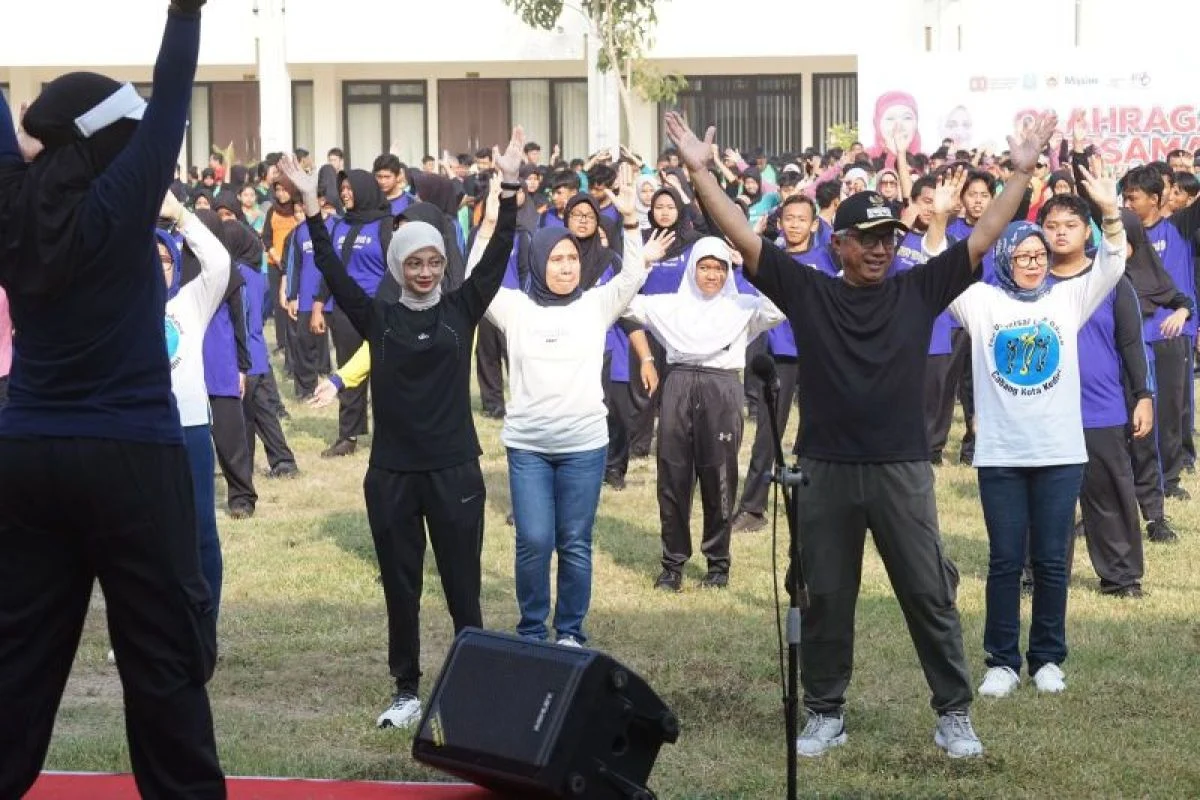
September 9 holds a profound and enduring significance in the annals of modern Indonesian history. Celebrated annually as Hari Olahraga Nasional (Haornas), or National Sports Day, this observance transcends a mere commemoration of athletic milestones; it represents a foundational pillar of national identity, resilience, and unity. The genesis of Haornas is deeply intertwined with the birth of the Pekan Olahraga Nasional (PON), the nation’s premier multi-sport event, which was inaugurated in Surakarta (Solo), Central Java, on September 9, 1948.
As Indonesia marks the 43rd anniversary of the official Haornas proclamation in 2026, the occasion serves as a critical juncture for reflection. It allows policymakers, athletes, and the general public to evaluate the trajectory of national sports development, assess the economic and health implications of an active populace, and look forward to upcoming spectacles such as the National Coastal Games in Ancol and the preparations for future multi-sport exhibitions like the 2028 PON in Sumba Timur, which aims to spotlight sport tourism.
The Historical Genesis: Defiance and Diplomacy Through Sport
To fully comprehend the weight of Hari Olahraga Nasional, one must examine the geopolitical and socio-economic landscape of Indonesia in 1948. Having proclaimed its independence on August 17, 1945, the young Republic was still fighting to secure international recognition of its sovereignty. The global diplomatic arena was fraught with obstacles, and traditional pathways to international integration were blocked by colonial remnants and bureaucratic friction.
A prime example of this diplomatic struggle occurred when Indonesia sought participation in the XIV Olympic Games, scheduled to be held in London, United Kingdom, in 1948. The fledgling republic faced severe administrative hurdles. International sports governing bodies, heavily influenced by the pre-war colonial order, did not fully recognize the nascent nation’s Olympic Committee. The newly formed Persatuan Olahraga Republik Indonesia (PURI)—the precursor to the modern Indonesian National Sports Committee (KONI)—faced a dilemma: how to assert national existence on the global stage when denied standard diplomatic pathways.
The response was both pragmatic and revolutionary. Rather than conceding to international exclusion, Indonesian leaders, athletes, and sports pioneers decided to organize a domestic multi-sport competition that would rival the scale of international games and demonstrate the administrative and physical capability of an independent nation. Surakarta, chosen as the host city, transformed into the epicenter of national pride from September 9 to 12, 1948.
The first PON brought together athletes from various regions across the archipelago, despite ongoing military conflicts and infrastructural limitations. It was more than a sports competition; it was a physical manifestation of independence. The opening day of this historic event—September 9—permanently etched itself into the national consciousness as the spiritual birthdate of Indonesian sportsmanship.
Institutionalization and the Proclamation of Haornas in 1983
While the spirit of September 9, 1948, lived on in the hearts of athletes and sports enthusiasts for decades, it was not until 1983 that the date was formally institutionalized as a national day of observance.
On September 9, 1983, during a grand ceremony in Surakarta, President Soeharto officially proclaimed Hari Olahraga Nasional. The proclamation coincided with the inauguration of the newly restored and modernized Sriwedari Stadium, a historic sporting venue that had hosted events during the colonial era and served as a central hub for the 1948 PON.
The 1983 declaration aimed to rejuvenate the nation’s commitment to physical fitness and competitive excellence. Recognizing that a productive and resilient workforce requires a strong cultural foundation in physical education, the government sought to transition sports from an elite competitive pursuit into a widespread public habit.
To give the observance legal permanence, the administration formalized the status of the holiday through Presidential Decree (Keppres) Number 67 of 1985 concerning National Sports Day. This decree officially designated September 9 of each year as Haornas, mandating that government bodies, educational institutions, and civic organizations promote sports development, physical fitness, and athletic training on a continuous, nationwide basis.
Evolution of Haornas: Beyond Medals to Public Health and Economy
In contemporary discourse, the Ministry of Youth and Sports (Kemenpora) emphasizes that Haornas is no longer viewed solely through the narrow lens of elite athletic achievement and medal counts. While international podium finishes remain a source of immense national pride, modern sports policy in Indonesia increasingly focuses on "sports industry" and "sports science," aligning physical activity with broader national development goals.
Recent statements from the Ministry of Youth and Sports highlight that the systematic development of sports yields profound dual benefits: public health and economic stimulation. As lifestyle-related non-communicable diseases rise globally, promoting grassroots physical activity acts as a crucial preventive healthcare measure, reducing long-term public health expenditures.
Concurrently, the sports economy has emerged as a vibrant sector capable of generating significant revenue and employment. From athletic apparel manufacturing and fitness center franchising to large-scale event management and sport tourism, the economic footprint of sports in Indonesia is expanding rapidly. Initiatives such as hosting specialized competitions—including the upcoming PON Pantai (Coastal PON) in Ancol, Jakarta, and the strategic positioning of Sumba Timur as a sport tourism hub for the 2028 PON—demonstrate how athletic events can stimulate regional economies, boost hospitality sectors, and showcase regional cultural assets to domestic and international travelers.
Addressing Infrastructure and Training Deficits
Despite the optimistic outlook surrounding modern sports development, industry stakeholders and government officials acknowledge persistent structural challenges. High-performance sports require substantial capital investment in modern infrastructure, sports science laboratories, elite coaching staff, and systematic athlete development pipelines.
Reflecting these demands, recent proposals from Kemenpora have underscored the necessity for substantial budgetary allocations—such as the projected need for Rp1.5 trillion to construct comprehensive national training centers and specialized sports academies. Experts argue that if Indonesia aims to consistently perform at the highest tiers of Asian and global competitions, grassroots identification must be paired with world-class training facilities that integrate sports psychology, nutrition, and advanced biomechanics.
The broader implications of these investments extend beyond professional accolades. Well-funded sports academies create career pathways for talented youths from diverse socioeconomic backgrounds, fostering social mobility and national integration. Furthermore, robust community sports facilities encourage grassroots participation, fulfilling the core objective of Haornas: building a healthy, disciplined, and united society.
The 43rd Observance of Haornas in 2026
As the nation observes the 43rd anniversary of Hari Olahraga Nasional on Wednesday, September 9, 2026, the focus shifts to actionable engagement. The anniversary serves as a reminder that the heritage of the 1948 Solo PON must be preserved through active participation rather than passive commemoration.
Across the archipelago, communities, schools, corporate entities, and government offices mark Haornas 2026 through varied initiatives. These include mass gymnastics, community running events, grassroots tournaments, and educational campaigns highlighting the importance of regular physical activity for families and workplaces. Public figures and national athletes frequently use the platform to mentor younger generations, imparting values of perseverance, fair play, and teamwork.
The longevity of Hari Olahraga Nasional underscores a fundamental truth about modern Indonesia: the nation was built on resilience, and its physical culture reflects that same indomitable spirit. From the makeshift tracks and fields of post-independence Surakarta in 1948 to state-of-the-art training complexes and sprawling sport tourism destinations envisioned for the future, September 9 remains a powerful annual touchstone. It calls upon every citizen to honor the sacrifices of past generations by embracing physical vitality, supporting national athletes, and ensuring that sports remain an integral, unifying thread in the fabric of Indonesian society.